
In Africa, hydropower is becoming increasingly unreliable due to recurring and devastating droughts induced by climate change.
At the same time, global financing for new coal-fired plants is dwindling, leading many countries to shift away from thermal power stations toward solar energy. Countries such as Zambia and Zimbabwe are currently experiencing prolonged electricity cuts due to low water levels at the Kariba Dam, which supplies a significant portion of the electricity to the two countries.
Electricity generation at Kariba Dam has decreased significantly over the past two years due to an El Niño drought, the worst in more than 40 years, which affected the Southern Africa region in 2024. Zimbabwe’s Kariba Hydropower Station has an installed capacity of 1,050 MW, but by the end of August this year, it was generating only 400 MW per day. Similarly, South Africa has also experienced prolonged periods of electricity blackouts due to unreliable coal-fired power plants and outdated, aging transmission equipment.
Meet EP Investing — capital discovery for the energy transition.
However, a silver lining is emerging as many countries in Africa are now investing in solar energy, buoyed by the decreasing cost of solar panels from China. According to a recent report and analysis by Ember, a global energy think tank, Africa’s solar panel imports have increased significantly over the last 12 months. The report reveals that solar panel imports from China rose 60 percent to 15,032 MW, with imports outside of South Africa nearly tripling from 3,734 MW to 11,248 MW over the last two years.
Zimbabwe-based renewable energy expert, Eddie Cross, says the solar panel import numbers are very significant.
“It means Africa is taking to the solar revolution in a big way. This is a low-cost form of energy generation that is available to everyone. It will improve lives and enable families and companies to meet their essential needs,” Cross says.
The rise in solar panel imports is a continent-wide phenomenon, with 20 countries setting new records in the 12 months to June 2025. Twenty-five countries imported at least 100 MW, up from 15 countries the previous year. If installed, the solar panels imported into Sierra Leone over the last 12 months would generate electricity equivalent to 61 percent of the country’s total reported electricity generation in 2023. In 16 countries, the solar panels would add electricity equivalent to over 5 percent of their total reported electricity generation.

The report notes that the vast majority of Africa’s solar panels are imported from China, due to China’s dominance in global solar panel production and exports. However, some countries in Africa are starting to develop their own manufacturing capacity. Morocco recently doubled its manufacturing capacity to 1 GW per year, and South Africa has a similar capacity. Egypt and Nigeria also have smaller manufacturing lines. Several gigawatt-scale projects are set to come online in Egypt, which will begin to shift the balance.
“The take-off of solar in Africa is a pivotal moment. This report is a call to action, urging stronger research, analysis, and reporting on solar’s rise – to ensure the world’s cheapest electricity source, fulfils its vast potential to transform the African continent,” Dave Jones, lead author of the report and Global Insights programme director at Ember.
At the same time, Muhammad Mustafa Amjad, an energy and climate change researcher from Pakistan and program director at Renewables First, an energy and environment think tank in Pakistan, was quoted in the report as saying the bottom-up energy transitions fueled by cheap solar are no longer a choice—they’re our future.
“Tracking these additions is what makes the difference between a messy shift and an organised, accelerated one. When you don’t track, you lose time and opportunities. Pakistan’s experience shows this clearly; Africa’s transition will happen regardless, but with timely data, it can be more equitable, planned, and inclusive,” Amjad says.
One lesson from Pakistan, according to the Ember analysis, is the time delay and analysis of understanding solar’s growth.
“Earlier warnings could have better guided government actions—for example, to promote batteries to better help integrate and add value to solar or to prepare the grid for oncoming distributed additions by better planning future capacity needs. Change can happen quickly. Better data and reporting are vital to understand and support this positive development opportunity for Africa,” the report says.
Pakistan is one country that has experienced an unprecedented solar boom, largely driven by falling global solar panel prices, cheap imports from China, and extremely high and unreliable electricity tariffs on the national grid. This solar revolution is leading to the massive adoption of solar power, making Pakistan one of the world’s largest and fastest-growing solar markets. However, it also presents financial challenges for the country’s struggling power companies.
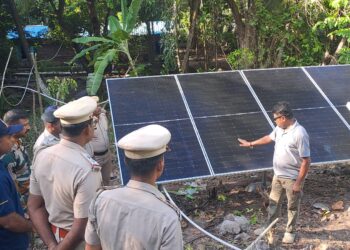
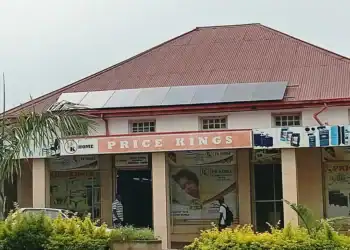
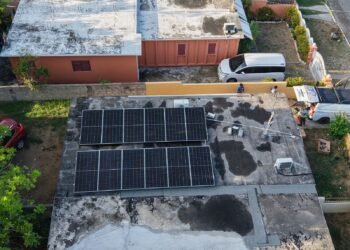
In Southern Africa, many countries are now investing considerably in solar energy, from rooftop solar systems to mini solar grids and national solar power projects. In Zimbabwe, for example, thousands of houses now have rooftop solar systems. At the same time, various solar projects are being developed across the country. One such project is the US$350 million floating solar power plant to be constructed at Kariba Dam. The African Development Bank’s Sustainable Energy Fund for Africa (SEFA) and its partners recently signed a US$26.5 million deal for Zambia’s Ilute solar project, which will supply the regional power market through an innovative trading structure.
Additionally, Mozambique is planning to construct a 1,000 MW solar power plant by 2030. Already, there are various active solar power projects, including the 40 MW Mocuba and 41 MW Metoro solar power plants. These projects are supported mainly through public-private partnerships and international financing.
However, with hydro and thermal power becoming unreliable in many countries in Africa, solar energy is the next frontier in the continent’s clean energy revolution.
Meet EP Investing — the platform behind the stories.
1,300+ companies · 350+ investors · 47+ grants