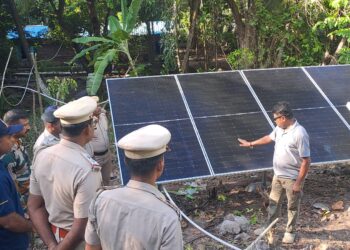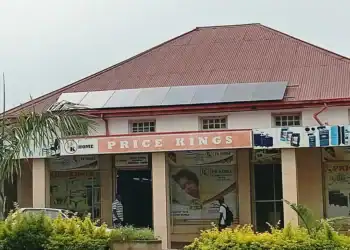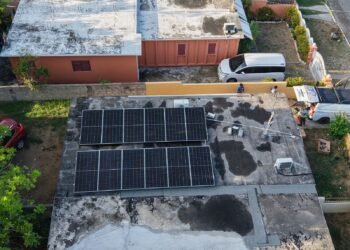


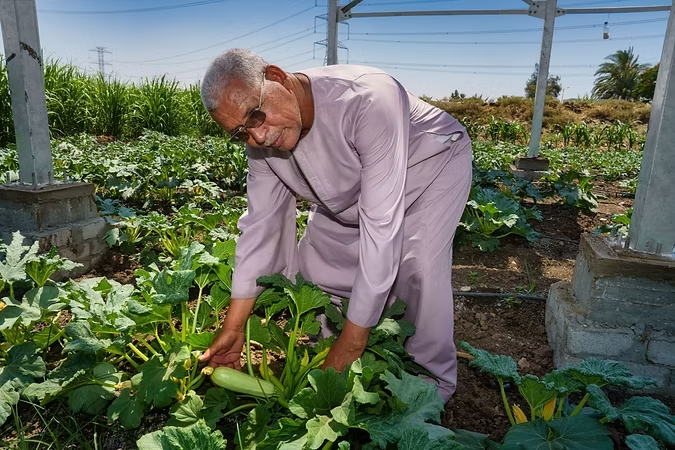
Two years ago, Ahmed Agha, a 40-year-old Egyptian farmer, made a groundbreaking decision: he transitioned his 20-acre farm, located in Beheira Governorate in the Nile Delta, to a solar-powered irrigation system. This bold move not only modernized his agricultural practices but also simplified the arduous task of irrigation, allowing him to manage his farm with the mere press of a button.
The initial investment was significant, with Agha spending 270,000 Egyptian pounds (approximately $5,600) to establish two solar power stations. However, he swiftly realized the long-term benefits. “I effectively saved the cost of purchasing 80 liters of diesel daily—at 15.5 Egyptian pounds per liter (approximately $0.30) —plus the expense of motor oil and the regular maintenance,” he shared.
Remarkably, within two years, he recouped his initial investment and now enjoys a free, user-friendly, and environmentally safe irrigation system with a lifespan of around 25 years. However, Agha’s solar-powered dream faces its own hurdles. He admits that solar plants struggle during winter months, foggy periods, and at night, forcing him to rely on a backup diesel generator to ensure irrigation continues uninterrupted.
Meet EP Investing — capital discovery for the energy transition.
With soaring fuel prices and high maintenance costs, many farmers in Egypt are considering installing solar panels on their own farms. The Egyptian government is also responding to this trend, ramping up efforts to harness renewable energy amid rapid urban expansion and growing electricity demand, which is surging at a rate of 1,500 to 2,000 megawatts each year. The nation’s strategy aims to boost the share of renewable energy to 42% by 2030.
Solar energy has achieved annual growth, reaching 2.59 gigawatts by the end of 2024, rep
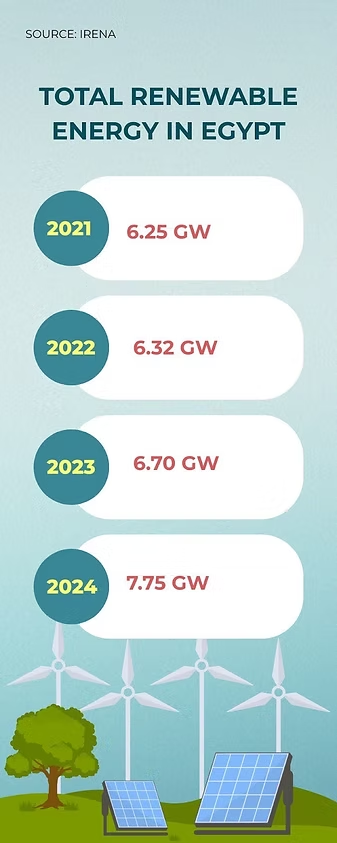
resenting 33.4% of Egypt’s total renewable electricity generation capacity, according to IRENA.

Solar-powered irrigation systems can be a game-changer for Egypt’s agricultural sector. By converting sunlight into electrical energy, these systems power water pumps without depending on fuel or electrical grids, making them perfect for remote and desert regions.
Dr. Maher Aziz, an engineer specializing in renewable energy and environmental issues, emphasizes that Egypt has vast potential to expand the use of solar energy in agriculture, due to its location, topography, and climate. It has an average level of solar radiation between 2,000 and 3,200 kWh per square meter a y
ear.
He noted that solar panels are used to generate electricity for pumping water from underground wells, serving as an alternative to diesel engines, which saves on daily operating costs. Moreover, they require less maintenance than traditional generators due to fewer moving parts and are environmentally friendly, producing no noise or carbon emissions.
A recent Nature study (April 2025) found that smart solar-powered irrigation reduced water use by 28% and cut CO₂ emissions by 0.252 kg/m²/year, with a payback period of 5.6 years.
High upfront costs: the main barrier to adoption
The high initial operating costs of solar power plants represent the biggest obstacle to expansion in this field. Costs are influenced by several factors, including the quality of the panels, the country of manufacture, the size of the system, and the conversion efficiency.
Despite the higher cost of solar energy for farms compared to traditional generato
rs, Aziz says that solar panels offer “an economical alternative in the medium and long term, as daily operating costs are virtually zero after the initial operating costs are recovered”.
It is also characterized by its stability, as it is expected to continue operating at high efficiency for up to 25 years, making it the ideal choice for achieving sustainability and controlling operating costs, given the continuing rise in fuel and electricity prices. A study on a private farm in Kafr El-Sheikh, Egypt, compared solar-powered irrigation with diesel, electricity, and traditional systems. It confirmed that solar energy combined with advanced irrigation outperformed the others, offering a clean, low-cost, and sustainable alternative.
Payment facilities and government support for farmers
Aziz pointed out that farmers are offered facilities to overcome the challenges of high upfront costs through soft loans provided by banks at reduced interest rates to help farmers install the system.
Solar panel installation and operation companies also offer the option of five-year installments to help farmers repay the initial cost after it is recovered. According to the Egypt Solar Energy Platform, there are 160 private companies qualified to install solar panels, and the number of solar power plants implemented till now has reached 2,742.
The platform explains to customers the steps required to implement a solar power plant, provides a list of qualified companies based on customer needs and land area, and outlines the process for calculating the capacity of a solar power plant. It also includes an automated calculator to determine the estimated cost of the plant, based on its capacity in kilowatts.
The installation expenses of a solar power plant range between 10,000 and 15,000 Egyptian pounds (approximately $208–$313) per kilowatt. Government projects have supported farmers by installing solar panels free of charge in several governorates, including Sharqia, Beheira, and the Western Desert. These projects include the “Expansion of Solar-Powered Irrigation Systems” project, which covers 19 wells in Kharga and Darb Al-Arbaeen, 11 wells in Dakhla and East Uwaynat, and 10 wells in Farafra.
The project is being implemented by the Ministry of Water Resources and Irrigation, in cooperation with the Ministry of Industry, and the Arab Fund for Economic and Social Development. The project aims to modernize traditional irrigation systems by utilizing solar energy to operate pumps, thereby contributing to increased water efficiency, lower operating costs, and reduced carbon emissions, particularly in desert areas.
There is also the “Enhancing Water Productivity in Agriculture” project, implemented by the FAO in Egypt in cooperation with the Ministry of Irrigation and Water Resources, funded by the Japanese government.
Engineer Naglaa El-Bandary, Director of the FAO project in Egypt, explained that it is being implemented on 40 acres in Qena to run a drip irrigation system for sugarcane, benefiting about 50 farmers, and on 42 acres in El-Minya using a mixed drip-and-sprinkler system for different crops, also serving 50 farmers free of charge.
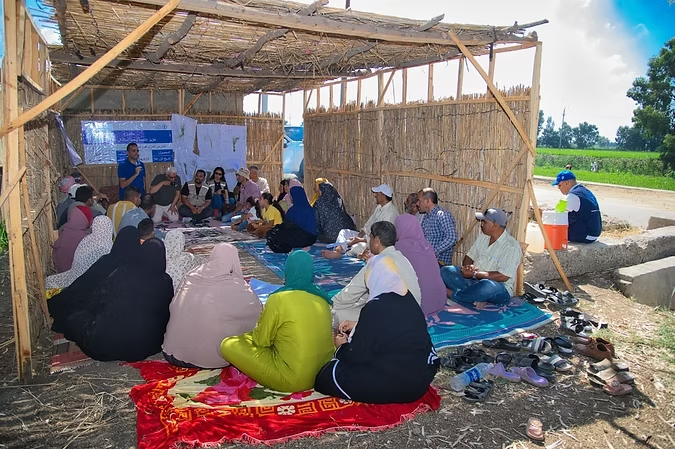
She noted that the project, with total funding of $3.7 million, goes beyond solar-powered irrigation to include broader activities aimed at saving 20% of water use—particularly in water-intensive crops like sugarcane—cutting energy costs by replacing diesel pumps with solar panels, and boosting productivity through modern irrigation methods that reduce fertilizer loss. The project is being carried out in cooperation with the Ministry of Water Resources, which has also established a system to monitor management and maintenance after completion.
According to studies, solar-powered irrigation systems are expected to become more feasible and efficient with technological advancements, helping expand the transition from diesel to clean solar energy. This transformation could redefine the future of Egyptian agriculture.
Meet EP Investing — the platform behind the stories.
1,300+ companies · 350+ investors · 47+ grants