

In many African countries, it is still common to see old, battered buses servicing major cities, puffing out black smoke as they traverse urban and rural roads.
Public passenger transportation systems in Africa still largely depend on informal, privately owned minibuses known locally as combis in Zimbabwe, matatus in Kenya, danfos in Nigeria, tro-tros in Ghana, dala-dalas in Tanzania, and chapas in Mozambique. Larger, formal bus rapid transit systems operate in major cities such as Lagos, and Johannesburg and Cape Town.

Decarbonizing road passenger transport in Africa is key to reducing greenhouse gas emissions.
Meet EP Investing — capital discovery for the energy transition.
“Passenger vehicles are a major contributor to road transport emissions. Advances in battery technology, manufacturing, and supportive policies are driving battery electric vehicle (BEV) adoption, while synthetic fuels are also being explored as a complementary low-carbon option, notably by major automakers such as Volkswagen,” says a recent study published by Nature energy.
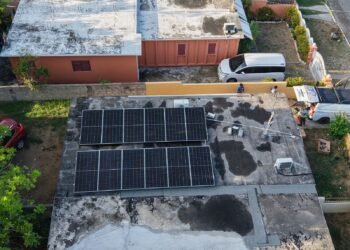
The research, which analysed 52 African countries, found that battery electric vehicles (BEVs) powered by solar off-grid systems will have lower costs and negative greenhouse gas abatement costs in most countries and segments. This is driven by falling technology costs, particularly in solar power and battery storage, and the growing availability of affordable EV models.
At the same time, financing is crucial for governments and global financial institutions to accelerate Africa’s transition to BEVs.
“Our research indicates that financing is the primary bottleneck to battery electric vehicle (BEV) adoption in many African countries. Zimbabwe, in particular, faces some of the highest financing costs on the continent. BEVs and charging infrastructure require significant upfront investment. In high-interest-rate environments, these capital-intensive technologies become difficult to finance and slow to pay back, even when their total cost of ownership may be competitive over time,” says Christian Moretti, research scientist at the Laboratory for Energy Systems Analysis at PSI and co-author of the study.

Moretti adds that one of the most striking findings is the rapid fall in technology costs, especially for batteries and solar photovoltaics. He notes that this trend has significant implications for both the economics and environmental sustainability of BEVs.
“The declining cost of solar power means that direct vehicle charging from solar energy is already economically viable for electric scooters. If current trends continue, within the next decade solar charging could become cost-competitive for a much broader range of vehicles. Regarding sustainability, BEVs with solar charging might have negative carbon abatement costs in 2040,” says Moretti.
A press statement accompanying the study reports that, “Off-grid solar solutions make charging possible even in places with no or unreliable electrical grids. Major challenges remain in terms of financing, with high interest rates slowing down adoption, despite drops in the cost of technology. The number of vehicles in Africa is expected to double between now and 2050—faster than on any other continent. The question is not whether mobility will increase, but how.”
The study’s lead author, Bessie Noll, a senior researcher in the Energy and Technology Policy Group at ETH Zurich, highlighted that many models have assumed that combustion engine vehicles will continue to dominate in Africa through mid-century.

“Our findings show that, under certain conditions, e-mobility is feasible sooner than many people think,” Noll said in the statement.
Though the study reveals that across much of Africa, the electrical grid is unreliable or non-existent, the transition to EVs is buoyed by the fact that the cost of solar power and batteries has fallen sharply in recent years. At the same time, increasingly affordable electric vehicles, particularly those from China, are entering the market, while motorbikes and e-scooters are becoming ever more economical.
“We wanted to know what would happen if the charging system were designed specifically for daily demand,” Moretti says. “Even we were surprised by the results: these systems are significantly cheaper than is often assumed, and in many contexts they are even more reliable than the existing electrical grid”, he added.
The researchers’ calculations show that a compact solar system is enough for a small car that travels around 50 kilometers, approximately 30 miles, per day. The cost of charging the vehicle, including using public charging networks and apps, makes up only a very small portion of the total vehicle costs. In many cities, riders are already seeing the financial benefits of switching to electric scooters and motorbikes.
“Africa is not a single, uniform market..the framework conditions vary enormously, as does the point at which e-mobility makes sense financially” says Noll.
The study also compared electric vehicles with cars powered by synthetic fuels, which perform significantly worse. Even in Chile, where solar power is cheap, producing synthetic-fuel cars under the most favorable conditions remains costly.
But the biggest obstacle to e-mobility is financing, rather than technology. In many African countries, loans are expensive because investments are considered risky. This affects electric vehicles, in particular, since the initial outlay is higher.
“If financing costs can be reduced, the transition will accelerate dramatically,” Noll says.
The potential options include government guarantees, new financing models, or international support. Noll outlines that “E-mobility could also create new economic opportunities for Africa through things like local assembly and new services or jobs along the supply chain.”
While Africa’s old, battered buses may be a familiar sight today, they are a relic of the past. As the continent shifts gears towards decarbonization, the future of road passenger transport looks brighter and cleaner. With the right policies, investments, and technologies, Africa can leapfrog into a sustainable era, where electric buses and green transport systems power its growth. the journey has begun; now it is time to accelerate.
Meet EP Investing — the platform behind the stories.
1,300+ companies · 350+ investors · 47+ grants