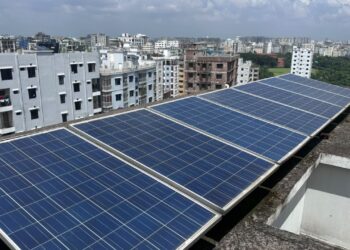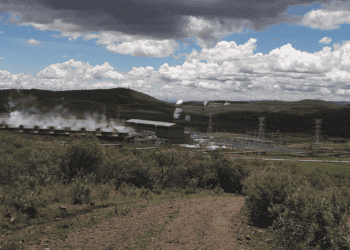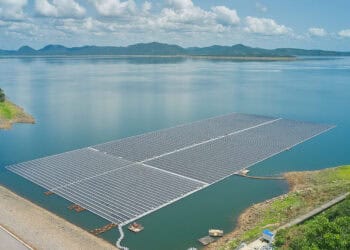

Africa’s clean energy sector is advancing rapidly, from solar-powered villages to large-scale wind and solar farms. Africa holds vast, underutilized renewable energy potential—solar, wind, hydro, and geothermal—but is now investing in renewable energy and consolidating its share of global clean energy consumption. Though the continent is making great strides toward a greener future, it still faces significant challenges in transitioning to clean energy.
Infrastructure limitations, regulatory complexities, and financing barriers remain major hurdles to Africa’s green energy revolution. Yet, the transition to renewable energy offers huge economic benefits: job creation, economic growth, better health, and a clear path to leapfrog fossil fuels. The International Renewable Energy Agency (IRENA) says Africa’s rapid economic expansion creates a daunting energy challenge, compounded by rising expectations for greater resilience and sustainability.
“Finding a sustainable way to meet growing energy needs is one of the core development challenges for the continent. Africa is rich in renewable energy sources, including hydro, sun, wind, and others, and the time is right for sound planning to ensure the right energy mix. Decisions made today will shape the continent’s energy sector for decades,” IRENA noted.
The UN Sustainable Development Group notes that Africa’s story on reliable access to electricity can be seen through three key data points: 600, 300, and 55.5. These figures highlight the challenge, the goal, and the opportunity shaping the continent’s access to electricity and overall energy future.
“‘600 million’ illustrates the scale of the issue—over half of Africa’s population still lacks reliable access to electricity. ‘300’ reflects the ambition of Africa’s target to turn the page on this access—Mission 300 to provide power to 300 million people by 2030. ‘55.5’ underscores the opportunity—more than 55 percent of Africa’s energy already comes from renewable sources, paving the way for long-term development,” the UN Sustainable Development Group explains.
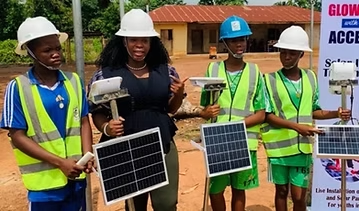
Glory Oguegbu, a renewable energy expert based in Nigeria, shares her insights with The Energy Pioneer on the successes and challenges facing Africa’s renewable energy transition. Oguegbu outlines how the main hurdles facing Africa’s transition to renewable energy are access to affordable financing, weak grid and transmission infrastructure, limited local manufacturing capacity, and gaps in skilled human capital.
“Just as important are policy consistency and community trust; projects struggle when rules change suddenly, or local communities are not meaningfully engaged,” Oguegbu says.

However, Oguegbu added that South Africa, Egypt, and Morocco are currently leading in large-scale renewable energy deployment. “Kenya stands out for geothermal [energy] and innovation. Countries like Nigeria and Ghana are moving quickly in distributed solar and mini-grids, especially driven by demand from businesses and communities,” she adds.
Oguegbu is the founder and CEO of the Renewable Energy Technology Training Institute (RETTI), an organization that focuses on building practical skills, quality assurance, and research in solar and clean energy systems.
“We train technicians, engineers, and early-career researchers in solar PV design, installation, testing, O&M [Operations and Maintenance], and PV materials research. Our emphasis is on practical, job-ready skills plus QA/QC [Quality Assurance/Quality Control] and standards so installations survive and perform. We also run community engagement and stakeholder liaison modules because social license is part of good engineering,” she says.
Oguegbu says her vision for the future of renewable energy on the continent is an Africa that moves from energy access to energy sovereignty, where clean energy is not just deployed but also manufactured, maintained, and innovated locally.
“This includes a layered system of grids, mini-grids, and distributed solutions, supported by skilled people and strong local institutions. People as infrastructure—skilled technicians and managers keep systems running,” she says.
At the Africa Fellowship for Young Energy Leaders (AFYEL), Oguegbu says, they run fellowship tracks—including a hydropower track—that prepare young African energy professionals for leadership on large projects.
“We purposely teach skills needed for big infrastructure project management, environmental or social safeguards, and systems integration so young Africans can meaningfully contribute to projects like the GERD and other flagship builds,” she adds.
At the same time, they have secured the land and completed initial groundwork for the Mgbakwu Solar Panel Assembly Factory (Anambra State). They are now mobilizing investment for Line-1.
“The plan is to assemble mono-crystalline modules (formats optimized for C&I, rooftops, and mini-grids initially). Our aim is pragmatic: reduce lead time, tune products to Nigerian climate stresses (heat, humidity, and soiling), and back product sales with RETTI-trained installers and O&M teams. The project is also designed to create local jobs in an off-grid community and serve as a replicable model for African manufacturing,” she says.
RETTI’s research arm is working on PV materials science, module testing under local climate stressors, and pilot integrations.
Oguegbu also founded the Climate Leadership Fellowship, which Access Bank adopted and sponsored across six cohorts. This fellowship is a 12-week program that equips emerging climate leaders with the tools to run school and community climate education campaigns.
“Since inception, the Climate Leadership Fellowship has trained 200 fellows who have educated 71,000 students, partnered with 190 schools, and impacted more than 127,800 people across 20 states. In 2025, its 6th cohort, 30 fellows from 10 states, trained an additional 3,000 students. The Fellowship complements RETTI’s technical programs by turning climate knowledge into grassroots action and local advocacy,” she says.
Africa’s renewable energy future is bright but requires smart investment, policy support, and inclusive plans to unlock its potential and address energy poverty. However, if this innovative approach to renewable energy, as led by Oguegbu, gains traction across Africa, the continent is well set for a clean energy revolution.