
India faces an energy trilemma: balancing energy security, maintaining affordable access to power, and meeting its 2030 clean energy transition targets. To address this energy challenge, India must expand the use of electricity in transport, industry, and households, while also increasing renewable energy in the power system, tackling both how energy is used and how it is produced.
As the world’s sixth largest economy, India is projected to grow at 7.2% in FY2025–26, according to the World Bank, despite global energy insecurity and persistent international crises, including the Russia-Ukraine War, the abduction of Venezuelan President Nicolás Maduro, and the Iran war.
While India was able to navigate the Russia-Ukraine war crisis by leveraging discounted Russian oil and, as of April 15, discounted liquefied natural gas (LNG), despite US sanctions, the country is now facing serious challenges following the closure of the Strait of Hormuz. Diversifying import channels and using policy measures to manage inflationary pressures are unlikely to be as effective this time, given the widespread global disruption to energy supplies.
The main buyers of oil passing through the Strait are China, India, and Japan, and the closure has driven up costs by constraining alternative supply options and intensifying competition for resources, with knock-on effects on the cost of living and the country’s economic growth prospects over the coming year.
But the crisis also offers India an opportunity to redesign its energy system, drawing on lessons from China’s push over the past decade to expand electrification, renewables, storage and grid infrastructure.
Redesigning the energy system
Roughly 40% of India’s crude oil imports, around 90% of its liquefied petroleum gas (LPG) imports, and about 55% of its LNG imports pass through the Strait of Hormuz.

Unlike during the Russia-Ukraine crisis, when India was able to benefit from discounted Russian oil, it now faces more constrained supply options and must diversify its energy imports at a higher cost. Some wealthier Asian economies, such as Singapore, have significant storage capacity and strategic reserves, while China has built substantial stockpiles to cushion against supply shocks.
Energy is central to national security, and India’s objective of ensuring stable and affordable energy access is under growing pressure, as continued reliance on imported energy leaves the country increasingly exposed to external shocks. Energy security is deteriorating amid weakening global cooperation and declining adherence to international law.
Despite its 2030 emissions reduction and renewable energy targets, India is increasingly relying on short-term fixes to ensure energy security amid global volatility. This includes continued use of fossil fuels and, in some cases, renewed interest in coal-fired power as a relatively cheap and readily available source of energy. However, the current conflict driven energy shock underscores the risks of this approach, as greater reliance on fossil fuels may hinder long term decarbonisation goals and expose the country to further energy shocks in the future.
Electrifying transportation
Despite growing progress in clean energy, India still relies heavily on fossil fuel-based technologies across many sectors. Electrifying energy use offers a way to improve efficiency while cutting emissions, especially as the electricity grid becomes increasingly renewable. This shift can be seen in everything from vehicles, to industry, to household appliances that replace direct fossil fuel use.
Transportation is one of the most vital sectors that needs change: Road transport is a major source of air pollution in India, contributing to roughly 12% of India’s CO₂ emissions.
India has made significant progress in electrifying its vehicle fleet, with electric vehicles accounting for around 8% of new sales in 2025, most of which are two and three wheelers including scooters, motorcycles and rickshaws.
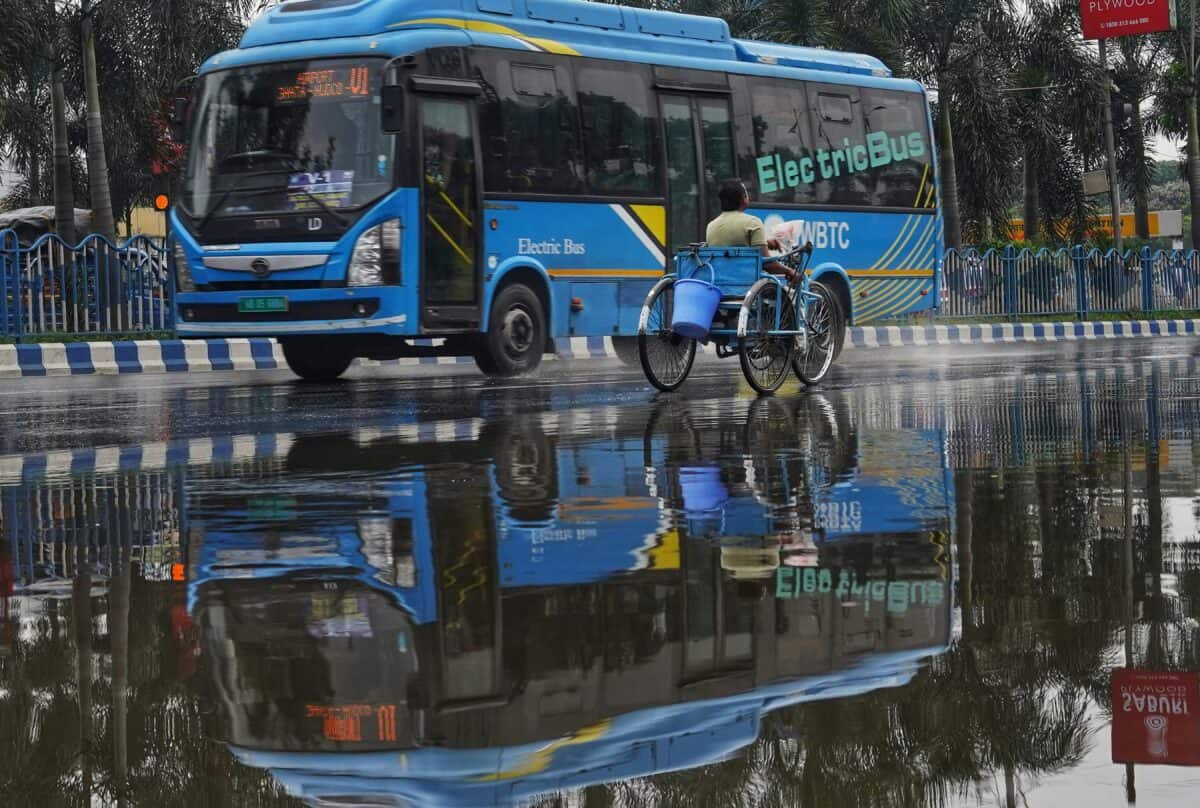
India is also heavily investing in electric buses, the main form of public transport in the country, with the aim of replacing 800,000 diesel buses. Electric vehicles (EVs) are becoming more mainstream yet their growth is still infrastructure constrained rather than demand constrained. Without reliable charging networks, battery storage, and grid upgrades, adoption will stall. Public investment is vital to lock in this progress in order for EV to spread nationwide rather than remaining limited to specific regions and urban centres.
Large parts of the transport system cannot be electrified as easily. Long-haul trucking, shipping, and aviation will also require alternatives such as hydrogen and sustainable aviation fuels. Hydrogen-based transport systems could help reduce India’s dependence on imported fossil fuels, particularly if produced as green hydrogen using domestic renewable energy. However, these technologies are still rather novel and will require sustained research and development to become commercially viable at any scale.
Electrifying Industry
The same logic applies in industry, where electrification remains one of India’s most underused decarbonisation tools. Electric heat pumps, which use electricity to generate industrial heat are far more efficient than fossil fuel-based systems and can cut both energy use and emissions. In steelmaking, electric arc furnaces (EAF) offer a cleaner alternative to coal-heavy blast furnaces by using electricity to melt recycled scrap steel rather than relying on coal to produce virgin steel. These are not marginal technologies, they are central to reducing industrial emissions and curbing imported coal demand.
Electrifying Households
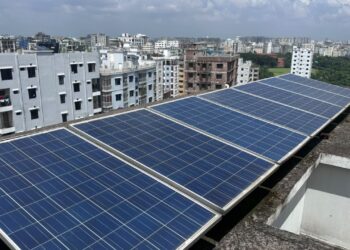
Households and buildings are another frontier of India’s energy transition, where electrification can be both affordable and transformative. Rooftop solar can allow households to generate their own electricity to power lighting, electric stoves, and even water heating, easing pressure on the grid by lowering peak demand. In larger commercial buildings, surplus electricity could also be fed back into the grid, turning buildings into contributors of power rather than consumers.
Cooking in households and restaurants remains vulnerable to volatile LPG and piped gas supplies. Expanding electric cooking could reduce reliance on imported fuels while lowering costs for consumers. But adoption is held back by the limited availability and affordability of suitable appliances. Targeted government incentives could help accelerate initial uptake.
Scaling Renewables
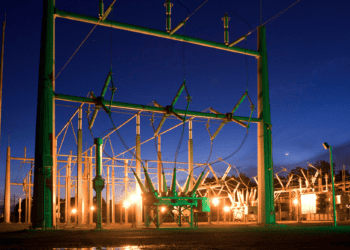
Scaling renewables is not just about adding more solar and wind; it also means building the infrastructure to support them. India has expanded renewable generation rapidly, but grid investment has lagged behind. Closing that gap will require major upgrades in transmission, battery storage, and smart grids, alongside stronger renewable procurement to manage intermittency and integrate clean power at scale.
It is not just about adding more solar and wind; it also means building the infrastructure to carry and balance that power. India should push Power Grid Corporation of India to accelerate investment in transmission corridors, grid modernisation, and storage so renewable power can be integrated at scale. Utilities also have a role to play by expanding renewable power procurement while investing in smart metering and battery storage to manage intermittency. Without these investments, clean power risks being generated but not delivered.
Transitioning to an electrified energy system is capital intensive and will take time to become financially viable. However, the long term benefits are both economically sound and strategically important. By integrating renewables and upgrading the grid, India can reduce air pollution, expand access to affordable electricity, and strengthen energy independence by reducing exposure to global fuel markets and external shocks.
To accelerate this shift, the government can play a catalytic role through concessional finance, targeted capital subsidies, and tax incentives. While a price on carbon or emissions can push firms to internalise environmental costs and adopt cleaner technologies, financial support can help speed up the transition by lowering upfront investment barriers.
The current energy crisis is an opportunity for India to make its energy system resilient while meeting its other two goals: making energy affordable and clean.