

The Energy Pioneer
No Result
View All Result
  • Home
  • Clean Tech
    • Electric Vehicles
    • Battery Storage
    • Energy Efficiency
    • Green Hydrogen
    • Smart Grid
  • Renewable Energy
    • Solar
    • Fossil Fuels
    • Hydrogen
    • Hydropower
    • Nuclear
    • Wind
  • Green Finance
    • Crash Course
    • Private Financing
    • Public Financing
    • Carbon Markets
  • Policy
  • Regions
    • Africa
    • Asia
    • West Asia
    • Latin America
    • North America
    • Europe
  • Features
  • Who We Are
    • About Us
    • Contact Us
    • EP Investing
  • Home
  • Clean Tech
    • Electric Vehicles
    • Battery Storage
    • Energy Efficiency
    • Green Hydrogen
    • Smart Grid
  • Renewable Energy
    • Solar
    • Fossil Fuels
    • Hydrogen
    • Hydropower
    • Nuclear
    • Wind
  • Green Finance
    • Crash Course
    • Private Financing
    • Public Financing
    • Carbon Markets
  • Policy
  • Regions
    • Africa
    • Asia
    • West Asia
    • Latin America
    • North America
    • Europe
  • Features
  • Who We Are
    • About Us
    • Contact Us
    • EP Investing
No Result
View All Result
The Energy Pioneer
No Result
View All Result
  • Home
  • Clean Tech
  • Green Finance
  • Policy
  • Renewable Energy
  • Regions
  • Features
  • Who We Are
Home Clean Tech Battery Storage

Making Lithium Ion Batteries Cleaner

Otto GundersonbyOtto Gunderson
March 21, 2025
Reading Time: 3 mins read

It is no secret that lithium-ion batteries will play a central role in energy storage and electric vehicle development. However, to make this critical technology more environmentally friendly, improvements need to be made in both manufacturing and end-of-life. Currently, creating lithium-ion batteries is carbon-intensive and done primarily in China. In fact, a report by the MIT Climate Portal explains that the production of lithium-ion batteries is more material-intensive than combustion engines. The end-of-life process likewise needs to be improved, both to prevent battery-related fires and accidents as well as to preserve and reuse the valuable minerals found within the batteries.

RELATED POSTS

Decarbonizing Africa’s Road Passenger Transport

Green Hydrogen in Tunisia: Ambitious Energy Strategy amidst Implementation Challenges

The Players Driving Africa’s Decentralized Energy Revolution

The most common lithium-ion batteries fall into three categories, meaning that improving production and end-of-life will need to be adaptable to fit each variation. Fortunately, these categories, lithium cobalt oxide, lithium nickel cobalt aluminum oxide, and lithium iron phosphate, include many of the same materials. By improving the extraction of materials such as lithium required for all the batteries and providing a higher recovery rate, each battery’s carbon footprint can be lessened. Higher recovery rates can increase the useful life of these materials while reducing reliance on imported goods and carbon-heavy industries, including mining. 

Most of lithium is extracted through hard rock mining, a particularly carbon-intensive industry (15 tonnes of CO2 are emitted per tonne of lithium). The extraction of lithium from underground reservoirs, on the other hand, requires significantly more water. To compound these impacts, approximately 77% of lithium-ion batteries are produced in China, and China’s power plants are still heavily reliant on coal. It remains unsurprising that the carbon offset of producing battery-grade lithium is high. 

From The Energy Pioneer New memberships opening April 15, 2026

Meet EP Investing — capital discovery for the energy transition.

Visit EP Investing →

 The US Environmental Protection Agency (EPA) released a report in 2024 detailing the recycling process that must be put in place to recover valuable materials and prevent mishandling. Several steps need to be put in place to prepare for what will be a flood of end-of-life batteries. Creating collection outlets wherein retailers or e-waste businesses could identify, disassemble, and sort batteries before recycling. Once the shredding process has occurred, different ways of recovering valuable metals out of the resulting “black mass” have been developed. These recovered materials would then be made into new batteries using essentially the same process as with initial battery construction.

In the case of increasing efficiency at the front end, U.S. company Sylvatex is improving upon existing lithium-ion battery production by introducing new cathode active material scales. Because this material represents 50-70% of the battery cost, an improved cathode material could significantly benefit both efficiency and cost. Sylvatex founder and CEO Virginia Klausmeier explained the impact of enhanced cathode development on lithium-ion batteries and how this could prevent future waste. She described it as a concept she referred to as “future-proofing,” meaning the system’s flexibility to develop more than one output, which offers several advantages over traditional production methods and allows for greater flexibility. Additionally, these new processes created by Sylvatex require significantly less energy while eliminating the previous need for water and providing longer-term use for their materials.
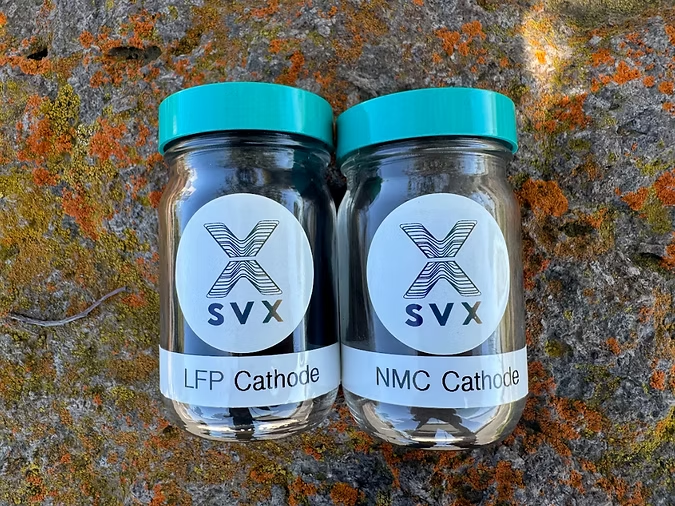
Improved Cathode Developed by Sylvatex: Photo Provided by Sylvatex

Improving the production of lithium-ion batteries during production is important, as it provides a high recovery at the battery’s end of life. An end-of-life process that recovers most of the materials is crucial as these batteries contain materials such as lithium, nickel, cobalt, and manganese, which could all have a second useful life. Not only are these materials valuable for the battery industry, but are classified as crucial materials, emphasizing their importance to both the US economy and national security. Along with the economic advantages of recycling comes the reduced fear of problematic disposal of batteries and potentially hazardous results. The EPA has clarified that mishandled end-of-life batteries could catch fire or explode.

 It is worth noting that no matter where the battery is produced or through which process, it will inevitably be better than no battery at all. Electric vehicles are unquestionably better than their counterparts. However, that does not mean that improving production and recycling is unnecessary. Instead, it will only become more necessary as the uses of lithium-ion batteries continue to expand.

Buy JNews
ADVERTISEMENT
From The Energy Pioneer New memberships opening April 15, 2026

Meet EP Investing — the platform behind the stories.

1,300+ companies · 350+ investors · 47+ grants

Visit EP Investing →
ShareTweetShare
Otto Gunderson

Otto Gunderson

Otto Gunderson has been working in clean energy for the last 7 years, with the last two being spent split between South America, Africa, and Southeast Asia, reporting on the transition to clean energy. After traveling and writing for two years, he founded The Energy Pioneer to create a news outlet with a global approach to clean energy journalism. He particularly enjoys writing about entrepreneurship, investment, and innovations that are contributing to greenhouse gas reduction and clean energy development.

Related Posts

Decarbonizing Africa’s Road Passenger Transport
Africa

Decarbonizing Africa’s Road Passenger Transport

March 3, 2026
Green Hydrogen in Tunisia: Ambitious Energy Strategy amidst Implementation Challenges
Africa

Green Hydrogen in Tunisia: Ambitious Energy Strategy amidst Implementation Challenges

February 13, 2026
The Players Driving Africa’s Decentralized Energy Revolution
Africa

The Players Driving Africa’s Decentralized Energy Revolution

February 2, 2026
South Africa’s Exciting Clean Tech Startups
Africa

South Africa’s Exciting Clean Tech Startups

January 15, 2026
3 Climate-Tech Innovators Powering Africa’s Agriculture
Africa

3 Climate-Tech Innovators Powering Africa’s Agriculture

January 5, 2026
Morocco Bets on Solar Desalination to Tackle Water Stress
Africa

Morocco Bets on Solar Desalination to Tackle Water Stress

December 29, 2025
Next Post
The Potential of Agrivoltaics

The Potential of Agrivoltaics

Takeaways from Uganda’s Updated Energy Policy

Takeaways from Uganda's Updated Energy Policy

Popular Stories

  • The Financiers and Startups Decarbonizing Africa’s ‘Anti-Fossil’ Fuel Nation

    The Financiers and Startups Decarbonizing Africa’s ‘Anti-Fossil’ Fuel Nation

    0 shares
    Share 0 Tweet 0
  • Decarbonizing Africa’s Road Passenger Transport

    0 shares
    Share 0 Tweet 0
  • Green Hydrogen in Tunisia: Ambitious Energy Strategy amidst Implementation Challenges

    0 shares
    Share 0 Tweet 0
  • South African Pension Funds Outshine $13 Billion Green Transition Funds

    0 shares
    Share 0 Tweet 0
  • Unlocking Africa’s Renewable Potential with Battery Storage

    0 shares
    Share 0 Tweet 0

Actionable Info

🔒 NEW MEMBERSHIPS OPEN APRIL 15
EP
EP Investing Climate Finance Intelligence

Our journalism is made possible by readers like you.

The founders, investors, and professionals reading The Energy Pioneer use EP Investing to find capital, partners, and opportunities.

1300+Companies
350+Investors
45+Grants
Explore EP Investing →

The Energy Pioneer

The Energy Pioneer covers the global energy transition — from clean tech and green finance to policy and renewable energy.

Recent Posts

  • Decarbonizing Africa’s Road Passenger Transport
  • Unlocking Africa’s Renewable Potential with Battery Storage
  • The Financiers and Startups Decarbonizing Africa’s ‘Anti-Fossil’ Fuel Nation

Categories

  • Africa
  • Asia
  • Battery Storage
  • Carbon Markets
  • Clean Tech
  • Crash Course
  • Electric Vehicles
  • Energy Efficiency
  • Features
  • Fossil Fuels
  • Green Finance
  • Green Hydrogen
  • Hydrogen
  • Hydropower
  • Latin America
  • North America
  • Nuclear
  • Policy
  • Private Financing
  • Public Financing
  • Renewable Energy
  • Smart Grid
  • Solar
  • West Asia

Quick Links

  • Home

© 2026 The Energy Pioneer | All Rights Reserved. |

No Result
View All Result
  • Home
  • Clean Tech
    • Electric Vehicles
    • Energy Efficiency
    • Green Hydrogen
    • Smart Grid
    • Battery Storage
  • Green Finance
    • Public Financing
    • Private Financing
    • Carbon Markets
  • Policy
  • Renewable Energy
    • Wind
    • Solar
    • Hydropower
    • Nuclear
    • Hydrogen
    • Fossil Fuels
    • Geothermal
  • Regions
    • Africa
    • Asia
    • Europe
    • North America
    • Latin America
    • West Asia
  • Features
  • Who We Are
    • About Us
    • EP Investing
    • Contact Us

© 2026 The Energy Pioneer | All Rights Reserved. |