
With the continued adoption of electric vehicles and the falling cost of traditional forms of clean energy, many aspects of the transition to a cleaner economy are well underway. However, industries considered hard to decarbonize, such as mining, steel, cement, and aviation, still face significant challenges. For many of these industries, green hydrogen will be a key replacement for traditional power sources such as coal, oil, or natural gas. Unfortunately, the cost of green hydrogen is currently significantly higher than that of other forms of hydrogen. If green hydrogen is able to scale production and reduce cost, it will be one of the main drivers of decarbonization. If not, industries will be faced with difficult decisions between costs and carbon emissions.
The current cost of green hydrogen ranges between $4.5 and $12 per kilogram, representing a significant “green premium” over other forms of hydrogen. Grey hydrogen, the result of producing hydrogen with natural gas, is between $.98 and $2.93 per kg. Even blue hydrogen, which uses fossil fuels but includes carbon capture, ranges from $1.8 and $4.7 per kilogram. That level of green premium, almost a 400% cost increase between grey and green, makes adopting green hydrogen exceedingly expensive and difficult without government involvement, such as subsidies or carbon tax.
While the cost differences appear daunting, there are strong reasons for optimism in the industry. A report by BloombergNEF found that after 2030, green hydrogen will be 18% cheaper than gray hydrogen in several major economies. These include China, India, Brazil, Spain, and Sweden. There are even greater causes for optimism when talking about new grey hydrogen plants. In eight of the 28 markets studied, new green hydrogen plants were more efficient than gray hydrogen.
Meet EP Investing — capital discovery for the energy transition.
The Biden Administration took a particular interest in reducing the cost of hydrogen through initiatives such as Hydrogen Shot. The goal of the Hydrogen Shot initiative was to reduce the cost of hydrogen to $1 per kilogram by 2031. The principal aims of reducing green hydrogen costs by 80% were that hydrogen could be used in hard-to-decarbonize industries, grow overall consumption of green hydrogen, reduce emissions, and create 700,000 jobs and $140 billion in revenue by 2030.
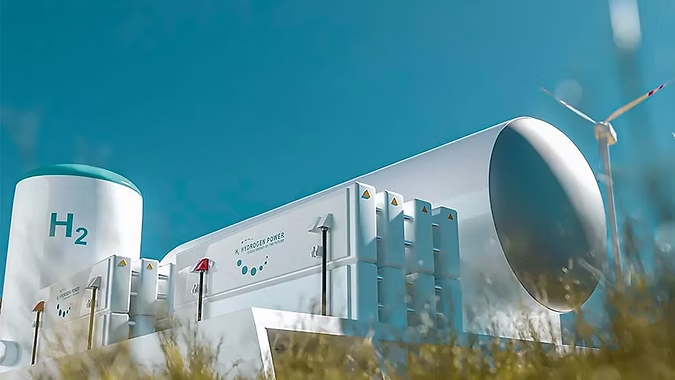
Jason Mortimer, Senior Vice President of Global Commercial at Electric Hydrogen Co, emphasized that the production scalability of electrolyzers will be critical in making green hydrogen affordable. The process of building electrolyzers to create green hydrogen in the past has been both expensive and complex, but by creating a 100 MW plant, Electric Hydrogen can significantly reduce cost while allowing for easier assembly and commissioning. Because the individual components are fabricated in the factory, little to no welding of custom field work is required, creating what Mortimer referred to as a “very large set of legos”. These electrolyzers reduce both cost and complexity, allowing for cheaper hydrogen as well as easier installation.
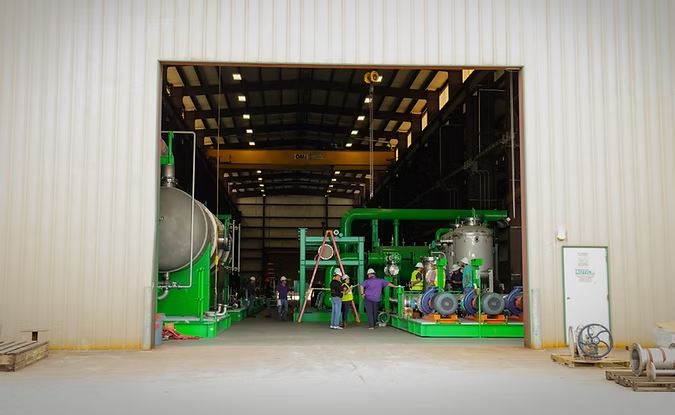
Much like the renewable energy and EV markets, start-ups continue to play a central role in innovation. Dr. Jonah Erlebacher, founder and Chief Technology Officer at Etch, has been working on producing green hydrogen from natural gas. By not requiring traditional inputs for green hydrogen creation, such as vast amounts of water, wind power, or solar, Etch can create hydrogen for remote, hard-to-decarbonize sectors. Dr. Erlebacher explained that one of the main challenges the industry has faced is moving hydrogen from production to the point of use. However, this can be reduced by using existing methods of transporting natural gas, allowing for an easier transportation of green hydrogen without resulting in carbon emissions.
While developing new technologies to make green hydrogen is essential, finding ways to make the process both economic and scalable is equally important. Etch CEO Katie Ellet explained that there were several parts of this new hydrogen decarbonization process that particularly interested her. One is the existing infrastructure that Etch can use to transport and create hydrogen. As Ellet explained, any place that currently has access to natural gas lines can now create hydrogen with no carbon emissions. Ellet outlined how the combination of pre-combustion sequestration, separating carbon from hydrogen in the early stage, along with the availability of the feedstock, natural gas, gives Etch confidence in their scalability.

Outside of the US, Latin America is well situated to enter the hydrogen market, and significant inroads have already been made in Uruguay and Chile. This is due, in large part, to the vast amount of cheap electricity provided by hydropower, solar, and wind projects in certain Latin American countries. Combined with available land and large markets in Argentina, Brazil, and other countries, the region is well-suited to be a green hydrogen leader. In conversation with Fernando Schaich, Founder of SEG Ingeniería, a leader in the green hydrogen market in Uruguay, he spoke about what steps the country has taken to become a leader in the industry.
Uruguay has many components required to develop the hydrogen industry, starting with complimentary sun and wind resources so that electrolyzers can be utilized at a high capacity. Secondly, Uruguay’s political and economic stability encourage capital investment in the country. As Schaich explained, this is partly the result of the easy access to decision makers by citizens, which allows for strong dialogue between policymakers and industries. Interestingly, the relatively limited size of the market in comparison to its neighbors is its most obvious limitation. However, the technological and practical progress in developing green hydrogen can serve as a roadmap for neighboring countries in the region.
Finally, creating new uses for the product can help encourage the adoption of green hydrogen. A perfect example of this is the use of hydrogen in transportation, particularly trucking. Matt Weig, Platform Leader at Nuvera Fuel Cells, described how combining hydrogen fuel cells with batteries has allowed areas in the transportation sector, notably mid-range trucking, to become cost-effective with traditional diesel engines. As outlined in a report from the U.S. Department of Energy, hydrogen can help curb the emissions resulting from heavy-duty vehicles, which make up 20% of transportation emissions.
While green hydrogen certainly faces challenges ahead, the reasons for optimism both in the US and in other markets make it one of the most exciting technologies for the green economy. Strong government initiatives such as Hydrogen Shot, rapid deployment of large electrolyzers, complimentary production of hydrogen from natural gas, and the uses of hydrogen in new products will all lead to rising usage and falling costs.
Meet EP Investing — the platform behind the stories.
1,300+ companies · 350+ investors · 47+ grants