

In Zimbabwe, a hybrid car battery comes with a hefty price tag, deterring many from embracing these eco-friendly vehicles.
Electric vehicles (EVs) are even rarer, with only occasional sightings on Zimbabwe’s roads. Ironically, Zimbabwe and other African nations are rich in raw materials essential for electric vehicle battery production, creating a paradox between their resource abundance and the challenges of adoption.
It is not uncommon to hear motor mechanics in Zimbabwe saying, “I don’t do hybrids or electric cars.” This means that they do not repair hybrid cars or electric vehicles. Finding spares or servicing a hybrid or electric vehicle in the country remains one of the biggest challenges. However, many people in Zimbabwe are now slowly embracing hybrid cars, particularly small compact vehicles like the Toyota Aqua, Toyota Prius, and Honda Fit, as well as subcompact crossover SUVs like the Honda Vezel.
Meet EP Investing — capital discovery for the energy transition.
“In college, I was trained how to fix manual transmission cars. Then came fuel-powered automatic transmission vehicles; I had to teach myself how to fix those cars. As for hybrid cars, I’m still learning, mostly through YouTube videos. And for electric cars, well, I’m not even sure whether they need a mechanic or an electrician to fix them,” Nicky Ziweya, a mechanic in Zimbabwe’s capital, Harare, says with a chuckle.
Zimbabwean companies like Carnostics and Autodiagnostics are now providing diagnostic and repair services for hybrid and electric vehicles. However, new electric vehicles are still expensive for the Zimbabwean market, which still relies heavily on second-hand cars, mostly from Japan. Worse still, the electricity grid is facing serious challenges, with some parts of Zimbabwe experiencing long hours—up to 18 hours—of daily electricity outages. As such, Zimbabwe needs to build solar-powered charging stations for electric vehicles. Currently, there are approximately 3,000 electric vehicles in Zimbabwe, and charging stations are operational only in major cities such as Mutare, Bulawayo, and Harare.
“The government needs to build proper infrastructure to support the adoption of electric cars. We need more charging stations in all parts of the country,” says Silas Nemutenzi, a resident in Zimbabwe’s border city of Mutare.
However, in an effort to boost the adoption of eco-friendly cars, the Zimbabwe government has reduced the import duty on electric vehicles starting in January this year.

This intervention is outlined in the country’s 2025 national budget, which was presented by Zimbabwe’s Finance Minister, Mthuli Ncube, late last year. Though it is still relatively high, the import duty on electric vehicles has now been reduced from 40 percent to 25 percent.
“Cognisant of the need to promote the use of eco-friendly vehicles, which will result in reduced carbon emissions, I propose to reduce customs duty on electric motor vehicles, with effect from 1 January 2025,” said Ncube while presenting the national budget.
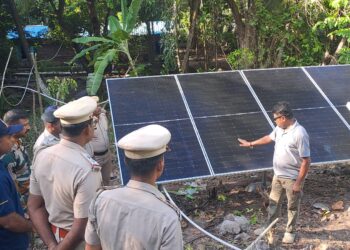
At the same time, the government also extended duty rebates for equipment used to establish solar-powered electric vehicle charging stations in different parts of Zimbabwe. With the electricity situation in Zimbabwe still subdued and deterring many people from investing in electric vehicles, the rebate on solar-powered electric vehicle charging stations will go a long way in driving the EV revolution in the country.
However, there is progress in EVs in other countries in Africa. According to recent research published by The Energy for Growth Hub—a global think tank advancing data-driven solutions to end energy poverty—12 African countries have demonstrated high readiness for electric vehicle adoption.
“These nations have shown promising progress in enabling policies, grid and charging infrastructure, and market conditions that support the transition to electric mobility,” reads part of the study by clean energy experts and researchers Rose Mutiso, Hamna Tariq, and Daniel Johansson.
These countries include Seychelles, Morocco, Mauritius, South Africa, Tunisia, Egypt, Rwanda, Cabo Verde, Ethiopia, Kenya, Ghana, and Namibia.
“In conclusion, while Africa faces unique challenges in EV adoption, several countries are making significant strides. The continent’s diverse landscape of EV readiness and potential impact underscores the need for tailored strategies and policies to drive the electric mobility revolution across Africa,” the three experts write.
On the other hand, Adam Elhiraika, director for North Africa at the UN Economic Commission for Africa, recently wrote that with nearly 30 percent of the world’s reserves of minerals critical to the global energy transition, such as cobalt, lithium, and nickel, Africa is uniquely positioned to benefit from the rapidly rising global demand for EVs and other low-carbon technologies.
Several countries in Africa have significant mineral reserves crucial for electric vehicle production. These countries include the Democratic Republic of Congo, which has cobalt; Zambia, which has copper; and Mozambique and Madagascar, which have graphite, while Zimbabwe, Namibia, and Ghana have lithium resources.
“When it comes to cobalt, Africa produces over 50 percent of global reserves and about 70 percent of quantities traded,” Elhiraika says.
However, despite over 20 African countries holding key pieces of the e-mobility puzzle, Elhiraika says, no country can thrive in isolation. Infrastructure gaps—particularly in electricity generation, storage, and charging networks—remain a challenge, he adds.
“Nonetheless, African consumers are already embracing smaller EVs that offer faster returns on investment and flexible charging. This lays down a strong foundation for broader EV adoption,” he says.
Elhiraika suggests that with strategic collaboration, African countries can navigate global competition, stabilize markets, prevent resource exploitation and instability, and ensure the continent reaps the full benefits of its natural wealth.
But globally, the demand for electric vehicles is growing. According to data from Virta—a global pioneer in developing smart electric vehicle charging services—there was a significant leap forward in electric vehicle sales in 2021, as they doubled to 6.75 million from 2020. In one week alone in 2021, Virta says, the number of EVs sold was higher than those sold in the whole year of 2012.
In 2022, EV sales surpassed 10 million, increasing the number of electric cars on the global roads to 26 million. This translates to a 60 percent rise from 2021. Last year, a total of 17 million electric cars were sold globally, Virta reports.
However, it remains to be seen whether Africa will tap into the booming global market for EVs and other low-carbon technologies. For now, it seems, gears are shifting, and the market is now revving up for rapid expansion of EVs on the continent.
Meet EP Investing — the platform behind the stories.
1,300+ companies · 350+ investors · 47+ grants