


After nearly ten hours on the road from Cairo, I arrived at Siwa Oasis, located in Egypt’s Western Desert near the Libyan border. I came filled with expectations about the transformation this isolated oasis has undergone since it was flooded with green energy. Solar power now illuminates homes that, hundreds of years ago, were constructed using sustainable techniques and natural thermal insulation. Meanwhile, its once-barren desert lands have become lush stretches of date and olive trees.
During the journey, I spoke with residents about the changes accompanying this transformation. This included researchers’ warnings about the imminent threat of the oasis sinking due to the continuously expanding lakes in its center, resulting from increasing amounts of irrigation water.
The “Shaab Al-Emarat” Solar Plant
Administratively, Siwa is part of the Matrouh Governorate on Egypt’s northern coast and is home to approximately 34,000 people.
Meet EP Investing — capital discovery for the energy transition.
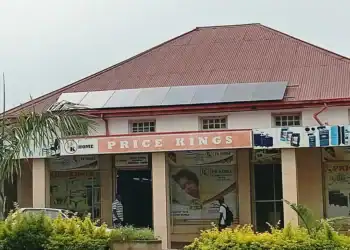
In March 2015, the “Shaab Al-Emarat” solar power station was installed with a capacity of 10 megawatts and a cost of $25 million. It was part of the UAE-funded grant program to supply electricity to rural areas, remote villages, and communities not connected to Egypt’s national grid. The plant supplies 30% of Siwa City’s and its surrounding areas’ power capacity.
It helps avoid the emission of approximately 14,000 tons of carbon dioxide annually and saves around 5 million liters of diesel fuel per year. The station consists of 74,640 thin-film “micromorph” solar panels that safely supply more than 6,000 homes in Siwa and nearby villages with clean electricity.
Abdel Rahman Omar, a local working in the tourism sector, explained: “Electricity is now more available than before, with only occasional outages in the evening due to the lack of batteries at the solar power station.”
He described how the solar plant doesn’t power homes directly but connects to the general power station, adding, “We need to recharge our electricity cards weekly to get power in our homes. During winter, costs range from 150 to 300 Egyptian pounds per week (equivalent to $3–6), but the amount doubles in summer due to the heavy use of air conditioning as temperatures can exceed 40°C.”
Abdel Rahman regretfully notes that in the past, houses in the oasis were built from kershef (a local mix of salt rock and mud) that provided natural insulation and adapted to the climate, eliminating the need for heating or cooling devices. “Unfortunately,” he says, “most houses now are built with bricks and cement.”
He justifies this shift: “Many residents couldn’t afford to restore and maintain their old kershef houses to prevent roof collapses during rainfall, and building a new heritage-style house is also costly because construction takes up to six months for a single-story house, which increases labor costs. We didn’t think long-term—we didn’t realize that by sticking to traditional methods, we could have saved on rising electricity bills each year.”
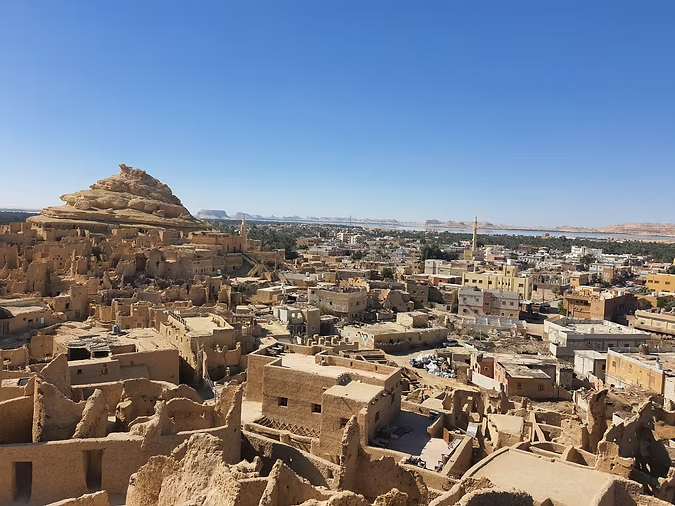
The process of building kershef houses depends on salt rock extracted from local salt lakes and mud that is left to ferment. Construction proceeds in stages, allowing the mud to dry before adding another layer, and continues until the structure is complete. Abdel Rahman adds: “In the past, social customs made construction cost-free since community members would cooperate to build a house for a man about to get married as a gesture of goodwill—but that social system has now changed.”
Groundwater Risks
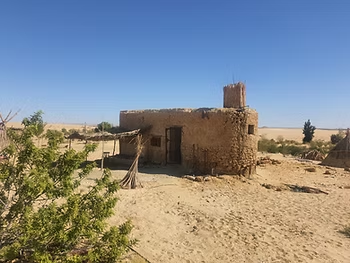
Yet, as the transformation in Siwa accelerates, its hidden environmental costs are becoming harder to ignore.
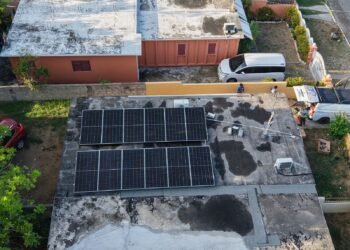
Alongside the Shaab Al-Emarat plant, hundreds of investors have installed solar panels on their farms to pump groundwater from wells and use it to reclaim thousands of acres of desert land.
According to a research paper, the cultivated area has expanded from 2,000 acres in 1960 to more than 30,000 acres by 2024.
Youssef Ramez, a researcher and co-owner of Haj Moulien Farm in Siwa—which spans 15 acres and operates entirely on solar power—said they installed their solar system four years ago for 120,000 Egyptian pounds (equivalent to approximately $2,500), producing 8 kilowatts per hour. It’s used for pumping groundwater, with another 2-kilowatt unit installed to light and power farm buildings. He noted that these panels saved them diesel costs and helped them adopt environmentally friendly, sustainable farming practices—especially with the use of drip irrigation to conserve water.
Irrigation system inside Haj Molien’s farm in Siwa – Photo: Rahma Diaa
Youssef co-authored a research paper titled “Fossil Water and Renewable Energy Capitalism: Land, Groundwater, and Solar Power in Egypt’s Siwa Oasis”, published in June 2025 in collaboration with researcher Amr Khairy through the Transnational Institute. The paper warned that “rapid transformation has increased soil salinity, a key indicator of soil degradation, and that the area of salt lakes within the oasis expanded by 58% between 1990 and 2021, leading to the submersion of farmland and homes.
Youssef explained that diesel pumps in the past naturally limited extraction due to high fuel costs, keeping withdrawal rates within reasonable limits. He concluded: “The problem isn’t solar energy itself, of course, but the misuse of it.”
The paper added that this flooding threatens not only agricultural land but also residential structures and the oasis’s architectural heritage. It endangers agricultural biodiversity: Siwa was once famous for its unique varieties of date palms and olive trees, registered under the Globally Important Agricultural Heritage Systems (GIAHS), but these native varieties are declining in favor of fast-growing commercial crops for export.
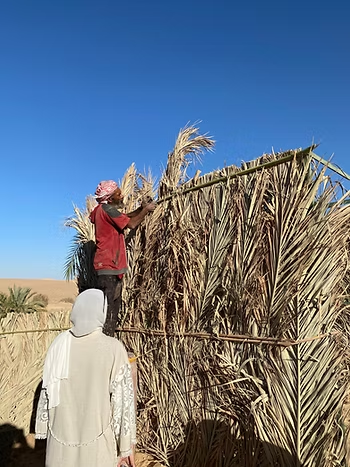
According to Mohamed Omran, a resident of the oasis and a member of the Siwa Sons Association for Tourism Services and Environmental Protection, solar energy has made a remarkable difference in reducing power cuts, especially amid the recent wave of urban expansion. He explained that the shift to solar energy has driven significant growth in agriculture, saved farmers substantial financial costs, and created numerous job opportunities.
Omran noted that the issue of random well drilling has persisted for over three decades, resulting in severe agricultural drainage problems that have affected olive cultivation and led to a decline in productivity. With the arrival of outside investors, new varieties of olive trees were introduced for export purposes.
He added that the government intervened in the early 2000s to address the problem by shutting down many old shallow wells and drilling a few new deep wells instead. Currently, another project, launched three years ago, is underway to modernize and improve the agricultural irrigation system in Siwa.
Governmental Responses and Future Outlook
The Ministry of Water Resources and Irrigation, in collaboration with the Armed Forces Engineering Authority and researchers from Cairo University, initiated a project to enhance Siwa’s irrigation and drainage systems. The aim is to restore the oasis’s environmental balance by managing water extraction and drainage levels, addressing groundwater over-pumping, and mitigating salinity issues in the primary irrigation aquifer.
This development plan involves constructing and maintaining lake embankments, drilling deep wells for freshwater from the Nubian Sandstone Aquifer, and closing numerous shallow wells responsible for overextraction. Efforts also include reinforcing embankments around Siwa Lake to reduce damage from high water levels and excavating a 33.7 km canal to redirect agricultural drainage water to Ain Al-Ganbi depression. Additionally, a lifting station is being built to transfer drainage water through a 5.7 km canal to the central open canal.
A 2020 study recommends increasing environmental awareness among Siwa residents through a participatory approach that involves locals, authorities, and institutions at all levels. It also called for new regulations for land reclamation projects that could negatively affect the oasis ecosystem, imposing strict controls on well drilling, licensing each well, improving irrigation efficiency, and upgrading the drainage network.
Solar energy holds immense potential to transform life in the oasis by effectively harnessing its abundant natural resources. However, this potential can only be realized if stringent regulations are established to prevent misuse, ensuring that the intended benefits are not undermined or reversed.
Meet EP Investing — the platform behind the stories.
1,300+ companies · 350+ investors · 47+ grants