
Green Islamic finance is an emerging form of ethical investment that aligns Islamic principles with the financing of environmentally sustainable projects. As global demand for climate solutions grows, it is becoming an important mechanism for mobilizing capital across Islamic markets toward achieving long-term sustainability goals.
Islamic finance is based on Shariah-compliant economic activities and has existed since the mid 7th century; however, these principles were only adopted by financial institutions in the 1970s, when they were formalised into modern banking practices. The concept of ‘Green Islamic Finance’ emerged around the same time as the Paris Agreement climate agreement and the UN Sustainable Development Goals (SDGs).
It operates through financial institutions, investment markets, and governments, and is gaining popularity across Asia, the Middle East, and North Africa. The financial framework operates in accordance with Shariah law; the moral and legal framework derived from the Quran and Sunnah, the primary sacred sources of Islamic law. These laws prohibit interest (riba), gambling (maysir), excessive uncertainty (gharar), and investments in forbidden industries such as alcohol and pornography.
Meet EP Investing — capital discovery for the energy transition.
Shariah-compliant finance also emphasizes social responsibility, ethical investment, and risk-sharing. Instruments like green zakat (charitable giving directed to environmentally beneficial projects) and green waqf (endowment funds used for sustainable and public-interest initiatives) illustrate how Islamic finance can channel resources toward both environmental and social outcomes.
As the global climate finance gap widens and the need for large-scale investment to support the transition to renewable energy and achieve carbon neutrality by 2050 increases, green Islamic finance has the potential to mobilize significant capital for sustainable development. The global Islamic finance industry holds approximately $5 trillion in assets, spread across sectors such as Islamic banking, sukuk (Islamic financial certificates), and investment funds, and is projected to reach $6.7 trillion by 2027, according to the Islamic Finance Development Report by the London Stock Exchange Group (LSEG). These assets are primarily concentrated in regions with established Islamic finance markets, including the Gulf Cooperation Council (GCC) countries, Southeast Asia, and parts of Africa.
Estimates suggest that directing just 5% of these assets toward renewable energy could inject around $400 billion into climate action.
“Islamic finance is a functioning alternative financial system with built-in ethical screening, asset-backing requirements, and risk-sharing structures,” said Tariq Al-Olaimy, Islamic Finance Advisor for the Ummah For Earth Project at Greenpeace Middle East and North Africa (MENA). Ummah for Earth Alliance is a global Islamic faith-based network working to advance climate action.

Al-Olaimy explains that “these structures naturally align with the capital-intensive, asset-backed nature of renewable energy projects, providing an opportunity to finance a sustainable energy transition while adhering to moral and ethical standards.” He emphasized that the most immediate opportunity lies in bridging the climate finance gap, especially in Muslim-majority countries and emerging markets most vulnerable to climate impacts.
Green sukuk, like green bonds, are meant to fund environmentally friendly projects while complying with Shariah principles and can fund clean transport, sustainable agriculture, and large-scale renewable energy projects while ensuring strict environmental accountability.
Global Case Studies
Islamic Finance and Renewable Energy report, published by Greenpeace MENA and the Global Ethical Finance Initiative examines how several countries are increasingly supporting this approach through policy action. Malaysia, which accounts for nearly half of the global Islamic finance market share, has adopted a maqasid-driven approach, integrating green finance and renewable energy into its Twelfth Malaysia Plan (2021–2025). In October 2023, the Securities Commission, a Malaysian body responsible for regulating and developing the capital market, issued the Maqasid Al-Shariah Guidance for the Islamic Capital Market, linking Shariah objectives directly to sustainability outcomes.
Saudi Arabia developed its own Green Financing Framework in 2021 in line with International Capital Market Association’s (ICMA) Green Bond Principles, facilitating green bond and sukuk issuance.
The report mentioned that this approach helped Saudi Arabia to reduce emissions by about 1.89 million tonnes annually through 10 million smart meters, which enables efficient energy use, and avoided 7.9 million tonnes of CO2 per year via 3,587 MW of renewable integration. It also delivered energy savings of around 1% of national consumption, improving efficiency and energy security.
It also created employment opportunities in the manufacturing, installation, and maintenance of smart meters, while expanding electricity access, benefiting around 34 million people, empowering consumers, and supporting economic diversification.
The UAE Central Bank released its High-Level Shariah Authorities Guiding Principles for Islamic Sustainable Finance at COP28 in November 2023, mandating all Islamic finance providers under its supervision to develop growth plans for sustainable finance products.
Indonesia remains the world’s first and largest sovereign issuer of green sukuk, raising over $7.8 billion by 2024 to finance renewable energy, sustainable transport, and green buildings.
Al-Olaimy noted that green Islamic assets are growing faster than conventional Islamic finance assets, and that the regulatory infrastructure the market has long needed is finally beginning to take shape.
Limitations in Green Islamic Finance
He acknowledged, however, that the sector faces challenges, including the lack of standardization, a shortage of skilled professionals trained in climate risk assessment, limited market development, and evolving methods for measuring environmental impact. Knowledge fragmentation also remains a barrier, as scholars of Islamic jurisprudence, climate scientists, and finance professionals often work in isolation, limiting coordinated innovation.
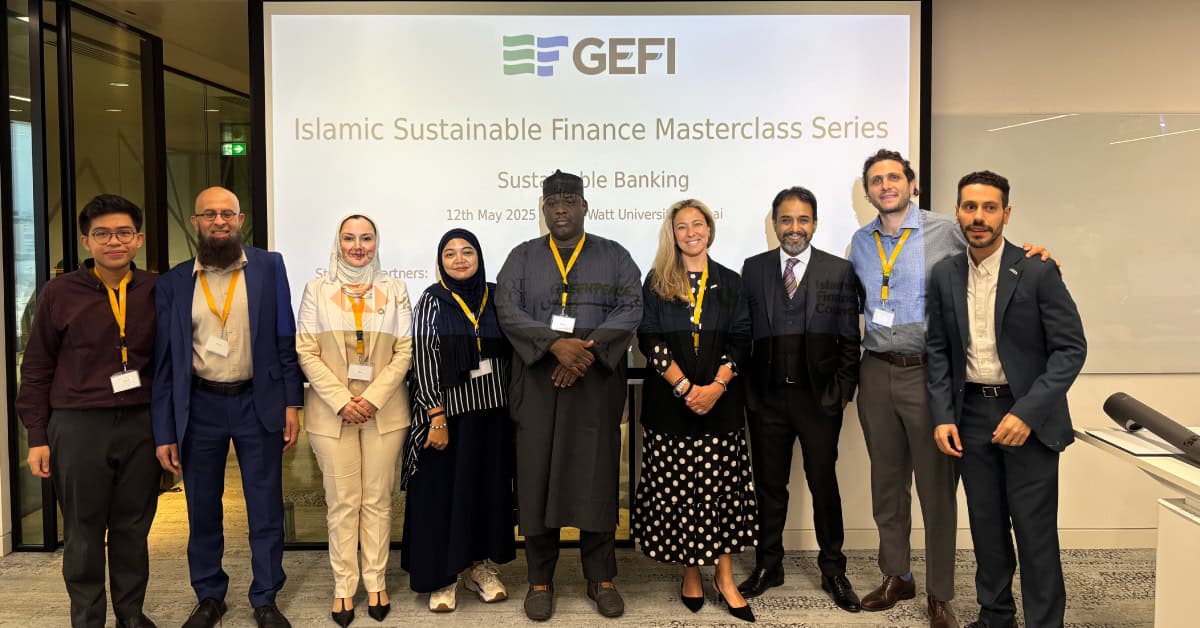
Civil society organizations, such as Greenpeace MENA and faith-based alliances like the Ummah for Earth Alliance, play a crucial role in bridging these gaps.
“We connect Shariah scholars, finance professionals, climate scientists, and affected communities, ensuring that investments align with Islamic principles rather than using the ‘green’ label purely as a marketing tool,” said Al-Olaimy.
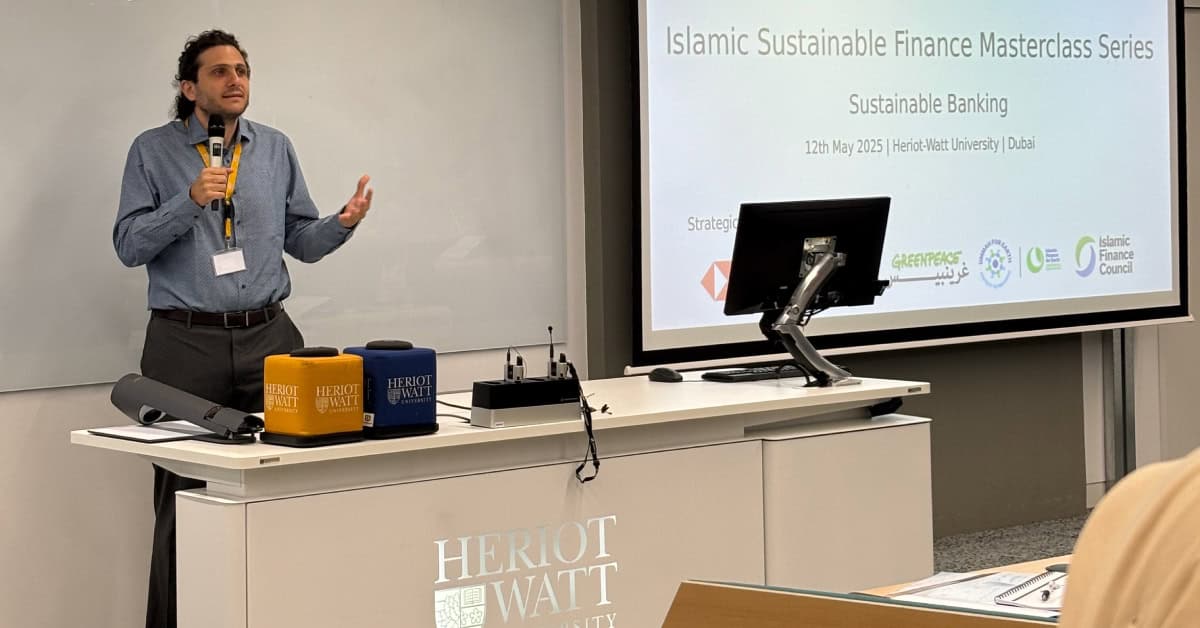
He mentioned that the Tayyib Fellowship, launching in 2026 in partnership with GEFI, will bring together around 40 practitioners, Shariah scholars, and sustainability professionals to train leaders capable of advocating for finance systems that prioritize both people and planet.
Scaling Green Sukuk Investment
Al-Olaimy said scaling up sustainable Islamic finance requires clear, globally recognised Shariah-compliant frameworks for green and SDG-linked sukuk to reduce uncertainty and costs.
He added that financial institutions must integrate sustainability into their core strategies, set measurable green targets, and improve transparency through regular reporting.
He stressed that strong market demand already exists for ethical financial products aligned with sustainability goals.
Engineer Jamal Yousef Al-Nawaisah, Chairman of the Renewable Energy and Environment Investment Association in Jordan, said green sukuk represent a key intersection between asset-backed Islamic finance and sustainable financing for environmental projects, making them a powerful tool to accelerate investment in renewable energy.
He explained that linking financing to tangible assets boosts investor confidence, while attracting both Shariah-compliant investors and those focused on sustainability. He added that green sukuk can help bridge the financing gap for long-term energy projects and enhance transparency by ensuring funds are tied to green investments.
Al-Nawaisah noted that solar energy projects are particularly well-suited for sukuk due to their stable cash flows and lower risk, while wind energy faces production variability and green hydrogen, although promising, remains high-risk due to limited markets and evolving technologies.
He also highlighted key challenges, including structural complexity, high issuance costs, lack of regulatory standardization across countries, limited secondary markets, and a shortage of technical expertise, especially in emerging sectors.
He called for unified standards and regulations for green sukuk, the development of new financial tools to support the energy transition, capacity building for financial institutions, stronger international partnerships, and increased awareness to attract greater investment into the sector.
Islamic Finance as a Catalyst for Low-Risk Renewable Energy Investment
Dr. Ahmed Badr, Director, Project Facilitation and Support Division at International Renewable Energy Agency (IRENA) stated that Islamic finance is highly suitable for investing in renewable energy projects, as it is based on the principle of risk-sharing, unlike conventional bank financing, which focuses on capital repayment with interest regardless of whether profits are achieved. This approach necessitates assessing all social and environmental risks associated with projects in order to mitigate them, ultimately reducing the cost of capital.
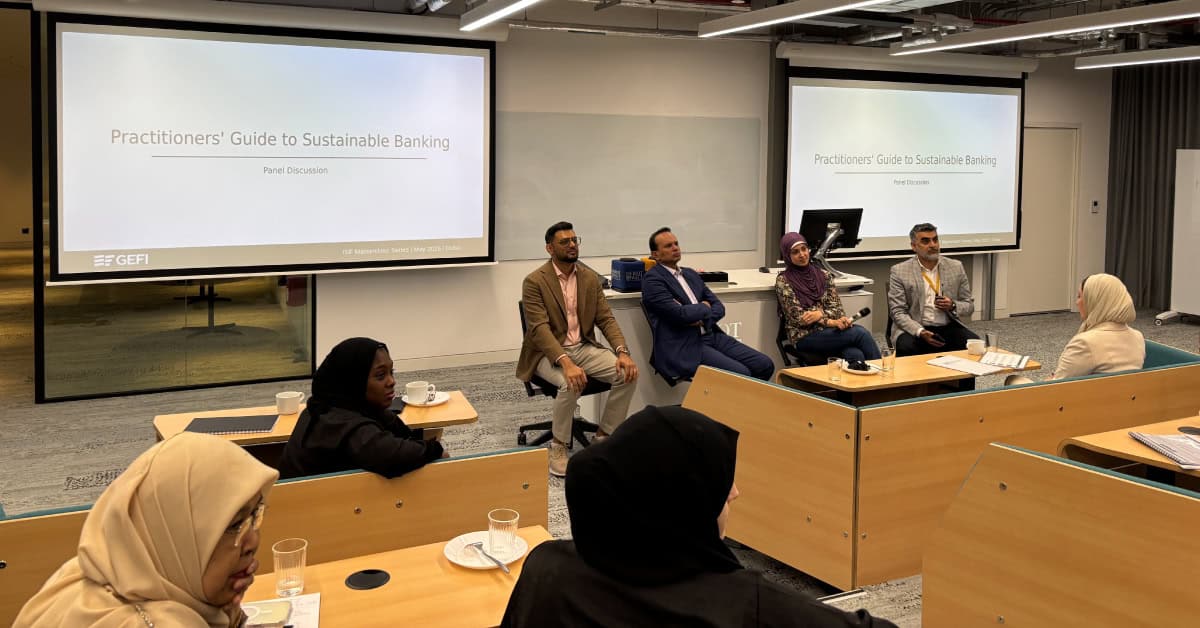
He added that predicting risks in conventional fuel projects is more difficult, which is evident under current conditions and the global rise in fuel prices. This, in turn, could contribute to the growth of green Islamic finance. Badr also agreed that investment in renewable energy projects is financially more favorable and less risky, helping to lower the cost of capital, attract more investments, and increase financing volumes.
He noted some of the main challenges including the need to integrate environmental factors into decision-making, the availability of trained human resources capable of combining expertise in Islamic finance with renewable energy investment, and the presence of supportive institutional systems.
Badr emphasized the need for large-scale awareness campaigns at the institutional level to expand green Islamic finance, highlighting that government systems in the Arab region play a significant role in raising awareness.
He further added that there is a need to develop more accessible financing tools that banks can adopt, as well as new technologies that help reduce investment risks in renewable energy projects. He pointed out that IRENA works to support countries in identifying such technologies, facilitating the energy transition and enabling better resource management.
With the right policies, awareness, and innovation, green Islamic finance can play a central role in closing the global climate finance gap and power the renewable energy transition.
Meet EP Investing — the platform behind the stories.
1,300+ companies · 350+ investors · 47+ grants