
As the third-largest economy in sub-Saharan Africa, Kenya has emerged as Africa’s leading example of anti-fossil-fuel leadership. With 90% of its grid powered by renewables, Kenya’s grid is more decarbonized than those of some wealthy European nations, including Germany, where renewables account for only 63%.
Kenya’s decarbonization
“Lots of global praise is heaped on Nordic countries as models of decarbonization. Africa is characterized as a hopeless last frontier of fossil-fuel economies. Kenya is reversing that caricature,” says Lerenten T Lelekoitien, the Deputy Director Climate Change Adaptation, at Kenya’s Ministry of Environment.
Meet EP Investing — capital discovery for the energy transition.
A mix of foreign and local expertise and financing has helped ensure that Kenya’s drive toward 100% renewable power by 2030 is achievable. “It has been all hands-on deck, a multi-hands effort towards decarbonizing Kenya’s energy”, says Lelekoitien referring to the finance, entrepreneurs and expertise that are greening Kenya’s energy pool.
Lelekoitien underscores that Kenya’s clean electricity sector is attractive to both domestic and foreign financiers, thanks to its abundant geothermal, wind, and solar resources as well as its stable green-energy regulations, a population of 53 million with rising power needs, and the potential to export excess power to its energy-stressed East African neighbors.
The money makers
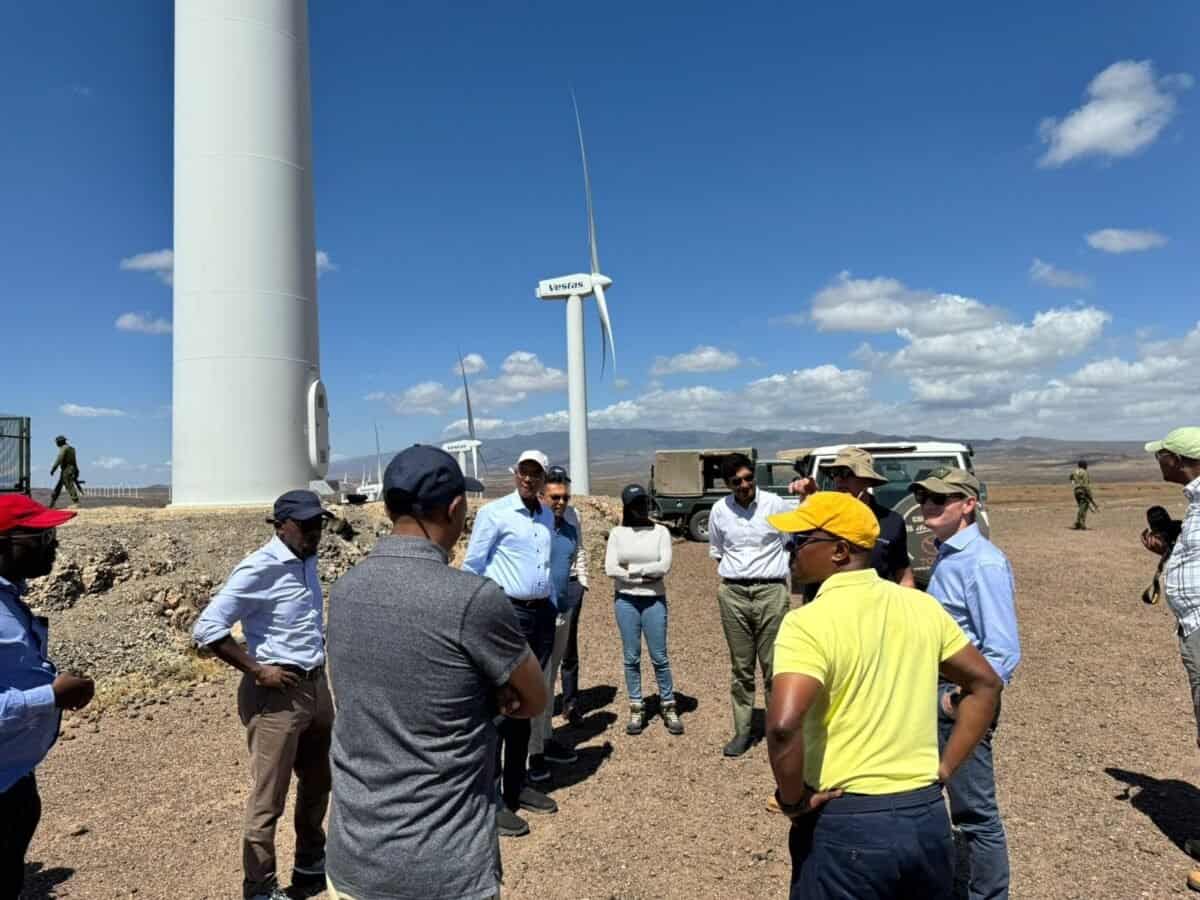
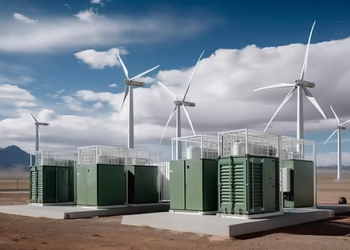
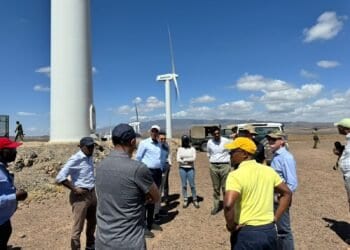
The most prominent actors are foreign equity and infrastructure investors. Chief among them are Nordic companies and agencies, including Vestas, the Danish wind turbine manufacturer, which are driving funding, infrastructure buildout, and mergers and acquisitions in Kenya’s renewable sector. Vestas’ primary involvement in Kenya was developing and supplying turbines for the Lake Turkana Wind Power project, which began operations in 2019 and has a total capacity of 310MW. This is Africa’s largest windfarm and is situated in Marsabit County, about 545 kilometers north of Nairobi. This wind farm benefits from a persistent weather phenomenon known as the Turkana jet blast. It supplies roughly 14% of the country’s electricity.
Though Vestas later sold its 12.5% equity stake to BlackRock’s Climate Finance Partnership (CFP) in early 2024, “its continuance in servicing the turbines, shows the vital role of more established global finance and expertise in pushing Kenya’s energy decarbonization faster,” says Moi Nyaka, an operations manager with Vestas Kenya. “As Kenya, we can’t do it alone”, reiterates Nyaka.
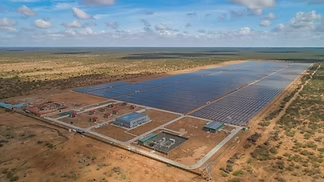
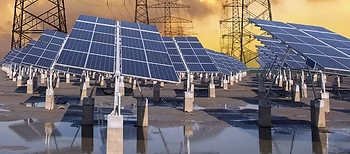
Another major project is the Garissa Solar Power Station, a 55 MW facility located in northeastern Kenya. It is the largest grid-connected solar plant in East and Central Africa. Garissa is a perfect example of what happens when domestic finance and expertise mixes with foreign equity to deepen Kenya’s green energy drive, says Lelekoitien. Although Kenya’s Rural Electrification Authority (REA) owns and operates the facility, a $136 million loan from the Export-Import Bank of China was crucial to its success. Lelekoitien emphasizes “Garissa has had a big impact – supplying electricity to 600 000 households, lowering power tariffs and further mixing Kenya’s energy pool away from hydro”.
Grassroots organizations
Beyond the large multinationals, Kenya’s green energy sector also includes small, Kenyan-owned startups that operate within and serve their local communities.
Prominent among them is MOMA Renewable Energy, a leading startup in Kenya’s vibrant green biomass ecosystem. The company converts agricultural waste and organic materials into sustainable cooking fuels and energy solutions, aimed at reducing deforestation and indoor pollution.
“We are especially proud of our production of bioethanol from organic food waste,” says cofounder, Yvonne Mose. To date MOMA has processed 1800 tons of food waste – and its sustainable cooking fuel has served over 4500 customers. To produce bioethanol, a clean, renewable fuel, MOMA ferments organic waste like spoiled fruit and vegetable residues, which are abundant across Kenya. “The biggest advantage of bioethanol is that as a cooking fuel it produces no smoke, dirty soot, or harmful indoor pollutants. This is critically important because in Kenya’s firewood, charcoal and kerosene are a big stressor on clean air and human health”, says Mose.
In addition to generating employment for the local communities, MOMA Renewable Energy helps lower greenhouse gas emissions at the grassroots level, supporting Kenya’s updated Nationally Determined Contribution (NDC), which aims for a 32% reduction in greenhouse gas emissions by 2030 as energy use and industrial activity continue to grow.
Acacia Innovations is another notable startup in Kenya’s clean cooking fuel economy. The company collects sugarcane waste from sugar factories then transforms it into an eco-friendly alternative replacement to firewood briquettes. “We are the biggest suppliers of clean cooking to schools in Kenya, with over 250 school customers in 20 counties. Our recycling technology takes care of 2300 tons of sugarcane waste annually, and enables nearly 100,000 children to get nutritious school meals cooked on smoke-free cooking fuel,” says Hudson Chitala, the general manager at Acacia Innovations.
21,500 to 23,000 Kenyans die prematurely each year due to indoor air pollution caused by firewood, charcoal and kerosene. But Kenya is undoubtedly on the right path to achieving universal clean cooking, with a significant increase in access to clean cooking fuel increasing from 10% in 2013 to 31% in 2023.
Together, these multinational investments and local grassroots initiatives show how Kenya’s decarbonization is being driven by both large-scale renewable infrastructure and from community-based clean-energy solutions.
Meet EP Investing — the platform behind the stories.
1,300+ companies · 350+ investors · 47+ grants