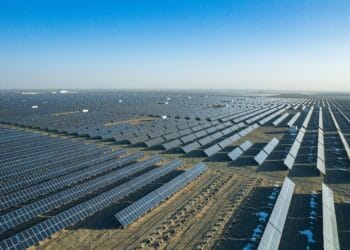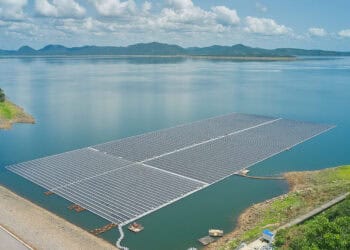

The Andaman and Nicobar Islands stretch across the Bay of Bengal, between the Indian mainland and the Strait of Malacca. Of the 836 islands and rocky outcrops that make up the archipelago, only 31 are inhabited, home to around 400,000 people. Known for their turquoise waters, dense forests and multicoloured pigeons, the islands are also home to six indigenous tribes, including the isolated Sentinelese.
Yet beyond their natural beauty, the islands have become central to India’s maritime strategy and development ambitions, placing them at the heart of a growing tension between environmental preservation, renewable energy goals and military expansion.
Development
In 2021 the Indian government announced the Great Nicobar Island Development Project, a plan to construct an international Container Transshipment Terminal, a civil and military airport, a township, and a 450 MVA gas and solar based power plant by 2050. In February of this year, the National Green Tribunal cleared the way for this ₹92,000 crore (USD $10 billion) mega-infrastructure project, citing its “strategic importance”, despite the risks posed to the islands’ biodiversity and indigenous populations.
The environmental cost of the project is stark. More than 80% of these islands are covered by forest and The Ministry of Environment, Forests, and Climate Change estimates that 850,000 trees may be cut, though independent estimates suggest the number could range anywhere from 3.2 million to 5.8 million trees.
Renewable Energy Ambitions
In January 2025, the Ministry of New and Renewable Energy (MNRE), alongside the Island Development Agency (IDA), outlined a separate ambition: to have the Andaman and Nicobar Islands, as well as the Lakshadweep islands, generate 100% renewable energy.


Most remote island nations rely on imported fossil fuels and diesel generators, making them extremely vulnerable to climate change, rising sea levels, and increasingly extreme weather events. As Sambhu Adhikari, Business Operations Executive at Bensun’s Andaman department—a pan-Indian solar power company—points out, imported fuel leads to “high electricity generation costs, dependence on global fuel prices, and the risk of supply disruptions during bad weather or any other emergencies. So when we shift to renewable energy, we reduce diesel imports and electricity costs become more stable. Therefore, more money stays within the local economy.”
Examples from elsewhere demonstrate the feasibility of this approach. El Hierro in the Canary Islands achieved 100% renewable generation in 2015, combining wind and hydropower. Within India, the island town of Diu in Gujarat generated its daytime electricity needs entirely through solar in 2025, highlighting how smaller, isolated grids can successfully transition to renewable energy.
While the Andaman and Nicobar Islands currently have 127.87 MW of installed capacity, well above the peak demand of 69 MW, system inefficiencies mean that power cuts still occur, often requiring backup diesel generators.
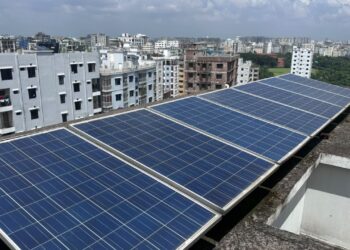
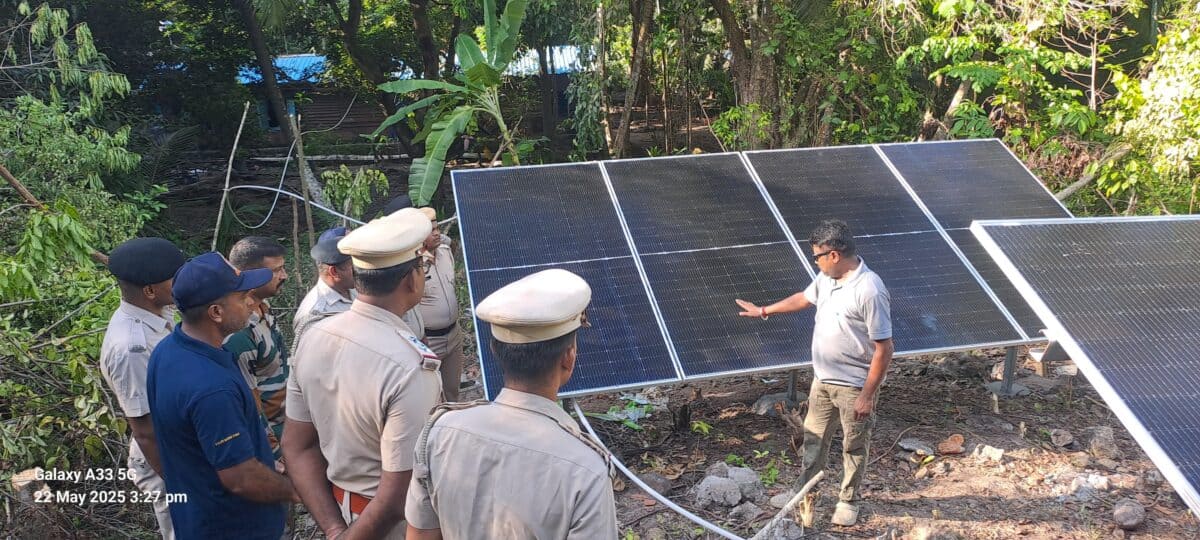
Bensun has installed 688kW in the Andaman Islands. Adhikari explains that, “Instead of only groundmounted plants we follow a decentralized and roof first approach. This reduces land pressure and environmental impact.”
Project data from Bensun shows that 624 kW of rooftop solar was installed on government buildings across the Andaman Islands, including schools, administrative offices and technical institutes. A further 64 kW has been deployed on private homes under the national PM Surya Ghar residential solar scheme that enables households to install rooftop solar panels so they can generate their own electricity and reduce reliance on the grid.
Bensun Solar Installations in the Andaman Islands
| Category | Installations | Installed Capacity | Capacity Share |
|---|---|---|---|
| Government Buildings | 79 | 624 kW | 91% |
| Residential Housing (PM Surya Ghar) | 22 | 64 kW | 9% |
| Total Program | 101 | 688 kW | 100% |
Most installations are small 2–5 kW projects, while a handful of larger public facilities host systems of 20–50 kW. Solar deployment on the islands relies on spreading generation across many rooftops, with larger government buildings acting as anchor sites for higher-capacity installations. While Bensun’s installations currently contribute roughly 0.5% of the total electricity capacity across the islands, the potential for growth is there. Adhikari himself has spoken up about the benefits of these subsidies saying “I am installing 5 kW at my home.”
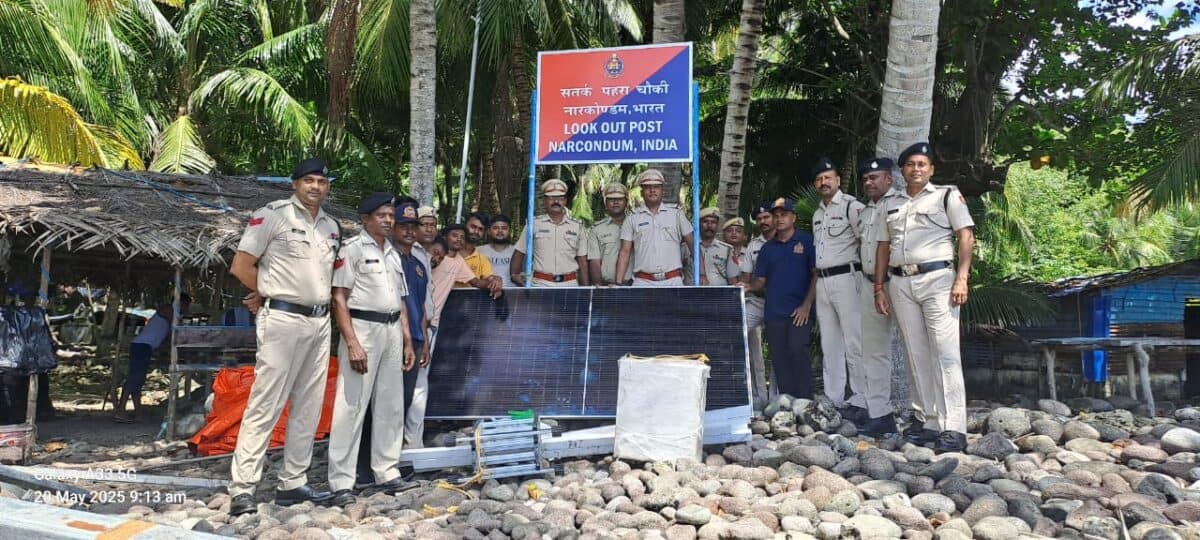
“In this island grid the challenge is not adding solar capacity. It is integrating solar in a way that maintains grid stability and ensures uninterrupted power supply. Solar plus storage combined with smart load management makes this possible”, says Adhikari.
Dr Poulomi Dutta, an interdisciplinary researcher who studied the islands’ renewable energy potential, explained that to incentivise adoption the government must continue “to give subsidies, tax reliefs… and come up with policies and regulations where [local stakeholders] should be encouraged to go for renewable energy.”
Solar is not the only solution, wind and tidal energy remain completely untapped. Given the islands’ low population density, achieving energy self-sufficiency is possible. However, Labanya Jena, Director of the Climate and Sustainability Initiative, explains, “I don’t think you can achieve 100% renewable energy unless offshore wind is commercialized, because solar alone only works eight hours a day and large-scale storage or investment would be needed for continuous supply.”
Strategic and Military Importance
While renewable energy initiatives highlight the islands’ potential for sustainable development, their strategic location continues to draw India’s security attention. As Dr. Anit Mukherjee, senior lecturer at King’s College London’s India Institute and former Indian army officer, explains:
“The Andaman and Nicobar Islands are strategically important to India. Among India’s concerns, there’s been increasing PLA activities in the Indian Ocean… China’s survey ships, submarines and surface fleets have made pretty frequent trips to the Indian Ocean in the last four or five years… while legal, these activities naturally concern India. India wants to establish platforms [on these islands] from which it can survey and monitor developments in the Indian Ocean.”
The islands’ proximity to the Strait of Malacca, through which roughly 25% of global maritime trade passes, reinforces their strategic value. The strait is especially critical for China, as 80% of its imported oil transits this route, making the islands a key element in India’s maritime posture and regional strategy.
Balancing Development and Preservation
The challenge for the Andaman and Nicobar Islands remains balancing development and conservation. As Mukherjee observes, “This whole emphasis on ‘don’t touch the island chains because it is environmentally fragile and the tribals who have lived there for thousands of years will get corrupted’ that approach has actually disadvantaged the economic interest and the development aspirations of those people who live on the islands. I think this two-pronged approach of environmentally sustainable development and economic development is perhaps the government’s response to the demand that comes from the people. But of course it also fulfills the security strategic considerations.”
At the same time, the ecological risks are impossible to ignore. With 1032 endemic species Dr. Dutta warns that “these are very sensitive islands”. She added that the island’s dependence on petrol and diesel is “harming the environment” and that “the coral reefs and the marine biodiversity are getting affected every day”.
Jena cautions, “We keep on saying that we are bringing economic development but the side effect is ecological disaster.”