
The Energy Pioneer
No Result
View All Result
  • Home
  • Clean Tech
    • Electric Vehicles
    • Battery Storage
    • Energy Efficiency
    • Green Hydrogen
    • Smart Grid
  • Renewable Energy
    • Solar
    • Fossil Fuels
    • Hydrogen
    • Hydropower
    • Nuclear
    • Wind
  • Green Finance
    • Crash Course
    • Private Financing
    • Public Financing
    • Carbon Markets
  • Policy
  • Regions
    • Africa
    • Asia
    • West Asia
    • Latin America
    • North America
    • Europe
  • Features
  • Who We Are
    • About Us
    • Contact Us
    • EP Investing
  • Home
  • Clean Tech
    • Electric Vehicles
    • Battery Storage
    • Energy Efficiency
    • Green Hydrogen
    • Smart Grid
  • Renewable Energy
    • Solar
    • Fossil Fuels
    • Hydrogen
    • Hydropower
    • Nuclear
    • Wind
  • Green Finance
    • Crash Course
    • Private Financing
    • Public Financing
    • Carbon Markets
  • Policy
  • Regions
    • Africa
    • Asia
    • West Asia
    • Latin America
    • North America
    • Europe
  • Features
  • Who We Are
    • About Us
    • Contact Us
    • EP Investing
No Result
View All Result
The Energy Pioneer
No Result
View All Result
  • Home
  • Clean Tech
  • Green Finance
  • Policy
  • Renewable Energy
  • Regions
  • Features
  • Who We Are
Home Africa

The Growth of Electric Vehicles in Ethiopia

Otto GundersonbyOtto Gunderson
March 12, 2025
Reading Time: 3 mins read

Electric vehicle adoption in Addis Ababa, Ethiopia, hopes to solve several roadblocks simultaneously. By introducing electric vehicles into the mainstream, Ethiopia aims to improve air quality, reach climate goals, create jobs, and spur economic development.

RELATED POSTS

Caught Between India’s Military Ambitions and Green Promises: The Future of the Andaman and Nicobar Islands

Decarbonizing Africa’s Road Passenger Transport

The Financiers and Startups Decarbonizing Africa’s ‘Anti-Fossil’ Fuel Nation

The attractiveness of the Ethiopian market to an electric vehicle start-up is obvious. Firstly, a population of 120 million people offers a broad customer base. This, coupled with the economic growth rate of over 7% and fewer competitors compared to other countries in the region, has made EV start-ups in Ethiopia keen to grow their business locally before expanding to neighboring countries. The influx of capital shows encouraging signs of capital investing into Ethiopia more broadly, which the government has encouraged by floating its currency for the first time.

Getting the government involved in this transition may prove to be crucial. By signing a partnership with the sovereign wealth fund of Ethiopia, Ethiopian Investment Holdings, Ethiopian EV start-up Dodai seeks to improve electric vehicle adoption as well as the infrastructure required for further development. This agreement will allow Dodai to combat one of the biggest hurdles to EV development, a lack of charging stations. This partnership will result in 100 battery swap stations being built in Addis Ababa in the following year, reaching 300 total stations across the country by 2028.
From The Energy Pioneer New memberships opening April 15, 2026

Meet EP Investing — capital discovery for the energy transition.

Visit EP Investing →

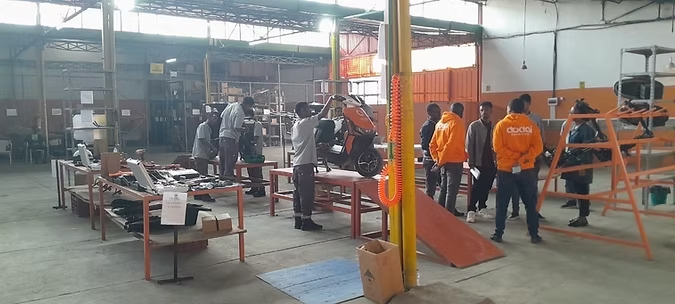
In regards to investment, Dodai has thus far received international investment totaling 7 million USD, primarily from Japanese Venture Capital. This capital will be used in several ways, first as a means of expanding the manufacturing facility in Addis Ababa to match the expanding demand. Secondly, this will go towards purchasing raw materials for further production. Lastly, it will hire new people to keep up with the accelerating business. There are several benefits to localized manufacturing, including a rapid feedback loop, which means products can be improved without unnecessary delays. This, along with providing maintenance and repairs locally, improves customer relations.

When speaking to the founder and CEO of Dodai Yuma Sasaki about the expansion, he mentioned another factor that made Ethiopia such an attractive destination for EV companies. A two-year corporate tax exemption and exemptions from import duties demonstrate the government’s commitment to encouraging a green transition. Along with these exemptions, Ethiopia has banned the import of gasoline-powered vehicles. This has thus far proved a hurdle for many potential car owners. Still, with the import of more than 100,000 electric vehicles per month and the promise of new power generation, Ethiopia has the potential to be a leader in EV adoption across the continent.

The development of the EV industry in Ethiopia offers significant advantages, apart from cleaner air and reduced emissions. This is perfectly exemplified by the Dodai mantra, “One bike equals one job.” Allowing users to enter the gig economy and access jobs in delivery and logistics is critical. Whether through partnerships with the state postal service or food delivery, the economic development provided by EVs is significant. These benefits are passed down to operators, as costs can be 90% lower than diesel alternatives. 

Buy JNews
ADVERTISEMENT

Despite challenges from supply chains and concerns regarding charging infrastructure, the EV market will continue to grow in Ethiopia, and the first country to ban the import of non-EVs is betting that the benefits are far greater than environmental.

From The Energy Pioneer New memberships opening April 15, 2026

Meet EP Investing — the platform behind the stories.

1,300+ companies · 350+ investors · 47+ grants

Visit EP Investing →
ShareTweetShare
Otto Gunderson

Otto Gunderson

Otto Gunderson has been working in clean energy for the last 7 years, with the last two being spent split between South America, Africa, and Southeast Asia, reporting on the transition to clean energy. After traveling and writing for two years, he founded The Energy Pioneer to create a news outlet with a global approach to clean energy journalism. He particularly enjoys writing about entrepreneurship, investment, and innovations that are contributing to greenhouse gas reduction and clean energy development.

Related Posts

Caught Between India’s Military Ambitions and Green Promises: The Future of the Andaman and Nicobar Islands
Renewable Energy

Caught Between India’s Military Ambitions and Green Promises: The Future of the Andaman and Nicobar Islands

March 19, 2026
Decarbonizing Africa’s Road Passenger Transport
Africa

Decarbonizing Africa’s Road Passenger Transport

March 3, 2026
The Financiers and Startups Decarbonizing Africa’s ‘Anti-Fossil’ Fuel Nation
Africa

The Financiers and Startups Decarbonizing Africa’s ‘Anti-Fossil’ Fuel Nation

February 16, 2026
Green Hydrogen in Tunisia: Ambitious Energy Strategy amidst Implementation Challenges
Africa

Green Hydrogen in Tunisia: Ambitious Energy Strategy amidst Implementation Challenges

February 13, 2026
From Access to Sovereignty: Africa’s Renewable Energy Vision
Africa

From Access to Sovereignty: Africa’s Renewable Energy Vision

February 4, 2026
The Players Driving Africa’s Decentralized Energy Revolution
Africa

The Players Driving Africa’s Decentralized Energy Revolution

February 2, 2026
Next Post
The Power of Small Nuclear Reactors

The Power of Small Nuclear Reactors

As the CBAM Experiment Begins all Eyes are on Europe

As the CBAM Experiment Begins all Eyes are on Europe

Popular Stories

  • The Financiers and Startups Decarbonizing Africa’s ‘Anti-Fossil’ Fuel Nation

    The Financiers and Startups Decarbonizing Africa’s ‘Anti-Fossil’ Fuel Nation

    0 shares
    Share 0 Tweet 0
  • Caught Between India’s Military Ambitions and Green Promises: The Future of the Andaman and Nicobar Islands

    0 shares
    Share 0 Tweet 0
  • Decarbonizing Africa’s Road Passenger Transport

    0 shares
    Share 0 Tweet 0
  • Green Hydrogen in Tunisia: Ambitious Energy Strategy amidst Implementation Challenges

    0 shares
    Share 0 Tweet 0
  • South African Pension Funds Outshine $13 Billion Green Transition Funds

    0 shares
    Share 0 Tweet 0

Actionable Info

🔒 NEW MEMBERSHIPS OPEN APRIL 15
EP
EP Investing Climate Finance Intelligence

Our journalism is made possible by readers like you.

The founders, investors, and professionals reading The Energy Pioneer use EP Investing to find capital, partners, and opportunities.

1300+Companies
350+Investors
45+Grants
Explore EP Investing →

The Energy Pioneer

The Energy Pioneer covers the global energy transition — from clean tech and green finance to policy and renewable energy.

Recent Posts

  • Caught Between India’s Military Ambitions and Green Promises: The Future of the Andaman and Nicobar Islands
  • Decarbonizing Africa’s Road Passenger Transport
  • Unlocking Africa’s Renewable Potential with Battery Storage

Categories

  • Africa
  • Asia
  • Battery Storage
  • Carbon Markets
  • Clean Tech
  • Crash Course
  • Electric Vehicles
  • Energy Efficiency
  • Features
  • Fossil Fuels
  • Green Finance
  • Green Hydrogen
  • Hydrogen
  • Hydropower
  • Latin America
  • North America
  • Nuclear
  • Policy
  • Private Financing
  • Public Financing
  • Renewable Energy
  • Smart Grid
  • Solar
  • West Asia

Quick Links

  • Home

© 2026 The Energy Pioneer | All Rights Reserved. |

No Result
View All Result
  • Home
  • Clean Tech
    • Electric Vehicles
    • Energy Efficiency
    • Green Hydrogen
    • Smart Grid
    • Battery Storage
  • Green Finance
    • Public Financing
    • Private Financing
    • Carbon Markets
  • Policy
  • Renewable Energy
    • Wind
    • Solar
    • Hydropower
    • Nuclear
    • Hydrogen
    • Fossil Fuels
    • Geothermal
  • Regions
    • Africa
    • Asia
    • Europe
    • North America
    • Latin America
    • West Asia
  • Features
  • Who We Are
    • About Us
    • EP Investing
    • Contact Us

© 2026 The Energy Pioneer | All Rights Reserved. |