
The Energy Pioneer
No Result
View All Result
  • Home
  • Clean Tech
  • Renewable Energy
  • Green Finance
    • Crash Course
    • Private Financing
    • Public Financing
    • Carbon Markets
  • Policy
  • Regions
    • Africa
    • Asia
    • West Asia
    • Latin America
    • North America
    • Europe
  • Features
  • Who We Are
    • About Us
    • Contact Us
    • EP Investing
  • Home
  • Clean Tech
  • Renewable Energy
  • Green Finance
    • Crash Course
    • Private Financing
    • Public Financing
    • Carbon Markets
  • Policy
  • Regions
    • Africa
    • Asia
    • West Asia
    • Latin America
    • North America
    • Europe
  • Features
  • Who We Are
    • About Us
    • Contact Us
    • EP Investing
No Result
View All Result
The Energy Pioneer
No Result
View All Result
  • Home
  • Clean Tech
  • Green Finance
  • Policy
  • Renewable Energy
  • Regions
  • Features
  • Who We Are
Home Green Finance

Another Setback for Green Hydrogen in UAE

byFares Arafat
April 1, 2026
Reading Time: 5 mins read

It’s fair to say that this year has been nothing short of a challenge for hydrogen enthusiasts. In July, the European Court of Auditors, the EU’s independent external auditor, criticized the European Commission’s hydrogen targets as being overly ambitious about the 10 million tonnes of both production and import of renewable hydrogen by 2030. A month later, Danish renewable energy producer Orsted announced it is no longer moving forward with its FlagshipOne hydrogen project, which aimed at producing 55,000 metric tons per annum of e-methanol from green hydrogen, in what would have been a key milestone for decarbonizing the shipping industry.

RELATED POSTS

What is Green Islamic Finance and How Could it Accelerate the Renewable Energy Transition?

Iran War Triggers Oil Shock as Zimbabwe Turns to Ethanol Blending

Hybrid Renewables for Sustainable Electrification in the Sundarbans

This series of setbacks continued this week as Bloomberg reported on Monday that Masdar, Abu Dhabi’s leading renewables energy company, has pushed back its initial target of 1 million tonnes of green hydrogen production from 2030 to “within the next decade.” Whilst the news came amid a backdrop of Masdar and Emsteel’s green steel inauguration project, which uses green hydrogen to extract iron from iron ore, they declined to specify hydrogen production volume. This poses the following questions: What is driving the hesitancy around hydrogen development?  Perhaps more concerning is that the fuel’s future is at risk.

Globally, hydrogen consumption is around 100 million tonnes, predominantly produced using fossil fuels— emitting around 920 million tonnes of CO₂ annually. Whilst the potential for decarbonization via hydrogen exists in various sectors, Micheal Liebreich, founder of BloombergNEF, believes that hydrogen‘s contemporary use cases in refineries and fertilizers alongside shipping and steel, where green alternatives lack, is where the fuel’s decarbonization impact lies most.1 This focus aligns with the UAE’s National Hydrogen Strategy, which anticipates that steel and shipping will dominate demand with 28% and 23%, respectively, of the nation’s 2.1 million tonnes per annum demand by 2031. Fertilizers, aviation, aluminum, and refineries look to make up the rest. Yet, despite the optimism surrounding these targets, the gap between anticipated demand and actual market uptake has hampered project development worldwide[MOU1].

From The Energy Pioneer New memberships opening April 15, 2026

Meet EP Investing — capital discovery for the energy transition.

Visit EP Investing →

Since 2021, global funding for hydrogen projects has quadrupled, reaching $362.5 billion. Driven by initiatives like the U.S. Inflation Reduction Act (IRA), the EU’s Hydrogen Strategy, and the GCC’s ambitions to lead the hydrogen race, developers aim to capitalize on these opportunities. In fact, globally announced green hydrogen production capacity now stands at 188 million tonnes per year, sufficient to meet today’s gray hydrogen demand.

But, whilst the supply side of the equation seems promising, demand uptake remains a challenge. BloombergNEF highlights that out of the announced production capacity aiming to come online by 2030, only 1% binds the off-taker, roughly 1 million tonnes per year. Moreover, perhaps paradoxically, the share of binding agreements is less in industries where gray hydrogen is used today. This is due to the fact that much of today’s gray hydrogen is produced on-site by the same companies that consume it, making the shift to an external green hydrogen infrastructure costly and logistically complex, as the EFI Foundation showcased[MOU2].  Without a strong sense of demand, suppliers remain hesitant to push forward with production projects; the case in point is Orsted, where the company highlighted the “slower than expected” growth of the offtake market as the main reason for scrapping FlagshipOne.

Furthermore, Aurora’s research suggests that to incentivize industrial users to adopt green hydrogen, government subsidies of up to €7/kg may be necessary to support the switch, far from the €2/kg price that gray hydrogen hovers around. Saeed Ghumran Al Remeithi, CEO of Emsteel Group, with green steel, acknowledged this premium during his recent  interview with Bloomberg.

Despite these challenges, there is still room for optimism. As developers learn from setbacks and projects like Emsteel’s Green Steel Initiative and Saudi Arabia’s NEOM Green Hydrogen Project, the industry may gain the insights needed to overcome barriers. Additionally, the EU’s Carbon Border Adjustment Mechanism—a carbon ‘border tax’ aimed at levying fees on imports based on their carbon footprint—set to take effect in 2026, could propel demand for greener alternatives both within Europe and globally. However, this is contingent on reducing the free allowances many industrial players currently receive, which enable them to emit CO₂ freely whilst simultaneously undercutting the carbon price.

Buy JNews
ADVERTISEMENT

Regulatory support is key here; hydrogen tax credits, proposed two years ago by the IRA, remain stalled, undermining investor confidence and risking the financial viability of many hydrogen production projects. Without swift regulatory action, the momentum for green hydrogen could very well lose steam.

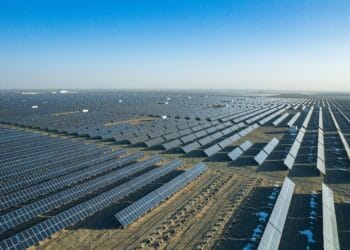
Green Hydrogen Graphic
From The Energy Pioneer New memberships opening April 15, 2026

Meet EP Investing — the platform behind the stories.

1,300+ companies · 350+ investors · 47+ grants

Visit EP Investing →
ShareTweetShare
Fares Arafat

Fares Arafat

Fares Arafat is a civil engineer driven by a deep awareness of the environmental challenges posed by human activity. This passion led him to pursue an MSc in Sustainable Energy at Imperial College London where his research focused on analyzing the integration of renewables into the grid, its impact on electricity markets, and the potential of green hydrogen as a transformative solution. Beyond his academic work, Fares has cultivated a broad interest in energy geopolitics, the feasibility of industrial decarbonization, and the financial viability of clean technologies in the Global South. Today, he is dedicated to leveraging his expertise to deliver articles grounded in transparency, factual accuracy, and insightful analysis.

Related Posts

What is Green Islamic Finance and How Could it Accelerate the Renewable Energy Transition?
Green Finance

What is Green Islamic Finance and How Could it Accelerate the Renewable Energy Transition?

April 10, 2026
Iran War Triggers Oil Shock as Zimbabwe Turns to Ethanol Blending
Renewable Energy

Iran War Triggers Oil Shock as Zimbabwe Turns to Ethanol Blending

April 8, 2026
Hybrid Renewables for Sustainable Electrification in the Sundarbans
Features

Hybrid Renewables for Sustainable Electrification in the Sundarbans

April 2, 2026
Two Paths Forward: How The Iran Conflict Is Reshaping the Energy Sector
Renewable Energy

Two Paths Forward: How The Iran Conflict Is Reshaping the Energy Sector

March 31, 2026
The Modular Approach to Direct Air Capture
Clean Tech

The Modular Approach to Direct Air Capture

April 1, 2026
Lithium Lockdown: Zimbabwe’s Big Bet on Local Processing
Clean Tech

Lithium Lockdown: Zimbabwe’s Big Bet on Local Processing

April 1, 2026
Next Post
Impact Investing in Latin America

Impact Investing in Latin America

The Difficulties of Plastic Waste Management and Potential Solutions

The Difficulties of Plastic Waste Management and Potential Solutions

Popular Stories

  • Caught Between India’s Military Ambitions and Green Promises: The Future of the Andaman and Nicobar Islands

    Caught Between India’s Military Ambitions and Green Promises: The Future of the Andaman and Nicobar Islands

    0 shares
    Share 0 Tweet 0
  • Two Paths Forward: How The Iran Conflict Is Reshaping the Energy Sector

    0 shares
    Share 0 Tweet 0
  • The Race to Host AI: Data Centres in Water-Scarce India

    0 shares
    Share 0 Tweet 0
  • The Modular Approach to Direct Air Capture

    0 shares
    Share 0 Tweet 0
  • Africa’s EV Future May Depend on Electrifying the Informal Sector

    0 shares
    Share 0 Tweet 0

Actionable Info

🔒 NEW MEMBERSHIPS OPEN APRIL 15
EP
EP Investing Climate Finance Intelligence

Our journalism is made possible by readers like you.

The founders, investors, and professionals reading The Energy Pioneer use EP Investing to find capital, partners, and opportunities.

1300+Companies
350+Investors
45+Grants
Explore EP Investing →

The Energy Pioneer

The Energy Pioneer covers the global energy transition — from clean tech and green finance to policy and renewable energy.

Recent Posts

  • What is Green Islamic Finance and How Could it Accelerate the Renewable Energy Transition?
  • Iran War Triggers Oil Shock as Zimbabwe Turns to Ethanol Blending
  • Hybrid Renewables for Sustainable Electrification in the Sundarbans

Quick Links

  • Home
  • Clean Tech
  • Renewable Energy
  • Green Finance
  • Policy
  • Regions
  • Features
  • Who We Are

© 2026 The Energy Pioneer | All Rights Reserved. |

No Result
View All Result
  • Home
  • Clean Tech
    • Electric Vehicles
    • Energy Efficiency
    • Green Hydrogen
    • Smart Grid
    • Battery Storage
  • Green Finance
    • Public Financing
    • Private Financing
    • Carbon Markets
  • Policy
  • Renewable Energy
    • Wind
    • Solar
    • Hydropower
    • Nuclear
    • Hydrogen
    • Fossil Fuels
    • Geothermal
  • Regions
    • Africa
    • Asia
    • Europe
    • North America
    • Latin America
    • West Asia
  • Features
  • Who We Are
    • About Us
    • EP Investing
    • Contact Us

© 2026 The Energy Pioneer | All Rights Reserved. |