
With just over half of Colombia’s land area currently classified as Non-Interconnected Zones (NIZ), the country has the opportunity to simultaneously reach its emission reduction goals and provide access to renewable power to the entire country. The push for renewables is partly in response to the emission reduction targets that Colombia has set, which include a 51% reduction in emissions compared to a 2030 reference scenario. Rural areas of the country, which continue to rely heavily on diesel for energy generation, could instead adopt alternative forms of distributed power generation, such as solar microgrids and small-scale hydropower, to provide economic benefits to the country while reducing carbon emissions.
Policies implemented by the Colombian government are converging into a comprehensive approach to enhancing rural electrification rates. This has thus far included incentives for renewable energy investment and tariffs to encourage distributed generation in rural communities. The reliance on diesel generators, which continue to supply the majority of power in these areas, is expensive and receives state subsidies to drive down the price. In 2020, the usage of diesel in NIZ reached almost 14 million liters a month, due to both the rise in demand and poor efficiency of the generators. The Colombian government has made strides to replace diesel due to the hazardous impact its emissions can have on health, the high cost of diesel transportation, and the opportunity for renewables in those areas.
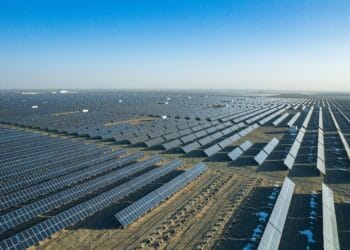
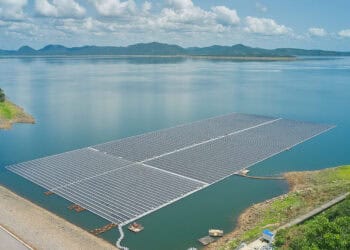
Solar is perhaps the most effective solution for electrifying many parts of the NIZ in Colombia. Distributed generation solar projects can provide the power necessary for communities without the up-front cost and delays of wind or hydropower. One of the primary drivers for solar energy in Colombia is the goal of diversifying the country’s energy matrix. With 66% of Colombia’s energy mix coming from hydropower, there is certainly plenty of inexpensive power available. However, the cost of building or expanding distribution networks to remote areas hundreds of miles from hydropower plants makes this a costly option.
As hinted above, it is not the generating capacity but the distribution network that has resulted in communities not having access to energy. In conversation with Juan Diego Gomez, CEO and Founder of SunColombia, he explained that the most significant roadblock to 100% access to electricity remains the transmission network. The solution created by SunColombia has been the development of microgrids. The microgrids developed by SunColombia have thus far been used to provide power to the most remote areas of Colombia. Additionally, SunColombia also used its products to operate pop-up schools in rural areas.
These microgrids exemplify the potential benefits of distributed generation beyond providing power. In an interview with Forbes Colombia, Gomez mentioned that providing a distributed generation solar solution is just one step in improving the situation for the most remote communities in Colombia. As he puts it, the impact of these installations lies in the opportunities to improve access to education as well as for businesses to grow due to access to new power sources.
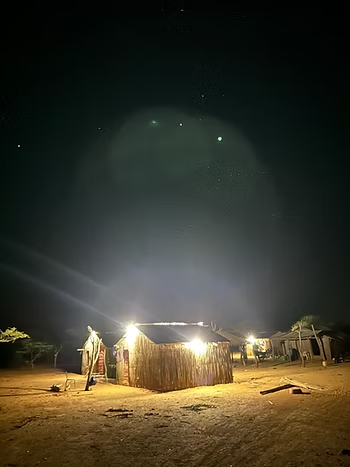
One interesting alternative to traditional distributed generation projects is the community-owned system. This offers several benefits for remote areas communities, including the ability to increase project size to procure necessary materials in bulk, sell excess energy to businesses, and negotiate better prices from installers and project developers. This results in a lower upfront cost for communities, which can then adopt longer-term payment methods such as “pay as you go.” Another option is to utilize small-scale hydropower, of which more than 140 are currently in operation and over 100 are under development.
Despite the potential of distributed generation, a report by the Universidad Internacional de Colombia found that one barrier to the development of new distributed generation projects is the procedures and permitting processes, which can take up to a year. By streamlining this process and incorporating tax incentives that support individuals and small to medium-sized enterprises (SMEs), distributed generation projects could experience significant growth.

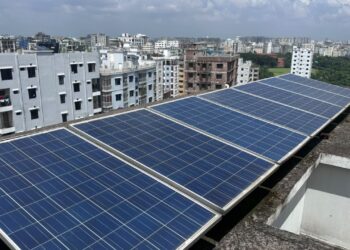
While the potential of microgrids is being recognized across areas of Colombia not connected to the grid, the deployment of rooftop solar has also found markets across the country. In conversation with Santiago Ortega, Co-Founder and Innovation Director at Emergente Energía Sostenible, he explored the potential of rooftop solar, which he sees as an integral part of the country’s transition to renewables. Estimates for rooftop solar in the country range from 4.2 to 10.2 GW of new rooftop PV capacity by 2030. This could result in as many as 1 million new installations per year until 2030. The benefits of a strong rooftop solar industry range from improving grid resiliency and reducing fossil fuel dependence to creating a more equitable energy transition.
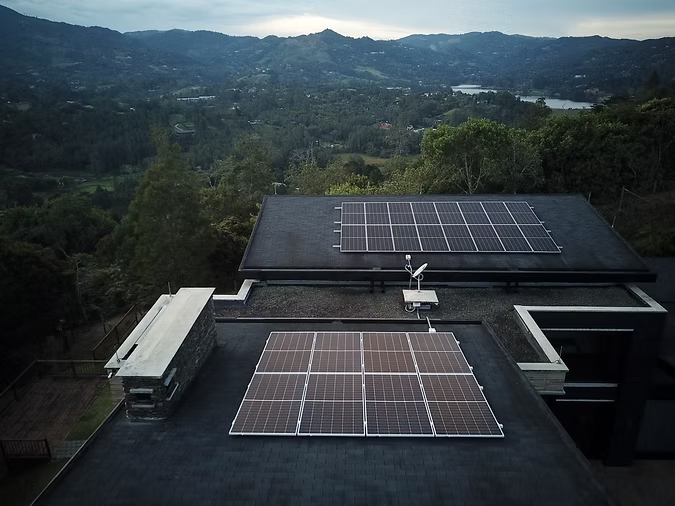
Ortega further explained how policies such as the 2014 tax breaks for renewable development and the 2018 implementation of net metering encouraged growth from the development angle, while high energy prices and grid limitations created higher levels of demand. Ortega made it clear that the high rates of return for rooftop solar are a driving reason for what he anticipates to be 7 GW of rooftop solar by 2030. These rates of return vary between residential and industrial projects, with residential rates of return reaching 25% and large industrial projects achieving up to 60%.
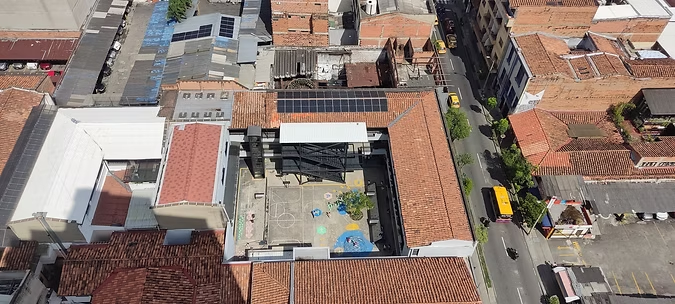
By encouraging the development of distributed generation, Colombia can provide power to millions of residents without the delays that come with broad infrastructure build-out. Incorporating new renewable projects, especially solar, into the matrix can take advantage of Colombia’s naturally high radiation, reduce reliance on hydropower in the overall energy matrix, and allow communities currently relying on diesel to switch to a more sustainable option.