
In Matola, Mozambique, workers assemble electric motorbikes and tuk-tuks at a facility operated by Epsilon Energia Solar as part of its new venture. Originally launched as a solar company in 2018, designing and installing on and off grid connected solar systems in Mozambique, Epsilon has since expanded into electric mobility assembly.
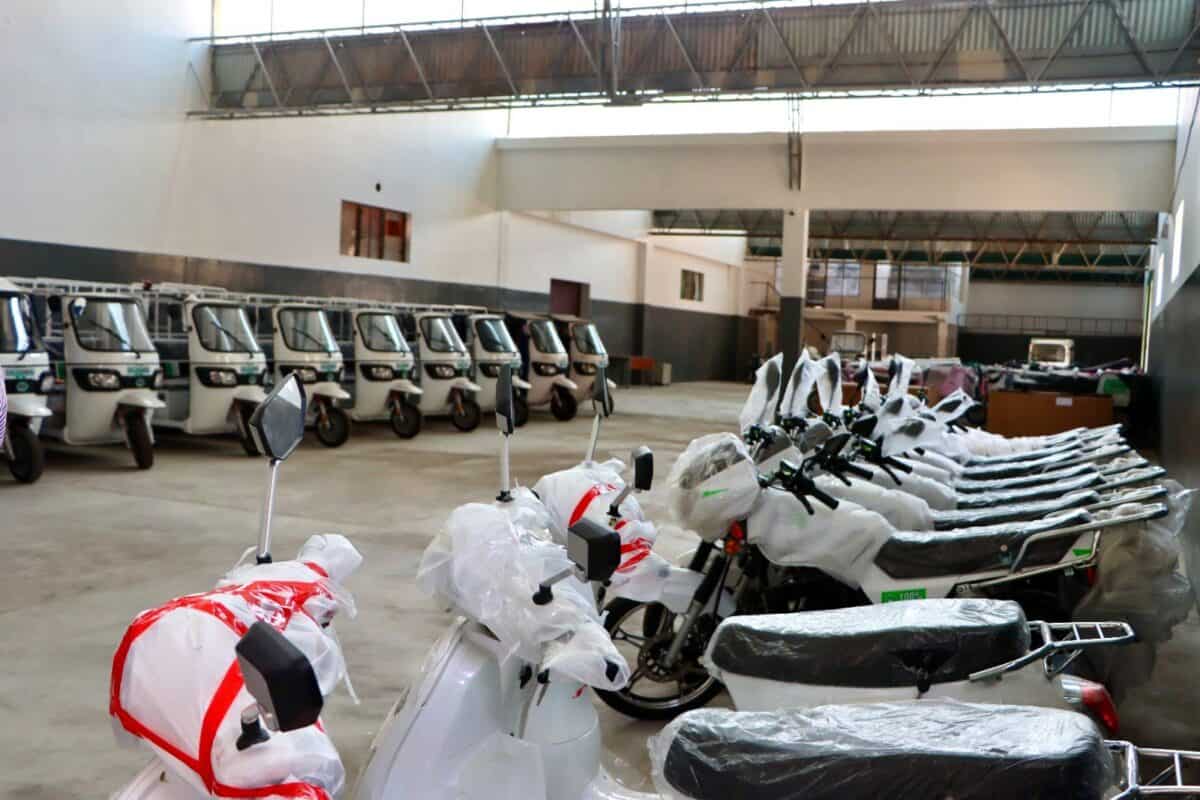
Backed by international development partnerships and private local investment, the plant is part of a wider continental shift toward electric mobility and cleaner transport. The move comes as markets across Africa grapple with soaring fuel costs and unreliable public transport systems. This project reflects broader efforts in parts of Africa to build their own clean transport industries rather than relying entirely on imported vehicles.
The British Government joined the Government of Mozambique by establishing the BRILHO-Energy Africa Mozambique program, to ensure access to energy through sustainable means. Working on the BRILHO program, Calvin Bailey, a UK Member of Parliament and the UK Trade Envoy to Southern Africa, tells The Energy Pioneer that the UK provided £300,000 in grant funding to support early-stage market development in Mozambique; specifically to help deploy electric motorbikes and tuk-tuks and to support the construction of solar-powered battery charging stations.
BRILHO offers a unique mix of structured non-reimbursable funding and support to de-risk business initiatives that aim to achieve competitive commercial returns and provide off-grid energy solutions to low-income markets.
“Epsilon Energia Solar is a locally owned company, with shareholding held by Mozambican investors…the UK involvement is delivered through the BRILHO bilateral programme, which supports Mozambique’s off-grid energy market through catalytic grants and technical assistance,” Bailey explains.
The program requires “Epsilon to co-invest, contributing more than 50 percent of total project costs. The assembly plant is a private investment by Epsilon, reflecting the company’s own commercial assessment of market demand. The UK’s role has been to help create conditions for sustainable private sector growth in Mozambique’s off-grid energy market,” says Bailey.
While Epsilon has successfully broken into the EV mobility market, the plant is not a standalone initiative but part of a broader commercial expansion driven by growing market demand.

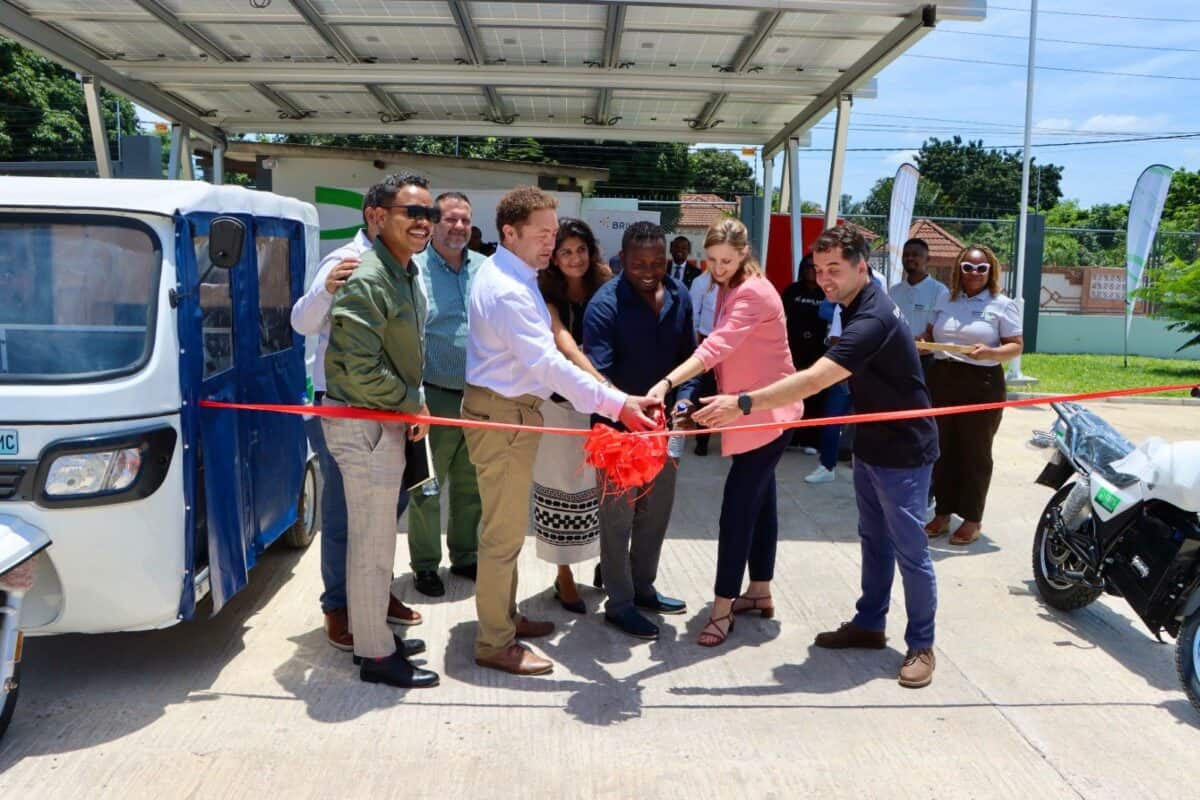
“UK support through BRILHO was designed to catalyse sustainable private sector growth rather than fund one-off projects. Early UK support helped Epsilon test the market and demonstrate commercial viability, and the decision to establish an assembly plant followed that evidence,” Bailey says.
The programme focuses on local capacity, market sustainability, and repeatable business models, so that companies can continue to grow without long-term reliance on public funding.
“The plant’s launch marks a transition from early-stage support to commercial scale-up,” he says. And in this initial phase, the plant directly employs 10 workers, all of whom are Mozambican.
“As the plant is being established in phases, recruitment will scale alongside production,” Bailey says. He adds that roles span assembly, technical, logistics, and operations, with further job creation expected as production grows and local supply chains develop.
“The project also anticipates indirect job creation over time through maintenance services, distribution, and supporting enterprises. From the outset, the focus has been on local employment, skills development, and knowledge transfer,” he explains.
In this initial phase, 90 percent of components are imported and 10 percent are sourced locally within Mozambique, which is typical for early-stage EV assembly in emerging markets.
“Epsilon’s strategy is to progressively increase local sourcing as the market matures and production volumes grow, with the longer-term aim of reducing costs and strengthening Mozambican supply chains,” he says.
However, training and skills transfer are embedded within the project from the start. “Mozambican workers are already carrying out assembly and operational roles, building hands-on expertise in EV assembly, maintenance, and operations,” Bailey says.
Epsilon also has a contract with the EU-funded MUVA programme, which supports 30 professional internships for young people across roles including electrical and mechanical technicians, sales, after-sales, and customer service. MUVA is a social incubator dedicated to empowering women and young people to fully exercise power over their lives.
For Mozambique, the modest assembly line at Epsilon Energia Solar represents more than just the production of electric motorbikes and tuk-tuks. It reflects an early attempt to build a local clean transport industry from the ground up; one powered as much by skills transfer and private investment as by batteries and solar charging stations.
While the sector remains heavily dependent on imported batteries, motors and other core components, supporters argue that the real significance lies less in the scale of the current production and more in what it represents for Africa’s industrial and manufacturing sector. In a market long dominated by second hand fuel vehicles and largely overlooked by major global automakers, even modest assembly operations are beginning to test whether electric vehicles manufacturing can gradually take root on the continent.
The EV assembly plant will help build local technical skills, creating jobs linked to clean energy industries and reducing reliance on expensive imported fossil fuels. Workers assembling electric motorbikes and tuk-tuks are gaining experience in a sector that many analysts believe will shape the next phase of global transport and manufacturing.
Backers of this project, like Bailey, say the initiative could help position Mozambique within Africa’s emerging green industrial economy at a time when governments across the continent are searching for ways to industrialise while adapting to climate and energy pressures. If the project succeeds, it may offer more than cleaner and cheaper mobility options. It could provide a blueprint for how smaller African economies can begin participating in the global transition to low carbon transport even without the massive industrial base traditionally associated with car manufacturing.