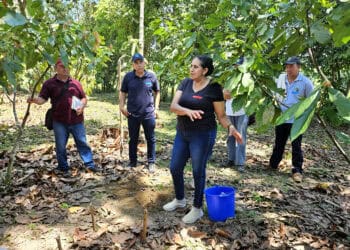


Esther Nyamekye Opoku is a Programme Officer at CORD Ghana (Centre for Opportunities and Rural Development), a civil society organisation working at the intersection of energy access, gender equity, and rural land rights in Ghana’s Northern Region, one of the country’s most energy-deprived areas. She was part of Ghana’s official delegation to COP28 in Dubai in 2023, and leads CORD’s Savannah Rural Women Voices Assembly (SRWVA), which brings together women from communities across the Savannah Region to speak on energy, land, and livelihoods.
In this conversation with The Energy Pioneer, Opoku draws on her fieldwork in communities including Salankpang, Gbalahi, and Tamale to challenge how the global energy access agenda frames rural women and question who energy policy is really designed to serve.
Q: You were part of Ghana’s official delegation at COP28. What is one conversation from that room that never made it into a press release, but changed how you think about the energy transition?
A: At COP28 in Dubai, in the side room of the Just Transition Pavilion, not the main stage, a negotiator from Kenya whispered something I have not forgotten: “The transition is already happening, but the injustice is that we are being asked to transition from energy we never had.”
That hit me hard, because I could relate completely. In the Northern Region where I live and work, we are not transitioning from coal plants. We are transitioning from darkness, from a woman walking five kilometres to charge her phone, from kerosene. In that room, everyone was talking about phasing down. I was thinking about phasing in.
This encounter changed my language. I stopped saying “energy transition” in my community and started saying “energy entry, just energy.” Because for my mother, it is not a transition. It is her first time.

Q: CORD works in the Northern Region, not far from the “solar grandmothers” of Upper West who trained as solar engineers in their sixties. Does that model translate?
A: Yes and no. The Barefoot College model in Upper West, grandmothers becoming solar engineers, is powerful because it proves two things: older women can be technicians, and illiteracy is not ignorance. But in the Northern Region, the challenge is not just technical training. It is custody.
I have seen projects where they train five women as solar technicians, and after three months their husbands or the assemblyman take control of the toolbox because “technical work is for men.” So for CORD, we had to adapt. We do not train an individual woman or a few women. We train a women’s group that owns the asset. The solar kit is registered to the VSLA group, the Village Savings and Loan Association, not to one woman. That group ownership is what protects it.
The Upper West model works, but in other areas it needs modification. We need collective ownership before technical training.
Q: Ghana updated its Renewable Energy Masterplan this year to be gender-responsive, with the Ministry of Gender at the table. Is that shift visible at community level?
A: Honestly? Not yet. It is still Accra-only.
On paper, it is a beautiful shift. Having the Ministry of Gender, Children and Social Protection co-chair the review is historic. The document now mentions productive use, unpaid care work, and female technicians.
But last month I sat with 32 women in Salankpang as part of the Savannah Rural Women Voices Assembly. Not one had heard of the Renewable Energy Masterplan. When I asked the District Planning Officer and the Gender Desk Officer, they said: “We are yet to be trained on it.”
The policy is gender-responsive at the top, but the implementation chain is still gender-blind. Until the budget for the Masterplan reaches the district assembly level with a gender marker, and until the District Gender Officer is invited to energy meetings, or energy meetings are held at district level, it will stay in Accra.
Q: Most gender-and-energy narratives focus on lanterns and cookstoves. What technology are women systematically excluded from?
A: Solar water pumps and solar freezers.
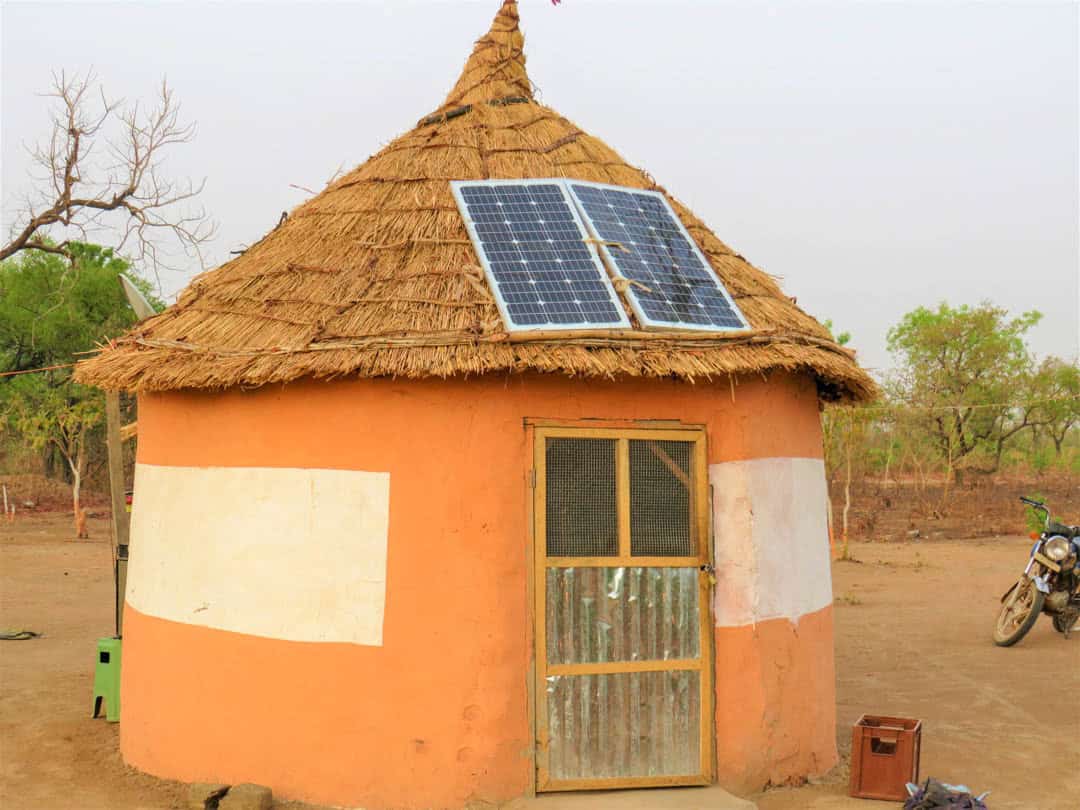
Everyone loves to give women a solar lantern or an improved cookstove because it keeps her in the home. But the technologies that actually make money are kept from her.
A solar irrigation pump costs around 15,000 Ghana cedis. A solar freezer for fish storage costs around 8,000 cedis. No woman farmer in our network has accessed either through the official subsidy, because the financing requires a land title as collateral. And 90% of women in the Northern Savannah Zone of Ghana do not have land title. The marketing is also designed for men, the posters show a man in a farm with a pump.
So women stay with low-power, low-income energy, light, while men get high-power, high-income energy: irrigation, cold storage, and milling. That is the real energy divide no one markets.
Q: What does a programme officer actually do day-to-day that a funder’s annual report never captures?
A: What the report does not capture is this: I left Tamale at 5am on a motorbike, arrived at 7am, waited two hours because the chief was at the farm, then spent one hour explaining to the men why women need to be in the meeting, then another hour under a baobab tree translating “energy transition.” Then I mediate a land dispute between two families before we even start talking about energy.
And then I come back and write the report in English that donors can understand.
My day is 30% technical, 70% translation, not language, but power.
Q: What is one assumption that outside funders or INGOs consistently get wrong about rural Ghanaian women and energy access?
A: That rural women are “waiting for energy.”
They are not waiting. They are already energy managers. A woman in our community is already managing four energy sources before 8am: firewood for tuo zaafi (a popular traditional dish from Ghana), charcoal for heating water, a battery for a torch, and a phone battery she paid to charge.
Funders think they are introducing energy to empty hands. No —women already have an energy portfolio, but it is expensive, dirty, and time-consuming. If you come up with a solution that adds to her workload, you need to maintain this, pay weekly mobile money, attend training, she will reject it, and you will call her “resistant to technology.”
She is not resistant. She is calculating.
The right question is not “How do we give her energy?” It is “How do we lower the cost of the energy work she already does?”
Q: Ten years from now, what would “success” look like for CORD’s work, beyond “increased access”?
A: In 2036, I want to go to Gbalahi and find three things.
First, that the community land we are protecting now is still farmland, not an estate and it is irrigated by a solar pump owned by the women’s cooperative, not by a man.
Second, that the girl who was twelve years old fetching firewood when I started, her name is Samata, is now twenty-two, employed as a certified solar technician by the District Assembly, and she fixes systems in three communities. And that her father is proud of that.
Third, that when the Lands Commission comes to Tamale, the Customary Land Secretariat has documentation that says “This parcel is for food and women have use rights” and that document holds.
Success is not how many lanterns we distribute. Success is when energy and land have made women landlords, not just users.