
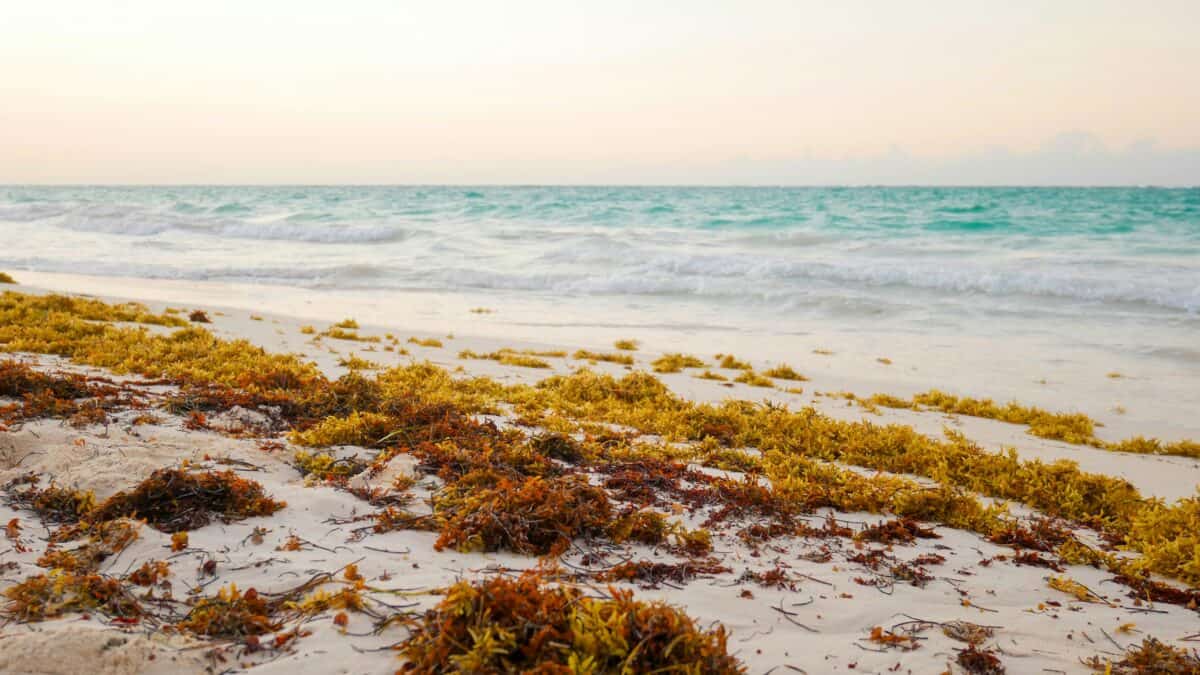
On the beaches of Punta Cana, in the Dominican Republic, the crisis arrives as an unrelenting, golden-brown tide. For miles, the fine white sand is choked under a thick carpet of pelagic sargassum, a type of brown algae. As the midday sun hits the shoreline, the trapped seaweed begins to decay, releasing hydrogen sulfide and turning a lush tourism hotspot into an environmental and operational nightmare.
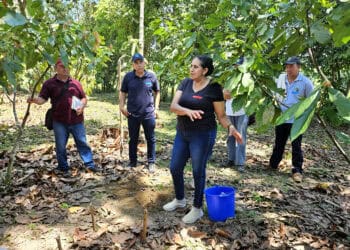
For the hospitality sector, the initial response was reactive: deploying heavy excavators to clear the beaches. It was a brute-force approach that carried a steep price. The use of heavy machinery on a resort beach destabilizes the delicate sand matrix, accelerating coastal erosion and permanently altering the shoreline.
The Dominican Republic’s economy relies heavily on its coastline: official figures reported by Spanish newspaper, El País, put tourism at 16% of national GDP and more than 330,000 jobs. After the country welcomed a record 11.19 million visitors in 2024, protecting that tourism engine has become an expensive operational challenge. According to Asonahores, the D.R.’s national hotel association, individual hotels spend US$30,000 to US$70,000 per month clearing sargassum, while annual cleanup costs can reach US$800,000 to US$1.5 million per kilometer of affected coastline.
Some have argued that this recurring influx of carbon-rich biomass could present a promising industrial opportunity: skim the seaweed off the beach, turn it into biofuel, biogas or fertilizer, and call it a circular economy.
But inside the engineering laboratories of the companies attempting to commercialize this resource, that narrative starts to look less convincing. The reality is that sargassum is an operationally hostile, chemically volatile feedstock. In layman’s terms: it’s wet, salty, unstable, and contaminated. For a dedicated clean-energy sector, attempting to force this marine nuisance into a traditional bulk biofuel model is a thermodynamic trap.
The companies closest to commercialization are therefore looking to stabilize the biomass quickly, remove contaminants where possible, and target higher-margin ingredients, biomaterials or agricultural inputs rather than chasing bulk energy.
The fundamental flaw comes down to basic energetics. Research by Dr. John Milledge at the University of Greenwich outlines the steep technical penalties inherent to macroalgae processing.

Raw sargassum is characterized by exceptionally high moisture, salt, and ash content. Converting this wet mass into combustible fuel requires an immense amount of energy just to handle the initial drying and desalination. For low-margin commodities like biogas or biodiesel, this intensive pre-treatment risks rendering the process economically unviable: too much effort spent making the feedstock usable, too little value captured from the final fuel.
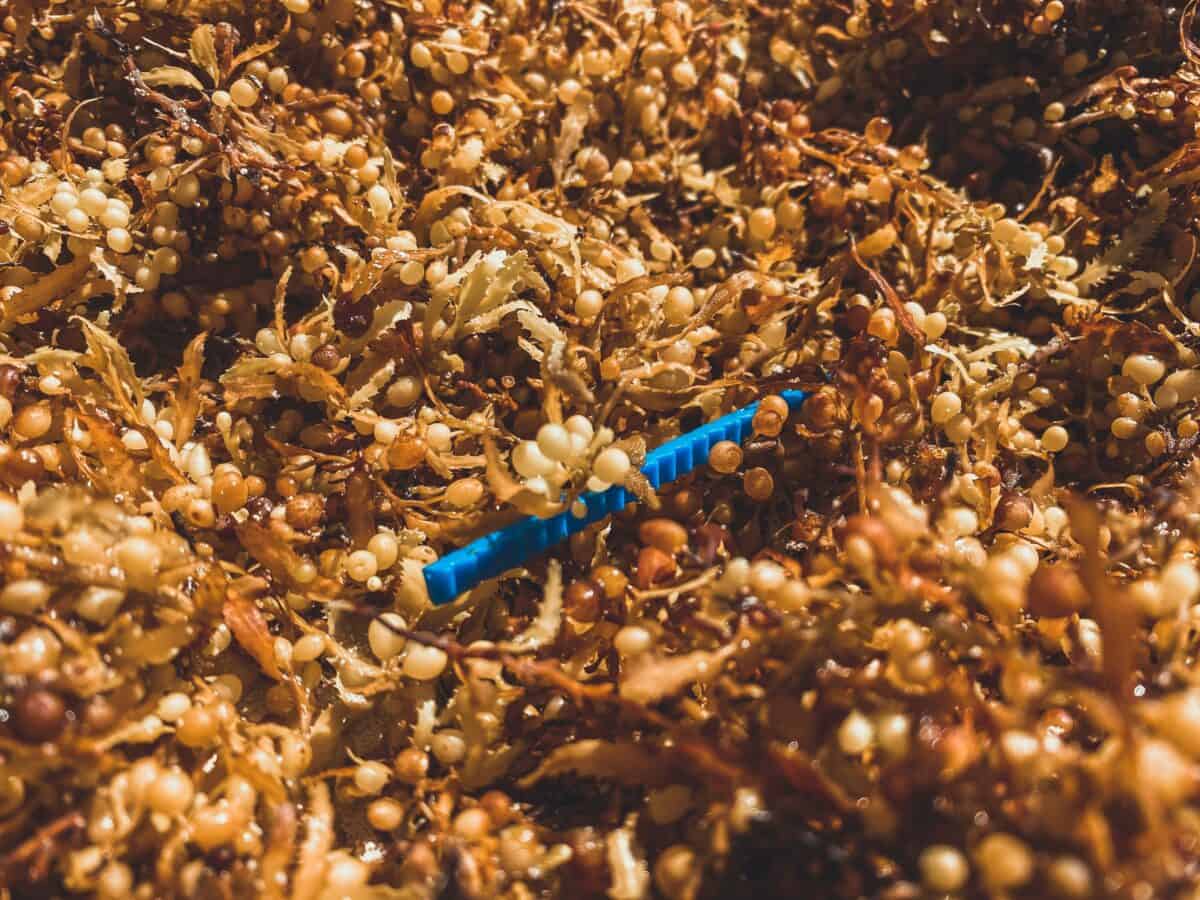
Sargassum’s internal chemistry is actively hostile to standard biorefinery infrastructure. The biomass contains complex polyphenols and high levels of lignin, which inhibit the anaerobic bacteria required to break down organic matter into methane, the primary component of biogas. High concentrations of sulfur also generate corrosive hydrogen sulfide during processing, which can rapidly degrade standard refinery pipes and generators.
Because Sargassum is expensive and difficult to process, it doesn’t make economic sense to turn it into low-value products like biofuels. Any viable industry using it would need to extract small amounts of much more valuable chemicals, such as ingredients for cosmetics, food additives, or agriculture, to cover the high costs of handling and processing the material.
Yet, shifting to premium consumer verticals introduces a new chemical gatekeeper: heavy-metal contamination.
“Arsenic removal is a problem, but it’s also solvable,” explains Jon Wettack, CEO of Sargassum Automated Nearshore Defense Systems (SANDS), a climate technology product manufacturing company based in Mexico.
Wettack points to an explicit engineering rule of thumb that dictates the commercial viability of remediation: “The short version is that as long as the product passes through a liquid phase at some point, the arsenic can be removed. If the product is a solid product and never is in liquid, aqueous form, it’s very difficult to remove arsenic.”
This creates a sharp economic divide. Low-value bulk commodities, like solid fuel pellets or raw compost, cannot support the overhead of liquid-phase chemical extraction.
Conversely, products entering high-end consumables industries, which naturally pass through an aqueous extraction phase, can absorb those costs because they are far more valuable per unit.
As Heikki Heiskanen, an industrial developer at Origin by Ocean, a Finnish bio-tech company that partners with Dominican organizations and harvests algae to turn into everyday consumer products, puts it: “The revenue that can be generated from one ton of fresh sargassum can hardly cover the collection and logistics costs unless high-value ingredients are produced. In low-value applications, the business case is closer to waste management than value creation.”
The value of sargassum lies in its chemistry rather than its bulk volume. But developers still face the final hurdle, the local supply chain. In this industry, the product is not the final chemical molecule; the product is the logistics architecture required to harvest and stabilize the biomass.
The supply problem is not only volume, but timing. The algae arrives in erratic seasonal pulses, creating sudden gluts that overwhelm beaches and long gaps that make steady industrial utilization harder to guarantee.
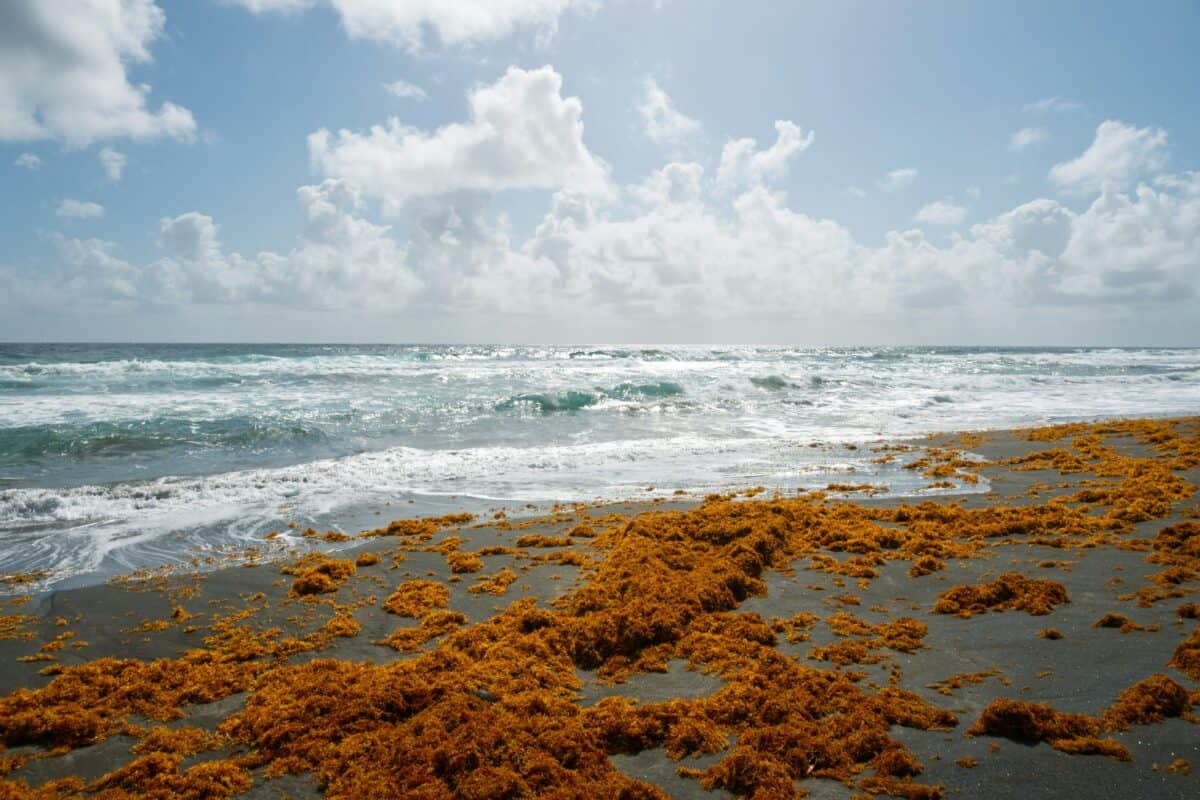
Sargassum is also highly perishable. Within hours of hitting the beach, it begins to rot, degrading the quality of its internal polymers. This is compounded by severe local infrastructure deficits, broken coastal road networks, limited beach access, and a total absence of dedicated offloading piers.
This has led to a split in operational philosophy. Heiskanen’s approach at Origin by Ocean focuses on centralized scale. By establishing regional pre-treatment terminals capable of stabilizing up to 9,000 tons of fresh sargassum per year by 2028, he says that they aim to smooth out the intense seasonal “peaks and valleys” of arrivals, creating a steady industrial feedstock.
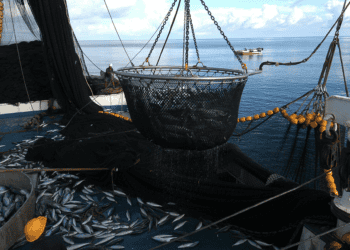
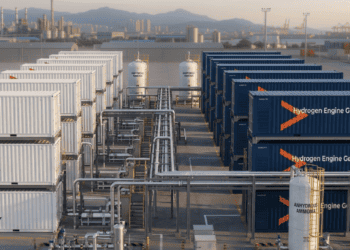
Wettack, however, argues that local infrastructure is simply too broken to rely on moving rotting biomass inland. Drawing on SANDS’ work stabilizing sargassum directly on Mexico’s Riviera Maya, he argues that the smarter approach is to bypass regional transport entirely. SANDS’ mobile beach units capture sargassum via offshore interception barriers, then transport, stabilize, and process it on site in containerized units for downstream sale. By processing the seaweed the moment it arrives, SANDS intercepts the biomass before degradation starts and eliminates sand contamination at the point of entry.
Ultimately, both strategies acknowledge a foundational rule that early biofuel ventures ignored: engineering efficiency is irrelevant without proven commercial demand on the backend. The transition of sargassum from an environmental liability to a bankable asset class will not be won by chasing the headline hype of bulk energy. It will be won by developers who can master the field-level logistics of a volatile supply chain, utilizing precise pre-treatment architectures to feed proven, high-margin global chemical markets. For the cleantech investors, policymakers, and coastal economies reading the landscape, the message is clear: stop looking at sargassum only as a source of fuel, and start looking at it as a masterclass in industrial logistics.