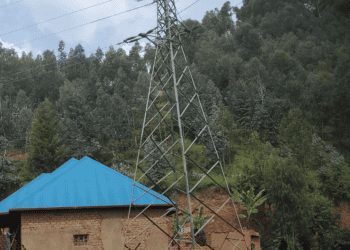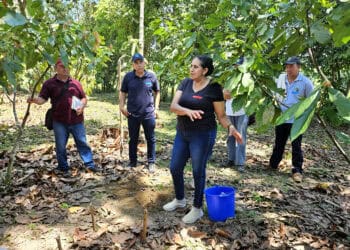

In farming communities across Ghana, farmers are selling at a loss. Despite strong harvests and existing market demand, the lack of reliable cooling, affordable transport, and access to better markets often forces them to sell their produce quickly before it spoils, accepting prices far below its true value.
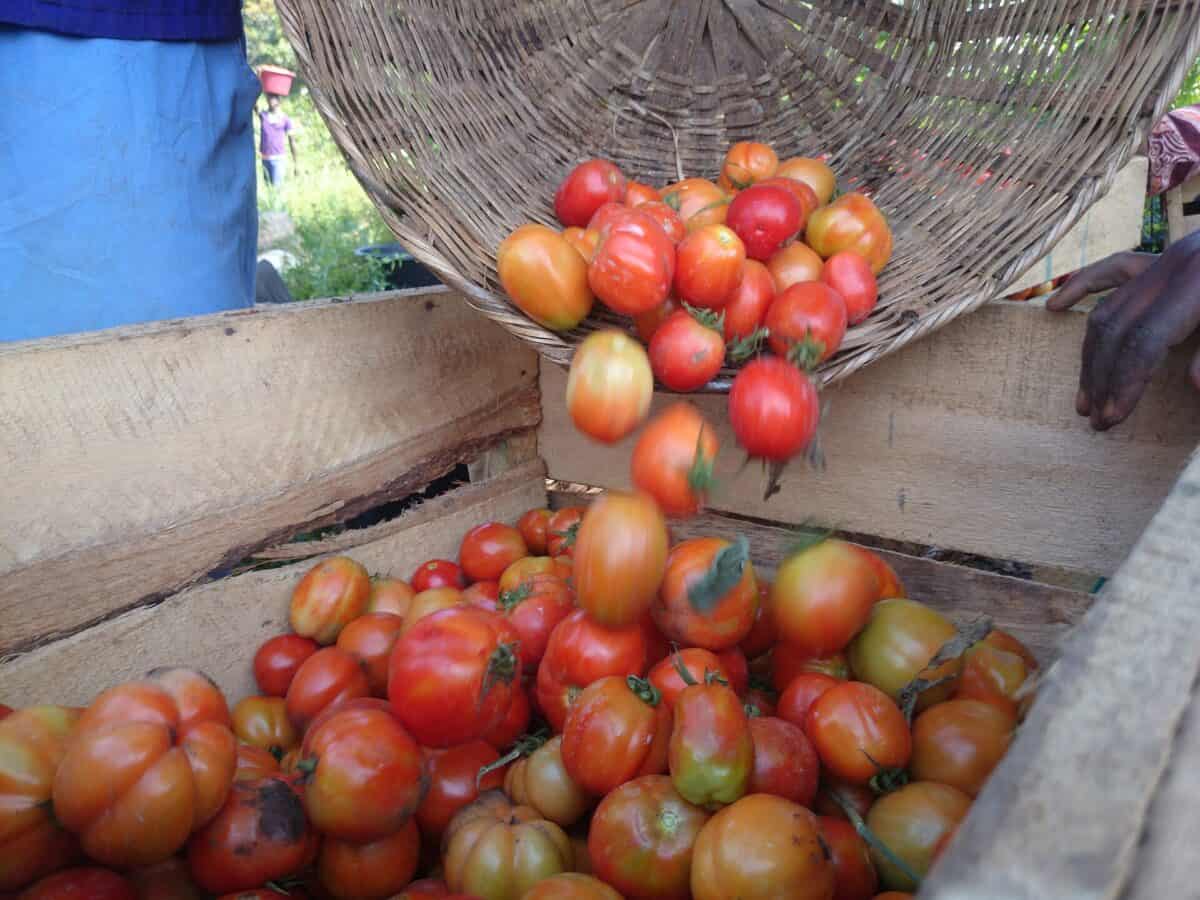
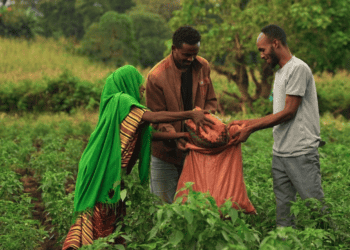
In Asante Akyem Agogo, farmers face this reality firsthand. Their tomatoes have yielded well this season, but time is working against them. With only a few days before the crop begins to spoil, they have little choice but to accept the price offered by the buyer standing before them. They sell. They absorb the loss. Next season, they plant again and hope for a different outcome.
The problem is not the quality of the harvest or the skill of the farmer. It is access to energy.
A $1.9 Billion Problem
Ghana loses approximately USD 1.9 billion worth of agricultural produce every year through post-harvest losses. Ghana’s Ministry of Food and Agriculture estimates that between 10% and 40% of perishable fruits, vegetables, and root and tuber crops are lost after harvest before it ever reaches the consumer.
Across sub-Saharan Africa, countries lose more than a third of their harvested food. The continent does not have a food production problem. It has a food preservation problem.
Bismark Oppong of Greenstoration, a Ghana-based organisation working at the intersection of food systems and sustainable agriculture, is clear about where the damage happens: “We are investing more in how to produce… and less in how to preserve the harvest.”

Samuel Essuman, CEO of Extech Agricultural Services, a Ghana-based agritech company focused on market linkage, aggregation, and logistics for smallholder farmers, “A farmer can invest in seeds, fertiliser and labour and produce a good harvest, but without reliable energy for irrigation, cold storage, drying or processing, that investment can quickly lose value.”
Without refrigeration, perishable produce has a shelf life of three to five days in Ghana’s tropical heat. That is not long enough to negotiate a better price, reach an urban market, or wait out a seasonal glut. So almost 90% of smallholder farmers in Ghana sell their produce at their farm gate to the first buyer who arrives, at whatever price they are willing to pay. Energy poverty becomes price poverty, and price poverty becomes income poverty.
Electrification Does Not Guarantee Crop Preservation
Ghana’s national electrification rate of 89% is a figure the government rightly cites with pride. But for both Oppong and Essuman, it tells an incomplete story.
“Does the number mean anything to a farmer in a rural community trying to preserve her harvest?” Oppong asks. “Most rural areas don’t have light. And even where they do, a bulb uses five watts. A refrigerator uses five kilowatts. These are completely different scales of consumption, but the policy treats them as the same thing.”
Essuman outlined that while “it tells us that a connection may exist, but it doesn’t necessarily tell us whether productive agricultural energy is available. As an electrical engineer, I look at the load a farmer needs to run a cold room, irrigation pump, dryer or processing machine. If the power is unreliable, too expensive, or the infrastructure cannot support that load, then electricity access has limited economic value to that farmer.”
“We need to move from measuring connections, to measuring what that energy enables people to do”, explained Essuman.
The Gap Between Ministries
Ghana’s energy and agriculture ministries operate with separate budgets, strategies, and measures of success. Neither is formally responsible for the space between them.
Oppong captures the governance gap “The Ministry of Energy counts its grid capacity and calls it success. The Ministry of Agriculture counts its fertiliser and seed supply and calls it success. But nobody counts the energy that keeps the food alive between farm and table.”
“The biggest problem is that agricultural infrastructure is sometimes planned without considering its energy requirements. You can build an irrigation system, processing facility or cold-storage centre, but if the electrical infrastructure is not designed around the actual load, the facility may not deliver its intended impact”, explained Essuman.
The technology and know-how to close the gap are already there. Off-grid solar-powered cold rooms, irrigation pumps, and milling and processing equipment already exist. What is missing is a government strategy that connects agriculture to reliable, affordable electricity across the value chain.
The private sector has not waited for policy to catch up. AkoFresh, Ghana’s first green cold chain startup, deploys mobile solar-powered cold storage units that extend the shelf life of perishable crops from five days to 21, allowing farmers to break out of the farm-gate trap.
Extech focuses on the market linkage and logistics end, using digital platforms to connect farmers who can preserve their produce with buyers who are willing to pay the price. Across West Africa, companies like Cool Hubs and DeKoolar are deploying similar solar cold room models. The model works. The economics are proven.
The Northern Paradox
Ghana’s northern regions, where agricultural activity is concentrated and post-harvest losses are highest, are also the regions with the lowest levels of energy access, the weakest grid reliability, and the strongest solar irradiation.
The north receives between 5.5 and 6.5 kilowatt hours of solar energy per square metre per day, among the most powerful solar resources in West Africa. It also has some of the highest rates of food insecurity in the country. For Oppong, who has worked in these communities, the contrast is not just frustrating. It is a failure of political will. “We know as a country the solar potential in the north. The south hits 28-29 degrees. The north hits almost 40. That should tell you the amount of radiation that could fall on solar panels, and kickstart a dryer or a cold store. It is a direct failure. It is a direct disgrace.”
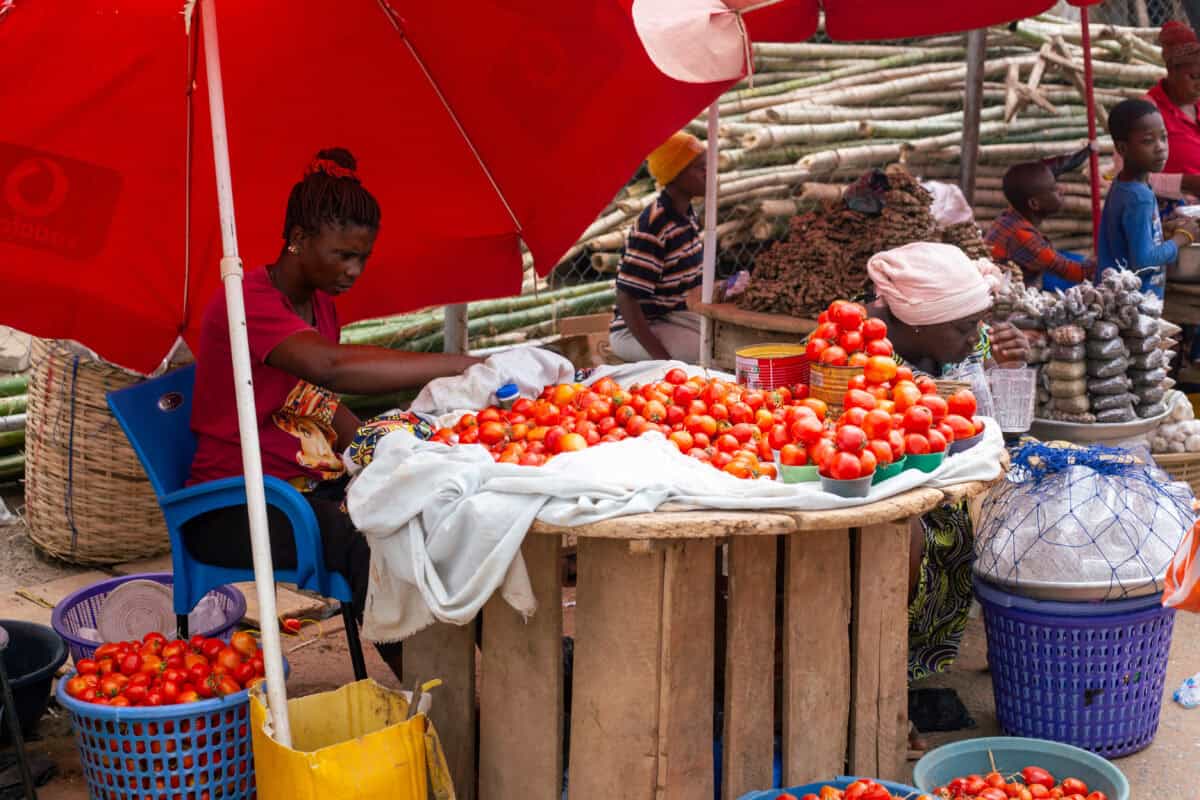
He points out that in order for farmers in the north to get their produce to a larger market like Sunyani, Kumasi, or Accra they have to travel long distances and “by the time they get there without cold storage, a lot of produce has gone bad. The distance plus the heat plus the absence of preservation, destroys the value.”
A 2025 peer-reviewed study in Frontiers in Sustainable Food Systems, surveying over 1,000 smallholder vegetable farmers in Ghana’s Upper West Region, found strong willingness to adopt off-grid solar-powered cold storage. The demand is there. The technology exists. What is missing is the investment and distribution infrastructure to put it where it is needed most.
Esther Nyamekye Opoku, Programme Officer at CORD Ghana, who works with women farmers across the Savannah Region, has identified the productive-use gap: “Everyone loves to give women a solar lantern or an improved cookstove. But the technologies that actually make money are kept from her. A solar irrigation pump costs around 15,000 Ghana cedis. A solar freezer for fish storage costs around 8,000 cedis. No woman farmer in our network has access either through the official subsidy.” While electricity has reached homes it has not yet reached the farms.
Where Does the $1.9 Billion Go?
The question of who absorbs Ghana’s annual post-harvest losses is invisible. As Oppong explains, “you can’t see where the money goes. It’s not a direct transfer.”
But the downstream consequences are concrete. “When losses force the country to import tomato paste from China and onions from Niger, that is money leaving Ghana’s economy,” he says. “Money that would have stayed in the country, gone into farmers’ pockets, circulated locally, instead it flows out. You have lost your in-country food and you are spending foreign exchange to replace it from somewhere else.”
What a Solution Looks Like
Oppong has visited communities where the energy-agriculture connection has been built. He outlined a facility near Adesu where a company produces dried fruits and vegetables. “Around 10% of their end products end up in Ghanaian supermarkets. The other 90% is exported to the Netherlands and Germany. That is a proper energy-farming community, one that is keeping youth in the area, creating income for women, and selling Ghanaian agricultural produce to European markets because they have the processing infrastructure to preserve and add value to what they grow.”
Ghana’s agricultural policy continues to be written primarily as a production story. Energy policy is similarly one-dimensional, focusing on connection rates and installed capacity.
“Energy should not simply be about putting electricity into a community,” Essuman says. “It should be about using engineering and technology to turn energy into productivity, reduce post-harvest losses and increase farmers’ incomes.”