
Producing green fuels cost-effectively and at scale has proven challenging. Uncertainty around renewable energy costs, electrolyzer sourcing and manufacturing, and securing guaranteed offtakers continues to create market volatility. This has created a chicken-and-egg scenario in which hydrogen and ammonia producers need larger markets to justify scaling production, scaling production is often necessary to make their products competitive in those markets. Despite these challenges, companies across the industries have developed new technologies and new market approaches to reach larger production.
Finding early off-takers for green hydrogen or green ammonia is crucial as it provides capital to scale, demonstrates product viability, and provides the necessary data collection. Hy2gen, a German-based renewable fuels company, has developed a flexible approach to sourcing off-takers. When asked about Hy2gen AG’s early market offtake sectors, Co-Founder and CEO Cyril Dufau-Sansot, explained that the benefit of being an independent developer is that they can follow the most bankable demand rather than being tied to a specific industry. Currently, Dufau-Sansot points to aviation and industry as offering the clearest signals through ReFuelEU Aviation rules and the requirements that it provides for sustainable aviation.
Green Ammonia has likewise searched for early adopters in order to develop their market. Since approximately 70% of ammonia is used for fertilizer production, that is the most important market for green ammonia producers. Karen Baert, Co-Founder and CEO of California-based Green Ammonia producer Ammobia, outlined how the company already has a pipeline of deals in fertilizer production across the United States, Eastern Europe, and India to address supply chain disruptions. Alongside the fertilizer market, Baert emphasized the potential for green ammonia to power shipping and transport. Specifically, maritime shipping applications in the Nordics offer an additional early market opportunity.
Ammobia currently works in what they define as the medium scale of production, using a modular system to allow partners to test and verify production before scaling their offtake. One of the largest challenges green ammonia has faced thus far is the capital expenditure required to build an ammonia production facility. However, Baert explained that the modular system developed by Ammobia reduces construction costs to between 100 and 200 million dollars and construction time to approximately three years. With 180 projects in their pipeline globally, it is clear that the reduced cost and time of construction have proven attractive thus far.
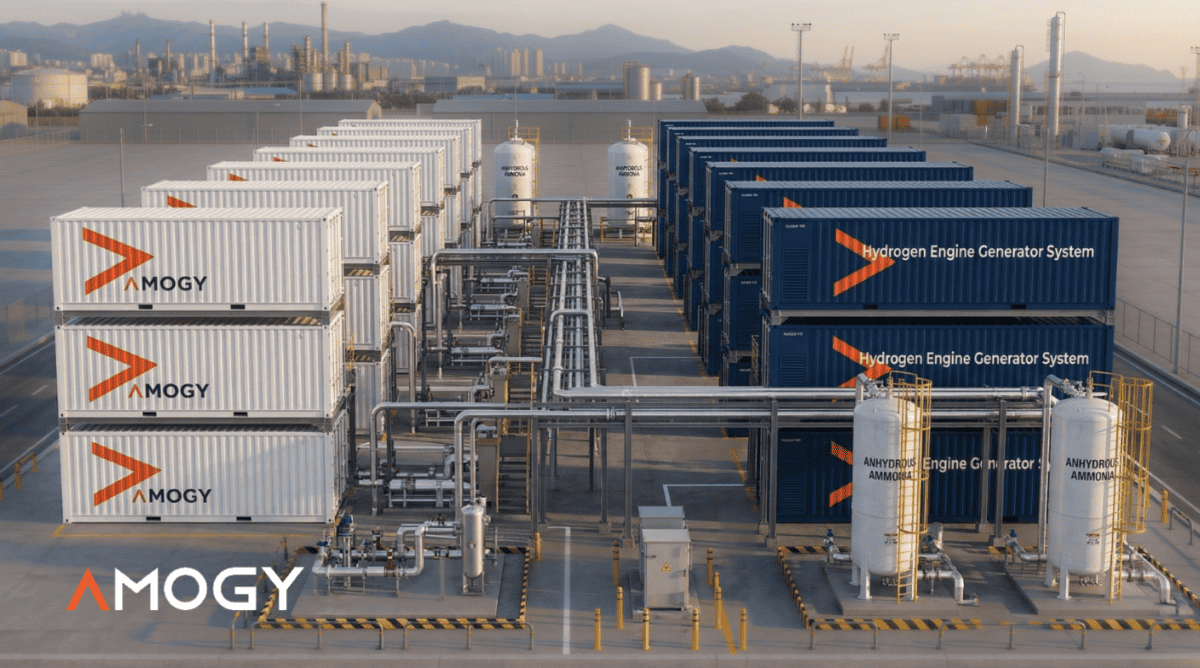
While “grey” ammonia may have the ability to produce at scale and therefore drive down cost, the bottlenecks in providing natural gas turbines may provide a further opportunity for the green ammonia industry. During an August conversation with Seonghoon Woo, CEO at New York-headquartered Amogy, he offered an interesting perspective on how green ammonia production compares with grey ammonia. While grey ammonia can be produced where natural gas is readily available, the current wait time to acquire new gas turbines is creating an industry bottleneck. Woo explained that early opportunities for ammonia to power may be in the microgrid space, as developers look to new technologies rather than wait for natural gas turbines to become available.
Amogy completed its R&D phase in 2024 and built its first manufacturing plant in Houston, Texas. They have since announced projects in South Korea as well as new data center development in Japan. By building and deploying a modular ammonia-to-power system in as little as nine months, the company can respond to growing demand for rapid access to power. As the industry grows, Woo anticipates hundreds of megawatts of deployment.
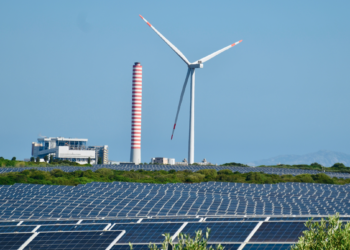
Dufau-Sansot, of Hy2gen echoed a similar point when asked how the green fuels industry could be developed in regions with high local power prices, explaining that the first step is having better price signals. Rather than relying on a single electricity bidding zone in Germany that averages out differences in power availability, Dufau-Sansot proposes separate bidding zones to take advantage of the abundant wind power in Northern Germany. This has the potential to reduce the cost of renewable hydrogen in northern Germany by 20 percent.

The role of green fuels in reaching climate targets is hard to overstate. For hard to decarbonize industries to reach net-zero emissions, both green hydrogen and green ammonia production will be crucial. Early off-takers, modular production, and low cost renewable energy are helping to scale production while driving down costs across both industries.
Readers can join our climate and clean energy network for updates and developments from companies across the sector, including Hy2gen, Ammobia, and Amogy.