
It is seven in the morning on Spintex Road in Accra, and traffic is barely moving. A trotro, one of Accra’s shared minibuses, sits in a queue of vehicles stretching down the road, its engine running as passengers watch the minutes tick by. The driver inches forward, brakes, and waits. Then inches forward again. All the while, the engine keeps burning fuel.
Elsewhere, Ghana is being celebrated for its progress towards a cleaner energy future. But on Spintex Road, that transition feels a long way off. Here, the problem is immediate and visible: thousands of vehicles burning fuel while going nowhere, producing little but exhaust.
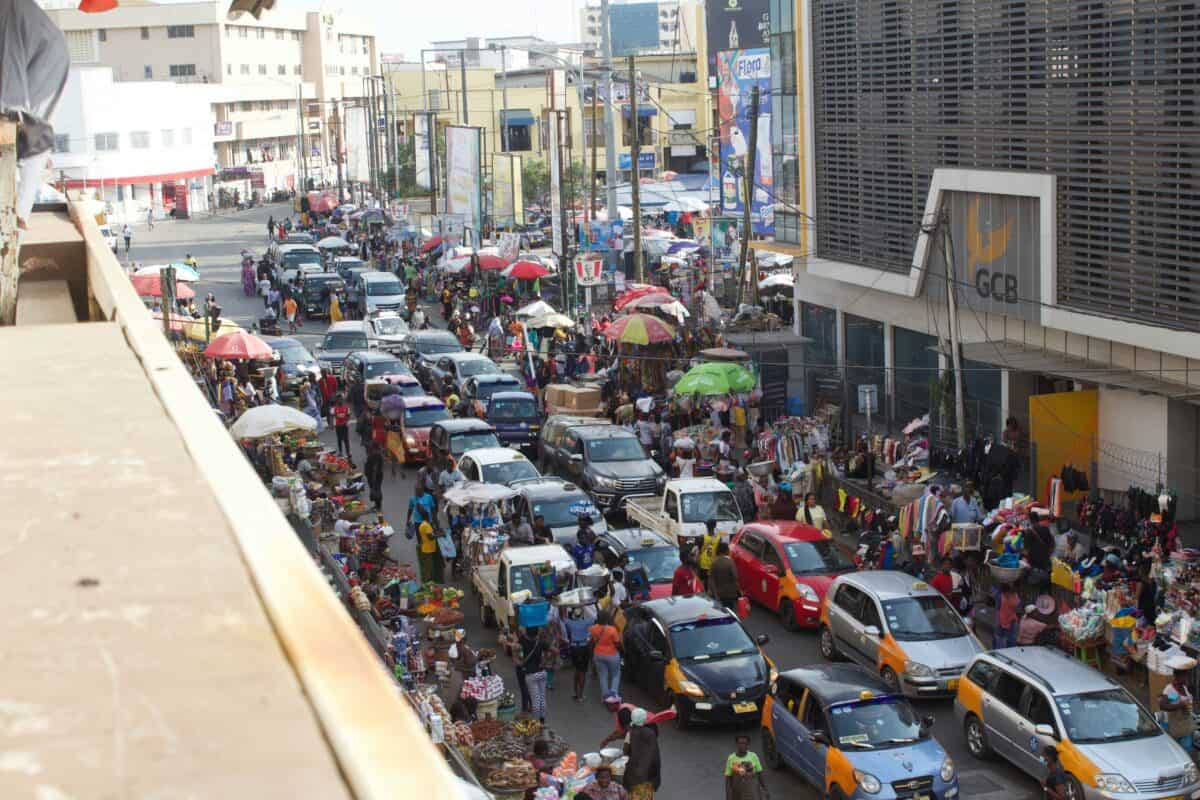
This is one of West Africa’s overlooked energy problems. The conversation about the region’s energy future tends to focus on electricity generation, offshore gas and the expansion of solar power. Yet every morning, enormous quantities of fuel are being consumed on the congested roads of Accra and Lagos.
A February 2026 report by Glima Research put the annual cost of Accra’s gridlock at GH¢4.5 billion (approximately US$386 million). Of that, GH¢434 million (around US$37 million) is lost to wasted fuel: petrol and diesel burned by vehicles idling in traffic. The resulting excess emissions amount to an estimated 73,000 metric tonnes of CO₂ a year.
In Lagos, research by the Danne Institute puts the annual economic cost of traffic congestion at ₦4 trillion (approximately US$2.9 billion), equivalent to roughly 4% of Nigeria’s GDP. The city also loses an estimated 14.12 million productive hours every day.
These are not simply transport problems. They are energy governance problems. Both cities are wasting vast quantities of fuel, generating avoidable emissions and draining economic productivity on an extraordinary scale.
Yet this crisis rarely features in conversations about energy. Perhaps because it doesn’t look like one. It looks like traffic.

Accra
Approximately 70% of Accra’s daily commuters depend on trotros, privately owned minibuses that are usually old, often poorly maintained, with no regulated emissions standard. Road transport accounts for approximately 39% of Accra’s PM2.5 concentrations, and outdoor air pollution was linked to 12,870 deaths in Ghana in 2024, with more than 64% of them being premature.
Transport is Ghana’s second-largest source of greenhouse gas emissions, responsible for 19% of national emissions. Of the energy powering Ghana’s transport sector, renewables supply just 0.03%.
“At city level, you find that transport is [the biggest emitter] all the time,” says Nii Noi Omaboe, Lead of Transform Transport Accra, a youth-led organisation pushing for cycling infrastructure, active mobility, and car-free city planning in the capital.
The consequences extend beyond emissions. Omaboe also points to the financial burden on the state, noting that “the government is spending heavily on public health costs related to air pollution.”
Lagos
Lagos faces severe urban air pollution, driven by rapid urbanisation, industrial activity and heavy road traffic. A 2026 study measuring PM2.5 across six monitoring locations in the Lagos metropolis found an average concentration of 47 μg/m³, more than nine times the WHO’s recommended annual guideline of 5 μg/m³. Concentrations varied sharply across the city, reaching 93.2 μg/m³ at one monitoring site. Road transport is a significant contributor: a 2025 study examining vehicle emissions on major Lagos roads identified traffic-related pollution hotspots associated with vehicle flows and road conditions.
With this in mind the Lagos Metropolitan Area Transport Authority (LAMATA) stopped accepting new diesel buses from operators in its regulated public transport system in 2026.
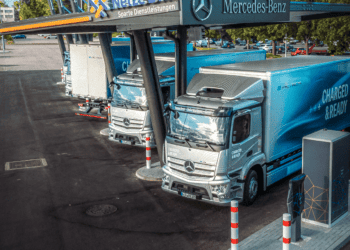
New entrants must use compressed natural gas or electric buses. Lagos has mandated compressed natural gas (CNG) and electric vehicles (EVs) for all regulated public bus operators and is targeting 52% of its Bus Rapid Transit (BRT) fleet to run on clean energy by 2050. Nigeria’s federal government aims to convert one million commercial petrol vehicles to CNG by 2027. The lower operating costs have kept regulated fares stable even as diesel prices more than doubled across the year.
Lagos still has enormous challenges. The BRT system covers roughly 15% of commuter routes, leaving much of the city’s transport demand to be met by conventional buses and informal operators. Three-hour commutes remain a fact of daily life, while the continued dependence on fossil fuels across transport, industry and household electricity generation means that cleaner buses alone cannot solve Lagos’s air pollution crisis.
Nevertheless, the policy direction that has been mandated rather than encouraged represents a governance decision Accra has not yet made.
Ghana’s Green Transport Gap
“Every government that comes in wants to add more cars,” says Omaboe, describing Accra’s decades-long pattern of road expansion without transit investment. Accra has a metro rail line, but its fares sit beyond the reach of ordinary commuters making developments like these inaccessible to the majority of the population.
The 2024 budget waived import duties on electric vehicles for public transportation until 2032, a clear signal of intent to begin replacing the ageing diesel fleet. But the gap between the gesture and the reality is considerable. Private buyers importing a fully built electric car pay standard 20% import duty plus additional levies. No used EV market exists in Ghana. Charging infrastructure is minimal. Ghana has no bus rapid transit system, no urban rail, no low emission zones, and 51 kilometres of cycling infrastructure with no protected bikeways in a city of five million people.
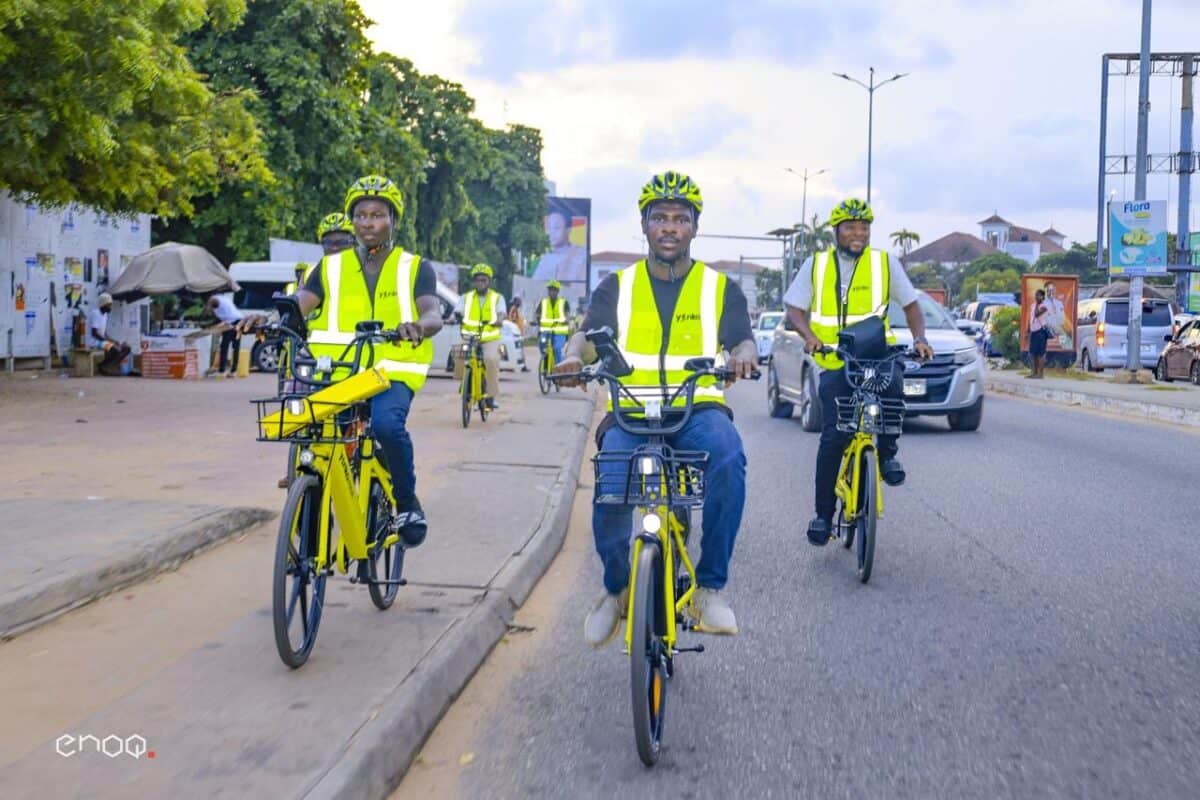
That absence is what Transform Transport Accra is trying to make visible. Every year, Omaboe and the organisation lead the ‘Tour Accra by Bike’, a cycling event through the capital’s streets designed to demonstrate what policy papers cannot.
“It’s a show of what’s possible,” Omaboe says. In Europe, streets are regularly closed to cars, giving cyclists, pedestrians and public transport more space and changing how people experience the city.
Asked what single infrastructure decision would make the biggest difference, he pointed to an Active Mobility Policy: a formal government commitment to building and protecting walking and cycling infrastructure across the city.
When public transport fails, the burden falls hardest on those with the fewest alternatives. Low-income commuters endure hours in traffic, while trotro operators face the high cost of switching to cleaner vehicles, with little government support or financing available. The duty waiver helps importers of commercial EVs. It does not help the driver of a 2003 Toyota HiAce working out how to maintain his livelihood.
Asked what clean affordable mobility should look like, Omaboe pointed to “something like mass transit. Not individual EVs, a system: connected, scheduled, integrated, built for the commuter with no car and no fallback.”
A well-designed BRT system, with dedicated lanes and scheduled CNG or electric buses, could move more people faster and efficiently than thousands of trotros stuck in traffic. The demand is there: 70% of commuters already use public transport of some kind. The World Bank’s Ghana Urban Mobility and Accessibility Project (GUMAP) is channeling investment toward exactly this challenge. What is missing is the political commitment to make the transition mandatory rather than aspirational.
Omaboe, who has said publicly that he wants one day to be Mayor of Accra, is unambiguous about what that commitment must look like: an Active Mobility Policy that builds the streets, the lanes, and the networks that make cleaner movement possible for everyone, not only the elite who can afford to import electric vehicles.