
On the evening of July 8th 2025, officials from Ghana and Switzerland gathered in Accra to mark a milestone. Ghana had just completed something no other African country had done before: a clean, end-to-end transfer of Internationally Transferred Mitigation Outcomes (ITMOs), carbon credits fully compliant with the Paris Agreement, from a project on Ghanaian soil to a registry in Switzerland. Ghana’s Environment Minister praised the technical team. The Swiss Ambassador called it a landmark.
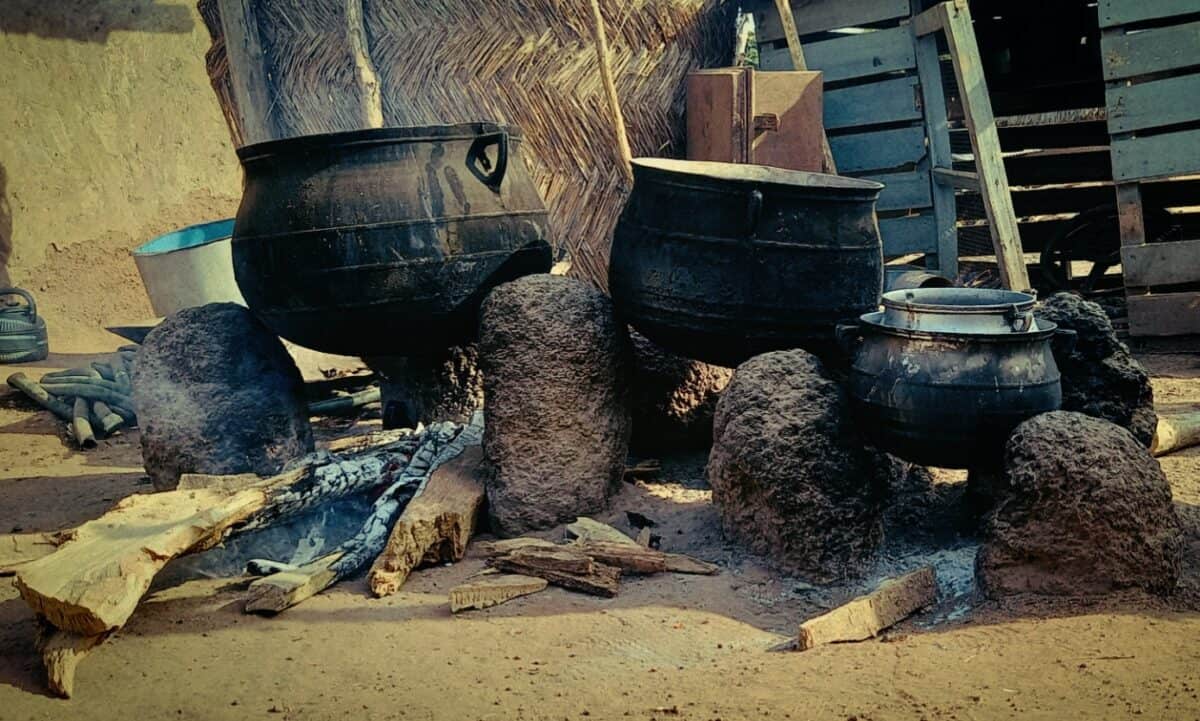
The transfer covered 11,733 tonnes of CO₂ equivalent, generated by the Transformative Cookstove Activity in Rural Ghana, a project designed to reduce household fuel consumption and the emissions associated with cooking. Under the arrangement, the verified reductions were transferred to Switzerland to contribute towards its climate commitments under the Paris Agreement. Of Ghana’s 91 pipeline projects, clean cookstoves make up the largest category, with 26 proposals aiming to distribute 9.1 million stoves by 2030. The first ITMO transfer came from this same project, implemented by Envirofit and ACT Group.
Since 2020, Ghana has built a carbon market infrastructure from scratch: a national carbon registry, a Carbon Market Office to receive and evaluate project submissions, a regulatory framework under review, and bilateral cooperation agreements with Switzerland, Sweden, and Singapore. It is rated among the most advanced parties implementing Article 6 of the Paris Agreement, the rules governing how countries can trade carbon credits without undermining their own climate commitments.
Ghana’s Carbon Market
As of mid-2026, Ghana had 91 projects in its national carbon-market pipeline, 11 of which had been authorised for international transfer, covering 12.7 million tonnes of CO₂ equivalent. The 11,733 tonnes transferred to Switzerland in 2025 were the first completed transaction within this broader effort. The Carbon Market Office estimates that the market could attract more than USD 1 billion in investment by 2030. The scale of that ambition, however, raises questions about how much of the pipeline will translate into completed projects and actual transfers.
“If you read the official press releases out of Accra, you would think we are orchestrating a sweeping national economic transformation,” says an official at Ghana’s Carbon Market Office, speaking in a personal capacity. “But if you actually sit in the room where project submissions are evaluated, the pipeline looks very different. We built world-class Article 6 plumbing, but what is flowing through those pipes right now is mostly basic distribution activities, not structural energy shifts.”
In other words, the projects moving through the carbon-credit system are still largely focused on distributing equipment, such as cookstoves, rather than driving broader changes in how the country produces and uses energy.

The Projects Carbon Finance Favours
Ghana’s pipeline includes 26 cookstove proposals but just three solar energy projects. For a country whose transport sector relies almost entirely on oil products and whose electricity supply remains heavily dependent on thermal generation, the imbalance raises questions about which kinds of projects carbon finance is incentivising. An official at Ghana’s Carbon Market Office attributes this to the way carbon finance is structured, rather than to Ghana’s broader energy priorities.
“It comes down to risk, capital structure, and sector complexity,” the official says. “Cookstoves are fast to deploy, straightforward to verify, and yield quick returns for international buyers. Utility solar or EV charging networks require tens of millions in upfront capital and multi-year grid integrations. Because carbon credits are paid ex-post, after reductions are demonstrated, carbon revenue alone cannot de-risk a major power project in Ghana. It can only top up a project that is already bankable.”
The result is a carbon market that favours projects capable of delivering quick, verifiable returns over the larger, capital-intensive investments needed to transform Ghana’s energy system.
Carbon finance has always flowed toward what is easy to verify. Under the Kyoto Protocol, Africa received less than 3% of all Clean Development Mechanism projects, reflecting broader barriers to investment across the continent. The Paris Agreement has changed the framework, but many of the same incentives remain.
The Cost of Ghana’s Climate Commitments
Ghana has designated 24 million of its 64 million metric tonnes of potential carbon credits for international transfer. Under Article 6, internationally transferred mitigation outcomes require a corresponding adjustment: Ghana cannot count the transferred reductions towards its own NDC targets if they are being counted towards those of the purchasing countries. Ghana receives investment and revenue in exchange. The logic is defensible.
“There is a real, unaddressed tension with our long-term NDC commitments,” says an official at Ghana’s Carbon Market Office. “When a foreign buyer comes with hard currency, short-term fiscal revenue almost always overrides 2030 climate accounting. If we transfer our cheapest, most accessible mitigation outcomes today, Ghana will be forced to fund far more expensive industrial decarbonisation out of our own constrained budget later.”
The integrity of the credits themselves is a separate concern. In 2024, a Swiss NGO alleged that the cookstove project behind Ghana’s first ITMO transfer relied on assumptions that inflated the number of credits generated. The allegation was contested, but concerns over inflated emissions reductions have surfaced repeatedly across the voluntary carbon market. But it surfaces the oldest problem in carbon markets: when the incentive is to maximise credits, the methodology used to calculate them becomes a site of pressure. “Additionality remains the most uncomfortable topic in these meetings,” another Carbon Market Office official says. “Project developers push baseline methodologies to the absolute boundary. We are a small civil service team operating against teams of international carbon consultants whose sole objective is maximising credit yield.”
Ghana’s Deputy Speaker has warned in Parliament that selling credits cheaply now could leave Ghana short of what it needs to meet its own climate targets. “Ghana must not become a destination for low-quality carbon projects,” he said.
A carbon market designed for Ghana’s energy transition would look different. It would direct finance toward off-grid solar, biogas, electric mobility, and methane reduction, sectors where carbon revenue changes investment decisions rather than topping up projects that would happen anyway. These are harder to verify than cookstoves. They are also where the transition actually needs to go.
An official at Ghana’s Carbon Market Office argues the country needs to stop letting buyer preferences set the agenda: “If an international buyer wants ITMO authorisation for low-cost cookstoves, they should be required to co-invest in a blended portfolio that includes grid solar, public transit electrification, or agricultural methane capture. We must dictate the terms of trade rather than just approving what foreign buyers find convenient.”