
Creating a comprehensive carbon market requires more than a simple two-sided marketplace; it means bringing together project developers, compliance specialists, carbon traders, corporate purchasers, and market platforms, alongside the teams that certify and monitor projects and the robust policy signals needed to support market growth.
Project Development
Carbon credits can be generated through a wide array of projects, including biochar and reforestation to direct air capture. The Energy Pioneer spoke with carbon project developers across various geographies and technologies to understand how projects are created.
Lono, a Côte d’Ivoire-based biogas and biochar company, has used carbon credits as a financial tool to scale its biogas manufacturing capabilities. The company’s primary product is a biodigester that turns waste into biogas and organic fertilizer, but it has developed its carbon credit program to further reduce upfront costs. During a conversation with Lono Co-Founder and CTO Kombo Ekra Noël N’guessan, he explained that using biochar credits as bridge financing to reduce costs and commercialize their biogas stoves is what allows them to compete in their primary market.
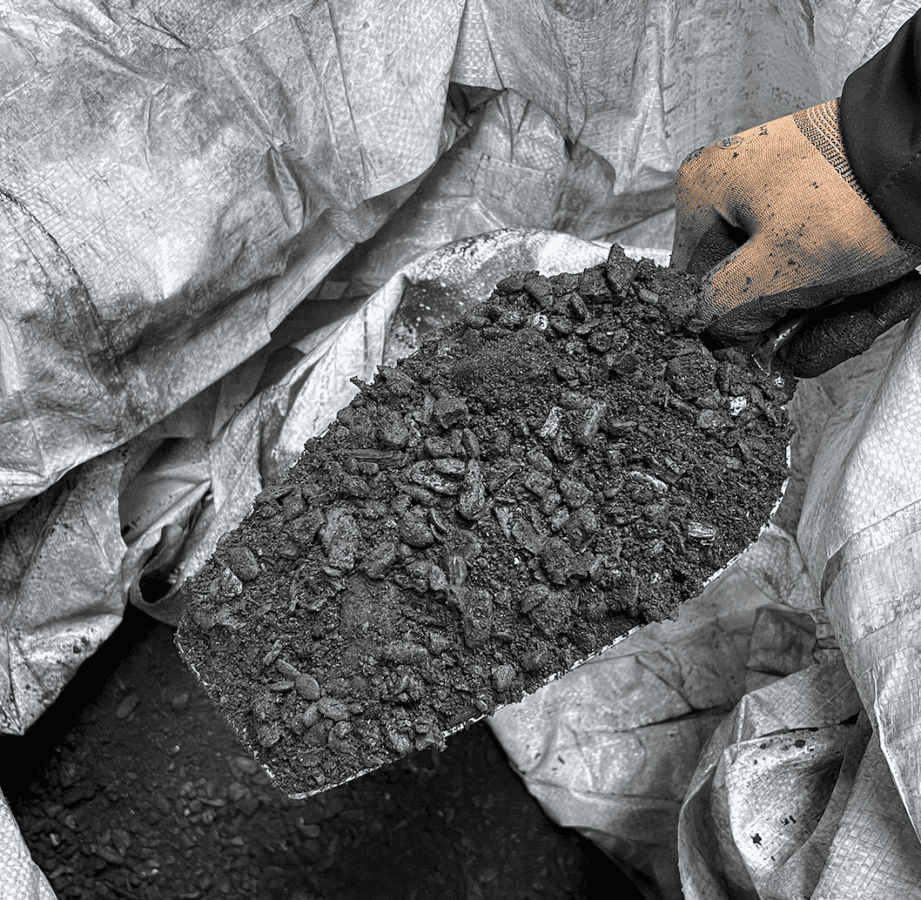
Alongside Lono, carbon removal company Cotierra has been developing its biochar technology to deliver verifiable carbon removal in collaboration with smallholder farmers. Revenue from carbon removal credits helps finance biochar production and use, enabling farmers to benefit from healthier soils, better water retention, and more resilient crops. As CEO and Co-founder Thomas Käslin explained, biochar makes carbon removal tangible: the stored carbon can be seen, touched, and tested. By assessing the biochar’s carbon content and durability, measuring production volumes, and accounting for emissions across the process, Cotierra can reliably quantify net carbon removed. This measurable approach gives buyers greater confidence in the climate impact of their purchases and directly addresses one of their primary concerns: greenwashing.
Similar to how carbon credits can be used to help finance growth in biogas markets, clean cooking companies BioMassters and BioLite use carbon credits as an income offset to grow stove adoption.
Yasmine Karam, Chief Operating Officer at BioMassters, a Rwandan-based clean cooking company, explained how the company uses carbon credits to subsidize the stoves in locations where purchasing power is low. This tool allows the company to expand its manufacturing and pellet business, drive down production costs, and reach profitability through its original fuel-based business model.

Similarly, Erica Rosen, Vice President of Marketing at off-grid power and clean cooking company BioLite offered a similar note on how carbon credits can be used to offset costs.
When asked about the importance of carbon credits, Rosen emphasized that they are an important tool for growing the cookstove market in emerging markets. Adding carbon credit revenue allows a higher distribution rate of high-quality cookstoves while maintaining a sustainable, scalable business. Notably, Rosen explained that these credits meet CORSIA compliance standards, and that CORSIA’s transition from voluntary to mandatory in 2027 could attract more buyers through a more regulated landscape.
Building a Carbon Marketplace
Creating a unified approach to purchasing and trading carbon credits comes with its own set of challenges. These include adapting to changing compliance policies, sourcing verified projects, and building an easy purchasing system.
ClearBlue Markets, a Toronto-based carbon markets consultancy, has developed its Vantage platform to bring security and ease of use to both the voluntary and compliance carbon markets. ClearBlue Markets’ Chief Technology Officer Nicolas Girod explained during a September call with The Energy Pioneer how the company built the platform to track carbon compliance effectively. One of its most important tools is the scenario builder. Girod outlined how regulatory uncertainty over free allowances and timelines in the European Union leaves companies facing a wide range of possible compliance costs.
The scenario builder lets them manage low- and high-case assumptions for that exposure. This now extends to Scope 3. Under the EU’s Carbon Border Adjustment Mechanism (CBAM), importers of goods such as steel, aluminum, and cement pay for the emissions embedded in their supply chain, turning Scope 3 emissions into a direct cost tied to the EU carbon price.
Vantage is further designed to improve access to liquidity through a request-a-quote system built to speed up pricing on EU allowances. Girod explained that carbon markets are predominantly over-the-counter and bilateral, which has allowed ClearBlue Markets to operate between pure carbon accounting and large financial trading exchanges.
The other challenge is the carbon credit market, which has fluctuated as voluntary carbon markets continue to shift. In an effort to simplify the market for purchasers, California-based carbon credit portfolio provider CNaught has developed an easy solution for buyers to access high-quality credits and build diversified portfolios. During a conversation with CNaught co-founder and Chief Operating Officer Steven Siger, he explained how the company has built carbon credit portfolios- similar to index funds- which only include high-quality projects and reduce exposure to individual project risks. This is a particularly impactful solution for the small-to-mid-sized buyers entering the market, as they oftentimes do not have the extensive, dedicated sustainability teams present at major corporations.
In response to a question about how CNaught can mitigate ongoing concerns in the carbon credit market, Siger referenced the due diligence every project undergoes, as well as the requirement for a high rating from an independent third-party agency, such as Calyx Global, Sylvera or BeZero. As added assurance, CNaught provides what it calls the “CNaught Guarantee”, under which the company covers the cost of backfilling credits if a project is permanently suspended or removed from a registry.
The Two-Sided Challenge
One of the most immediate challenges is ensuring buyers and sellers work from the same information on underlying projects, scientific methodology, and systems. Engineered carbon dioxide removal (CDR) standard and registry Puro.earth has developed its methodologies, approaches, and tech stack so project developers and carbon credit purchasers can buy and sell as simply as possible, without compromising on the underlying scientific rigor.
During a conversation with Benno Fuchs, Chief Operating Officer at Puro.earth, he explained how the two sides of the market seem to pull each other along. Fuchs outlined how the next generation of engineered carbon dioxide credits is seeing increased, regular commitments from corporate offtakers that emphasize quality.
Interestingly, he pointed out that the historic bottleneck for scaling the carbon industry has been on the demand side, but strong offtake interest in verified credits today is signaling to developers to scale.
During an October conversation with Founder and CEO of Emsurge Melissa Lindsay, she
explained how the company built a global platform – Emsurge Open Markets (EOM) – for the bilateral trade of carbon credits, so companies could have the efficiency of exchange technology but trade directly on bespoke terms. The platform also allows project developers or intermediaries to create their own storefronts. Since the company works primarily with the secondary market and corporate purchasers, simplifying the process and speeding up volume sourcing is key.
Lindsay outlined how they have created a filter system so that corporate buyers can sort projects to ensure they meet compliance requirements or internal quality thresholds. Lindsay concluded that the aviation carbon compliance scheme, CORSIA is the biggest driver of investment in carbon markets today, leading to a liquid secondary spot and futures market for trading CORSIA-eligible compliance units.
Tracking Carbon Compliance
UK-based AlliedOffsets has built perhaps the most comprehensive carbon market database currently on the market. During a September call with their Project Lead Maria Orsola Benzoni, she explained the challenge of developing a two-sided marketplace in which corporations can source carbon credits while AlliedOffsets works alongside project developers to ensure a quality supply of credits. Benzoni emphasized the challenge that comes in working across changing regulations and project standards, requiring AlliedOffsets to continuously update the database and customer tools.
While sitting at the intersection of project developers and corporate purchasers, AlliedOffsets also tracks 37 different registries. They analyze this data alongside project modeling data from partners, combined with policy research, to build a strong outlook on trading, buying, and developing projects.
The Importance of Quality
Over the last decade, the carbon marketplace has come under scrutiny, facing claims of greenwashing and overcrediting. When purchasing carbon credits, corporations often face an unfamiliar market and focus primarily on credit quality.
Donna Lee, Co-Founder at Calyx Global, explained that their platform provides information on the assumptions and validity of each project’s climate benefit claims, reducing risks for carbon credit purchasers. Calyx analyzes everything from soil oxidation rates of landfill methane to estimates of carbon sequestration from tree-planting. As Lee explained, credit quality varies. For the market to grow, corporate purchasers need to be sure that the credit claims are valid.
Readers can join our Climate and Clean Energy Network for updates and developments from companies across the emissions tracking and offset space, including Calyx Global, AlliedOffsets, CNaught, ClearBlue Markets, LONO, BioLite, BioMassters, Emsurge, Cotierra, and Puro.earth.