
Roger Miksad, President and Executive Director of Battery Council International (BCI), a North American trade association representing battery manufacturers, recyclers, suppliers, and distributors, discusses emerging battery chemistries, energy storage demand, domestic manufacturing, and battery recycling.
Q: What role does BCI expect newly commercialized battery chemistries — such as sodium-ion, flow, and zinc-ion — to play in meeting energy storage demand?
A: The bottom line is that the market for energy storage is growing fast, and both the private and public sectors are looking to the full breadth of battery chemistries to fill the gap. No battery is perfect for every application, and even if one were, the uncertain nature of global supply chains requires diversification to ensure end users can get the batteries they need.
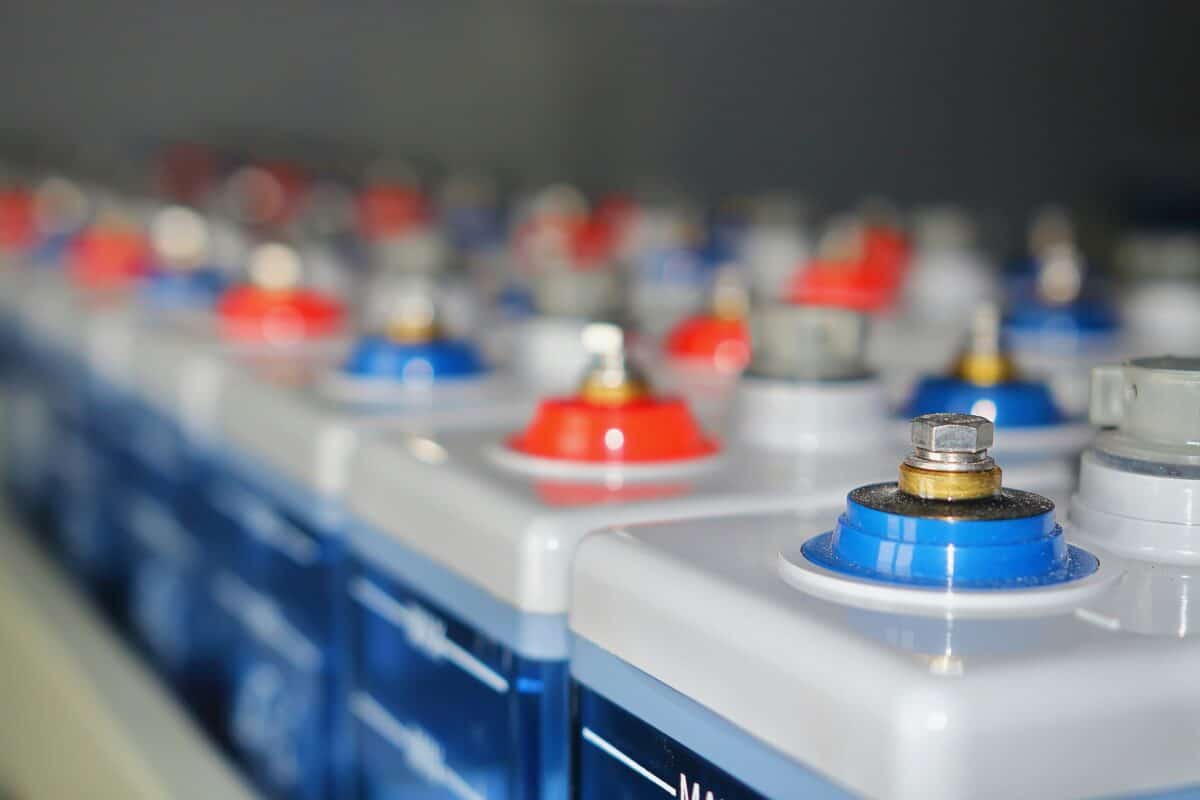
BCI is encouraged by developments in advanced lead, flow, sodium, and other emerging battery chemistries as they seek a path to widespread adoption and commercialization. Of course, we believe incumbent technologies – like lithium-ion cells for EV drivetrains or lead batteries for low-voltage applications – will continue to fill an important role for decades to come. But we’re doing everything we can to ensure other emerging chemistries have the support to succeed, drawing on the century of continuous improvement and growth we’ve seen in lead batteries.
That’s why BCI has individual working groups for emerging chemistries such as sodium and flow, and why we host focused events to discuss market developments and opportunities. For instance, we held BCI’s first Flow Batteries North America conference last year, the first dedicated event on the continent for that battery technology. About 200 delegates attended, and we’ll be hosting another event in Phoenix this October to build on that success.
Admittedly, it’s early days for flow batteries and other emerging chemistries. But we’re excited by the potential and will do everything we can to support a vibrant, diverse marketplace for energy storage.
Q: How has demand for long-duration energy storage (LDES) and battery energy storage systems (BESS) for renewable energy projects changed the landscape of battery development and commercialization in the US and beyond?

A: LDES and BESS demand, driven by renewables integration and now AI data-center growth, has reshaped both technology priorities and industry structure. As you know, the American BESS market is projected to grow significantly over the next five years.
The challenge, then, is ensuring supply meets demand. That harkens back to my earlier point about a diversity of energy storage solutions. Production needs to scale up across the board and include both incumbent and emerging battery chemistries.
At BCI, we’ve seen the industry grow much closer to the public sector as a result of this trend. In the US, some 10 trillion dollars in economic output is related to or reliant on batteries, and policymakers understand the risks if we fall short of our energy storage requirements. The US Department of Energy and its National Laboratories have made a concerted effort to support research and innovation through programs like the Consortium for Lead Battery Leadership, which is managed by BCI. We were awarded a grant in 2024 specifically to explore improvements to the cost-effectiveness of lead batteries to help meet the needs of grid-scale storage. This type of consortia-based, public-private partnership research program ensures that American tax dollars and the nation’s preeminent research laboratories bring benefits and advancement to a broad spectrum of industry players.
The North American battery industry is strong, but the grid-scale storage demands of the future are admittedly daunting. It will take continued public-private partnerships at the federal, state, and local levels to foster the kind of battery development and commercialization needed to reliably meet future demand.
Q: How can battery companies scale domestic manufacturing of new technologies without falling victim to the large capital expenditures (CapEx) of battery manufacturing facilities?
A: In short, building battery production capacity is an expensive, long-term effort that necessarily requires substantial capital. However, BCI fought hard to ensure that federal production credits for battery manufacturers incentivize that investment and accelerate future expansion projects.
Congress approved critical 45X production credits for battery companies in 2022, and I’m pleased to say that Congress and the White House have protected those credits since then. That’s because energy storage manufacturing is a bipartisan concern we must address with urgency. It’s also because this was not a handout, but a credit for every new battery produced.
Building a safe, effective battery manufacturing facility is expensive, and there’s no way around that. But finely calibrated policies like this one can ease the burden for domestic manufacturers – and we hope that, in the near future, Congress will recognize the benefit of the original 45X provisions and consider expanding and extending them to support this long-term effort to scale up battery manufacturing.
Q: How can end-of-life (EoL) and recycling processes for batteries provide the critical materials needed for the energy transition, and what needs to be put in place and what needs to be put in place, policy, best practices, financial incentives, to ensure a high recycling rate?
A: The good news for critical battery materials is that a successful, proven recovery model already exists: the US lead-acid battery recycling network.
BCI just published its latest recycling rate study, showing that lead batteries maintained their impressive 98% recycling rate, recovering more than 174 million batteries and more than 2.2 billion pounds of lead annually. Long-term rates have averaged around 99% since 2000, showing this isn’t a single data point but a sustained commitment to success and circularity.
Lead isn’t the only critical mineral designated by the US Geological Survey, however, and other critical battery minerals still have significant room for improvement in recovery rates. But recycling processes for all battery chemistries can be informed by the success of lead battery recycling – most notably, a system built on industry-led standards and a proven commercial model for material recovery, rather than reliance on regulatory mandates or costly government bureaucracy.
The battery industry fundamentally needs raw materials to do business. It’s also best equipped to understand the supply chain challenges and infrastructure needs required to achieve a similar recovery rate for other battery chemistries. That knowledge, coupled with the right government incentives and partnerships, is the best path to unlocking circularity for all critical battery minerals.