
As China leads the world in solar and wind growth, it is also expanding elsewhere – in coal gasification and natural gas power generation. Over the past decade, backed by government policies, China has grown its coal-to-chemical and coal gasification fleets, invested heavily in domestic and overseas gas exploration, and expanded its liquefied natural gas (LNG) storage and transport infrastructure. The result – China is now the world’s largest coal gasifier, importer of LNG and projected to overtake Iran as the world’s third largest gas producer by 2030.
To many, the fact that China is expanding coal gasification and natural gas while also leading in renewables seems like a contradiction. But in fact, it shows how the ruling Chinese Communist Party values one thing above all – energy security.
Why Coal Gasification
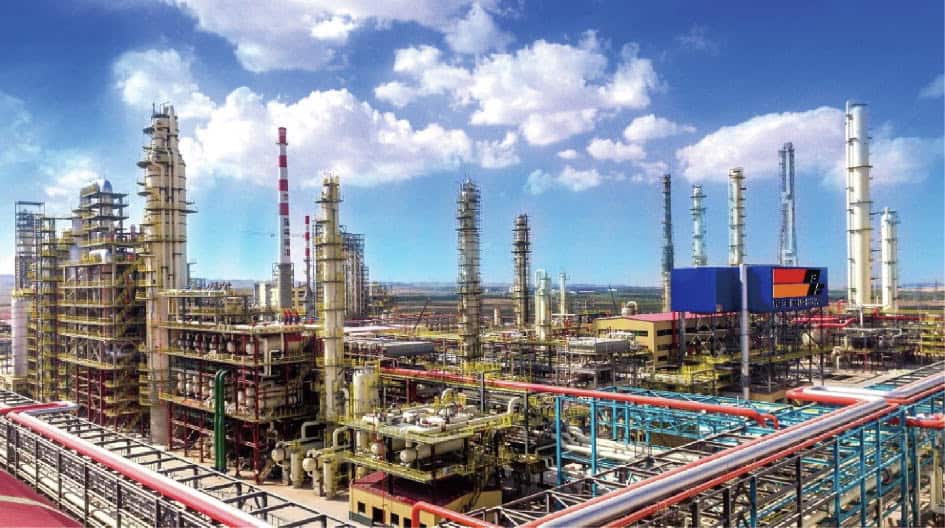
Coal gasification refers to the process of turning coal into a direct fuel replacement for liquid petroleum gas (LPG), while coal-to-chemicals involves using coal as an alternative feedstock to oil to produce various petrochemicals. In China, it’s been the latter that’s been a major growth area.
The primary focus in China is reducing reliance on imported LPG. According to a recent analysis from Rystad Energy, coal-to-gas demand is projected to grow from 9.4 billion cubic meters (Bcm) per year by the end of 2026 to 28 Bcm per year by 2030. There are now numerous newly opened and planned coal-to-chemicals plants. In 2024, these plants consumed 276 million tons of coal, nearly as much as all of Europe, and accounted for about 4% of China’s national emissions.
“China’s coal-to-gas program is a direct expression of its energy security doctrine,” said Wei Xiong, vice president for gas & LNG Markets at Rystad Energy. “In a world where LNG supply chains and pipeline routes are increasingly affected by geopolitics, China is investing in molecules it can produce, store and move without reference to any foreign supplier.”
Proponents argue that turning coal into chemicals or fuels is beneficial as it takes advantage of a domestic fuel source, reducing imports and increasing energy security. But critics note that coal-to-chemicals is expensive and has worrying health and community impacts, both upstream and downstream, and that cleaner alternatives exist. It could also lock in decades of coal consumption, making it harder for China to reduce emissions in-line with Paris Agreement targets. As natural gas and petroleum imports remain limited by ongoing conflicts in the Middle East and Eastern Europe, using domestic coal, China’s most abundant resource, as a petrochemical feedstock looks increasingly attractive. But with that comes worrying climate impacts.

“Coal-based chemical production generally has much higher emissions than oil- or gas-based alternatives,” said Xinyi Shen, a researcher at the Centre for Research on Energy and Clean Air. “In other words, this sector risks offsetting part of the climate gains being made elsewhere.”
Of note, current expansion is concentrated primarily in Xinjiang, homeland of the mostly Muslim Uyghurs, and Inner Mongolia. Both are coal-rich regions with weaker environmental and social standards than the Han Chinese-majority provinces in the East. That is no accident, according to Peter Irwin, formally with the Uyghur Human Rights Project, who wrote in an analysis that “Uyghurs will bear disproportionate environmental harms, echoing patterns seen worldwide where marginalized populations shoulder the costs of resource extraction.”
Expanding role in Natural Gas
With global oil and gas prices rising dramatically due to conflicts, China could soon reap the benefits of its decade-long strategy to expand domestic production, infrastructure, and overseas LNG contracts.
Since 2013, China’s gas consumption has tripled, and with it, greater control of the global gas market. Unlike the United States and Australia, which possess abundant energy resources and export fuels, China is highly dependent on energy imports, making energy security a key driver of the government’s top-down efforts to expand control over the natural gas sector. In fact, it was President Xi Jinping who, in 2018, pushed Chinese companies to produce and procure more gas.
“In response to President Xi Jinping’s call ‘to firmly hold the energy rice bowl in our own hands,’ Chinese companies continued to increase investment in domestic exploration and production,” said Shangyou Nie at the Columbia University Center on Global Energy Policy.
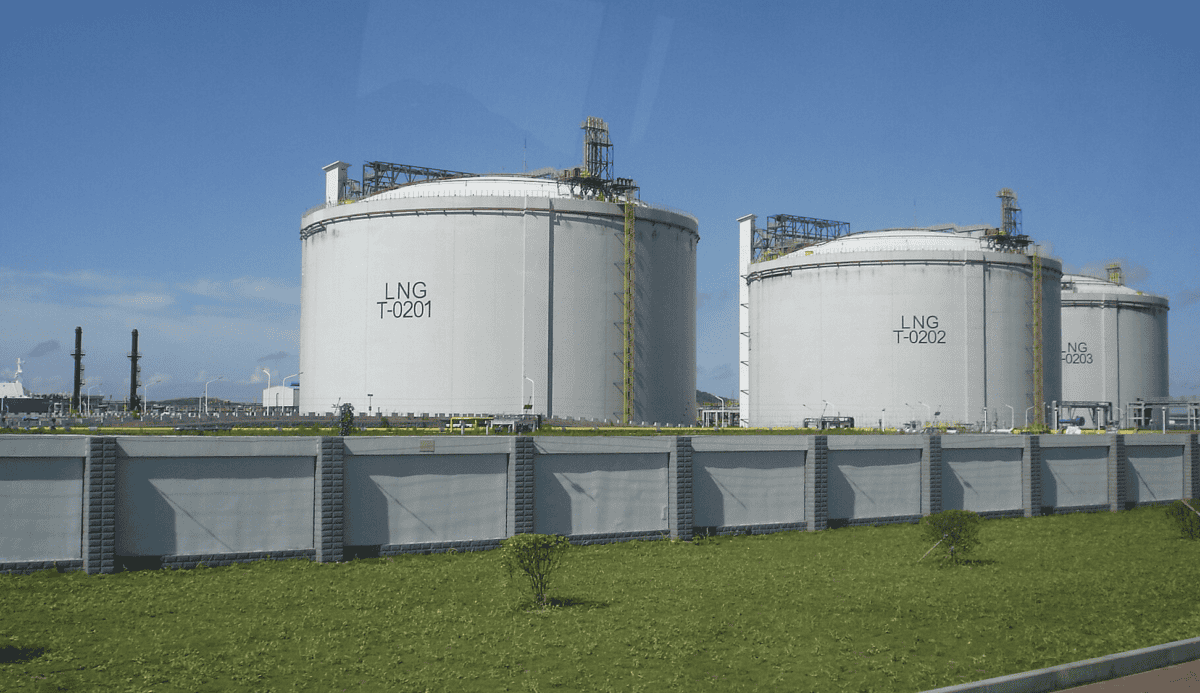
China’s diversification strategy means that the shutdown of trade along the Strait of Hormuz, where one-fifth of the world’s LNG flows through, may not have as big of an impact as it might for countries like Thailand, India, Korea, and Taiwan who rely more heavily on Qatar and the United Arab Emirates for its LNG. China has more domestic production, piped gas from central Asia and Russia, and new long-term contracts with other countries, such as Malaysia, Brunei, and Australia.
China’s expanded purchases of Russian gas have been seen as a way to support a partner and provide funding for its ongoing war. Having long-term deals with numerous countries, from the US andMalaysia to Qatar and Iran, provides reliability during the current energy crisis.
What about renewables?
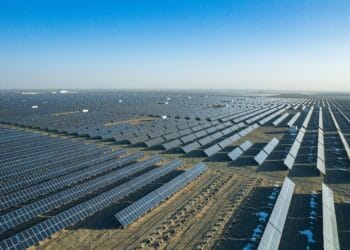
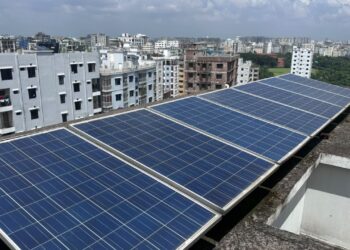
Why might China be seeking to expand its use of gas when it’s already the world leader in solar and wind? China has been in the headlines for its vast solar and wind mega-projects, adding more capacity than the rest of the world combined in 2025. But it’s barely made a dent in China’s ever-growing electricity demand, and still only accounts for only about 14% of generation, about the same as Australia and below Spain, Brazil and Morocco.
Solar and wind energy barely touch China’s industrial sector, which consumes a quarter of the nation’s energy and relies increasingly on natural gas. Furthermore, renewables cannot directly produce petrochemicals, though green hydrogen and ammonia may change that in the future.
For now at least, China will likely continue to expand gas and coal-to-chemicals as it seeks to remain energy secure in a challenging world.