The Energy Pioneer
No Result
View All Result
  • Home
  • Clean Tech
    • Electric Vehicles
    • Energy Efficiency
    • Green Hydrogen
    • Smart Grid
    • Battery Storage
  • Green Finance
    • Public Financing
    • Private Financing
    • Carbon Markets
  • Policy
  • Renewable Energy
    • Wind
    • Solar
    • Hydropower
    • Nuclear
    • Hydrogen
    • Fossil Fuels
    • Geothermal
  • Regions
    • Africa
    • Asia
    • Europe
    • North America
    • Latin America
    • West Asia
    • Oceania
  • Features
  • Who We Are
    • About Us
    • EP Network
    • Contact Us
  • Home
  • Clean Tech
    • Electric Vehicles
    • Energy Efficiency
    • Green Hydrogen
    • Smart Grid
    • Battery Storage
  • Green Finance
    • Public Financing
    • Private Financing
    • Carbon Markets
  • Policy
  • Renewable Energy
    • Wind
    • Solar
    • Hydropower
    • Nuclear
    • Hydrogen
    • Fossil Fuels
    • Geothermal
  • Regions
    • Africa
    • Asia
    • Europe
    • North America
    • Latin America
    • West Asia
    • Oceania
  • Features
  • Who We Are
    • About Us
    • EP Network
    • Contact Us
No Result
View All Result
The Energy Pioneer
No Result
View All Result
  • Home
  • Clean Tech
  • Green Finance
  • Policy
  • Renewable Energy
  • Regions
  • Features
  • Who We Are
Home Features

AI Can Scale Regenerative Agriculture – If Farmers Trust It

byFeatured Expert: Monica Varela
September 22, 2026
Reading Time: 3 mins read

When proponents of regenerative agriculture consider how they might get the practice to spread, they might begin with evidence, technology, finance, or policy. But convincing a farmer to change how they farm begins with trust. It’s the farmer, and not the person offering advice, who bears the consequences of failure. Any strategy for encouraging new practices must therefore earn farmers’ trust in the information, the messenger, and the institutions behind it. 

RELATED POSTS

ClimateTech Series: How Battery Companies are Scaling Production and Limiting CapEx

Climate Targets Need Money

Billion-Dollar Disasters: What the Data Reveals About Extreme Weather Costs

This is critical in places like my home country of Colombia. For decades, violence robbed rural farmers of their lands, their livelihoods and their futures. By the time Colombia signed the 2016 peace accord, rural communities were deeply fragmented. Farmland was degraded, and biodiversity was under growing pressure.
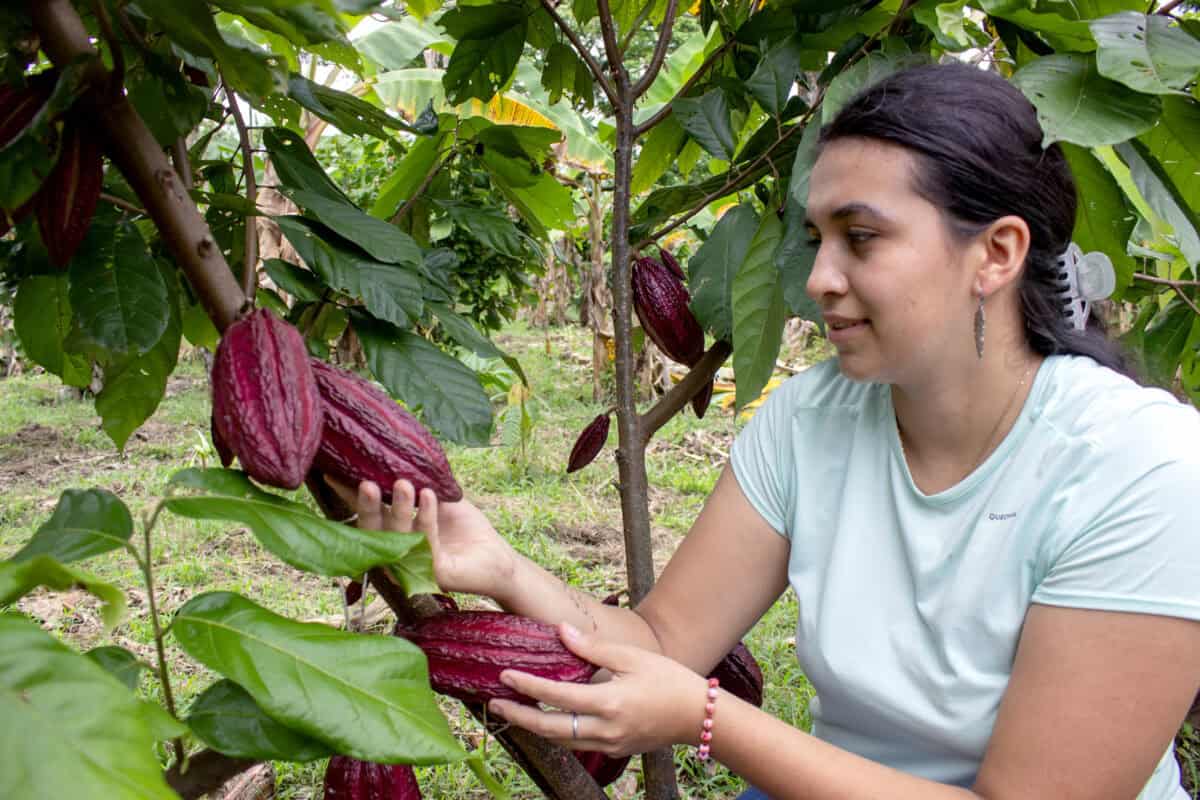
Sara Yulieth Ariza Marín on her family farm, She and her mother, Nelly Marín, are passionate about learning and implementing regenerative agriculture practices with Rare’s help. El Dorado, Meta, Colombia March 2025-Photo by Rare

Today, Colombia’s smallholder farmers face an urgent crisis. Seven out of every 10 farmers are smallholder farmers, and they are facing degraded soils, climate shocks, low productivity, and limited access to technical support. Meanwhile, the agricultural sector and land use account for approximately 60% of the country’s greenhouse gas emissions.  

Regenerative agriculture is part of the solution. Rooted in practices such as composting, seasonal crop rotation, and using natural fertilizers instead of synthetic chemicals, it offers numerous benefits for both people and nature. It helps restore the soil, supports biodiversity, promotes carbon sequestration, and creates more resilient landscapes. Regenerative agriculture can help produce higher crop yields, healthier food, financial security for farmers, and overall food security for communities. Our own comparative soil analysis between 2021 and 2025 showed increases in Soil Organic Carbon (SOC) and Cation Exchange Capacity (CEC) following implementation of regenerative practices.  

Despite the urgent need and clear benefits, it is hard for farmers, or anyone, to change behavior. Information alone is not enough. Farmers’ decisions are shaped by emotions, social norms, and the fear of adopting practices that may not work. Effective change requires addressing these human factors, not just transferring knowledge. 

Helping farmers adopt new practices requires an understanding of this human behavior and decision-making. That is why promoting regenerative agriculture always begins with listening to farmers. 

By talking to farmers in Colombia, I have learned that the people around them play a major role in their decisions about whether to adopt new techniques. Farmers trust the farmers around them. When farmers see their peers adopting regenerative practices, they may be more likely to adopt them, too.  

Buy JNews
ADVERTISEMENT
During a community workshop organized by Rare, local farmer Nelly Marín was teaching her fellow farmers about cover crops and how to protect the soil from direct sunlight. Meta, Colombia-Photo by Rare

Based on this insight, my organization established a network of farmer-to-farmer leaders, known as Profes (teachers). Their nickname reflects their role in educating their peers in sustainable practices like composting, crop rotation, and agroforestry. These trusted and respected leaders are creating the conditions for sustainable, regenerative practices to take root. Farmers aren’t being told what to do by an unfamiliar organization. Instead, they are being welcomed and respected by a friend or neighbor. That is fertile ground for behavior change.   

The Profes demonstrate how peer relationships can catalyze the adoption of new practices. But human networks alone cannot meet the demand for technical assistance. After all, in many regions of Colombia, only one extension advisor serves up to 5,000 farmers. Technology could help bridge that gap. Indeed, Bill Gates’ USD 1 billion commitment to equitable AI includes delivering advice to smallholder farmers. But for AI to be effective, farmers must trust the advice it provides.

We think we have found a way to do so in a new AI-powered virtual extension agent, Agent Tierra, that has successfully reached more Colombian farmers while still maintaining the trust of the Profes.  

Agent Tierra puts trusted technical support in the pocket of every farmer. It translates regenerative agriculture practices into accessible language, while respecting farmers’ experience, knowledge, and decision-making.  

But when designing the tool, instead of asking what artificial intelligence could do, we asked farmers what they needed. We set out to build a tool with farmers, not simply for them. 
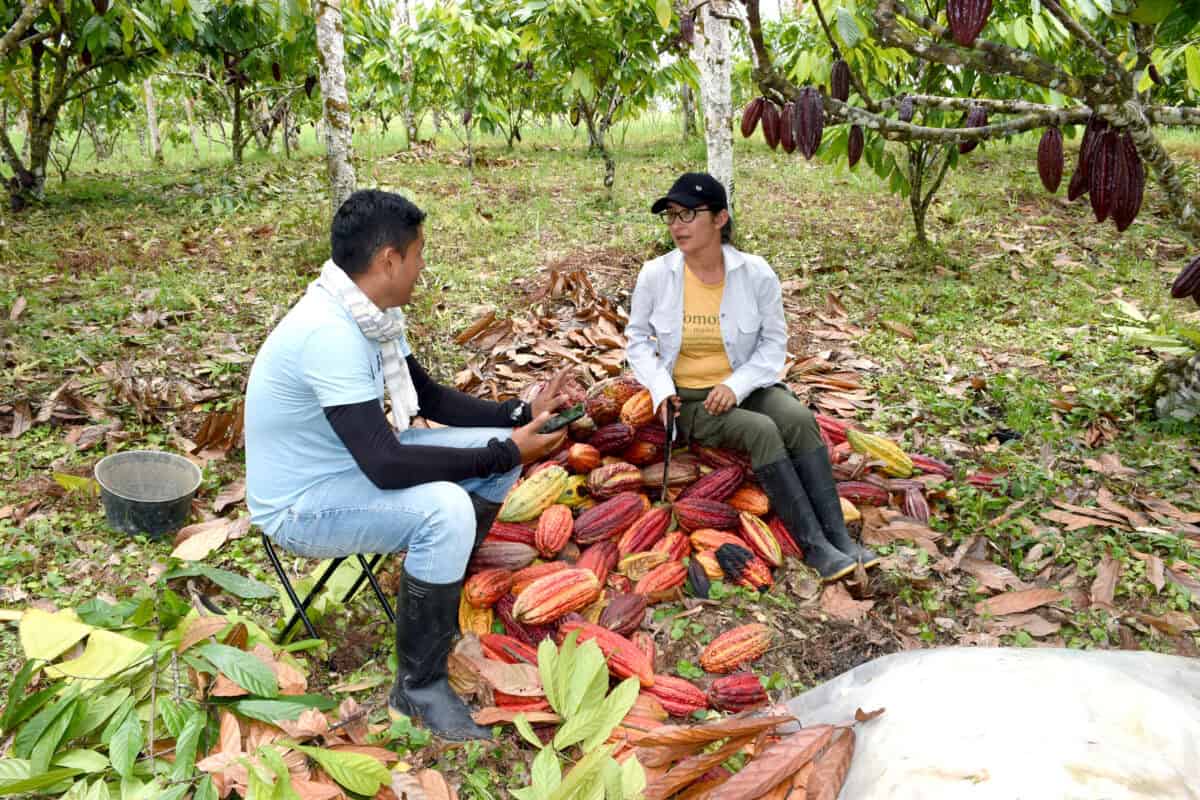
Cacao farmer Sandra Milena Bustos Gracia collecting baseline data. El Doncello, Caquetá, Colombia. September 2025-Photo by Diana Carolina Lozano for Rare

With over 600 million family farms operating globally, and many facing the impacts of climate change, we need a solution that can scale. Regenerative agriculture can help the planet while helping farmers. Technology can put trusted information in their hands.   

Success depends on whether those on the receiving end trust the information, the messenger, and the solution being shared. Trust is not a soft complement to scale; it is the foundation on which scale depends.

Tags: AIAI-powered virtual extension agentColombiafarmingregenerative agricultureSouth America
ShareTweetShare
Featured Expert: Monica Varela

Featured Expert: Monica Varela

Monica has worked in social development and the environmental NGO space for 20 years. She leads Rare’s work in Colombia and beyond to enable farmers, extension agents, and local leaders to shift toward regenerative agricultural practices. Under Monica’s leadership, Rare has reached thousands of farmers, trained hundreds of extension agents, and helped place over 5,000 hectares of farmland under regenerative practices. Monica has a law degree from Universidad de los Andes (Bogotá) and a Masters degree from the Lond School of Economics.

Related Posts

ClimateTech Series: How Battery Companies are Scaling Production and Limiting CapEx
Battery Storage

ClimateTech Series: How Battery Companies are Scaling Production and Limiting CapEx

September 21, 2026
Climate Targets Need Money
Features

Climate Targets Need Money

September 16, 2026
Billion-Dollar Disasters: What the Data Reveals About Extreme Weather Costs
Features

Billion-Dollar Disasters: What the Data Reveals About Extreme Weather Costs

September 11, 2026
The Five Most Important Moments in Virtual Power Plant History
Smart Grid

The Five Most Important Moments in Virtual Power Plant History

September 10, 2026
ClimateTech Series: Scaling Carbon Capture and Storage
Clean Tech

ClimateTech Series: Scaling Carbon Capture and Storage

September 9, 2026
The Era of the Big Fix
Features

The Era of the Big Fix

September 10, 2026
Next Post
World Bank Backs Togo’s Rural Energy Expansion With $160 Million RAISE Project

World Bank Backs Togo’s Rural Energy Expansion With $160 Million RAISE Project

Popular Stories

  • AI Can Scale Regenerative Agriculture – If Farmers Trust It

    AI Can Scale Regenerative Agriculture – If Farmers Trust It

    0 shares
    Share 0 Tweet 0
  • The Race to Host AI: Data Centres in Water-Scarce India

    0 shares
    Share 0 Tweet 0
  • Vietnam’s Oil Buffer Faces Pressure as the Iran War Disrupts Global Oil Flows

    0 shares
    Share 0 Tweet 0
  • The Sargassum Paradox: Why the Caribbean’s Clean Energy Hope is a Supply Chain Trap

    0 shares
    Share 0 Tweet 0
  • Caught Between India’s Military Ambitions and Green Promises: The Future of the Andaman and Nicobar Islands

    0 shares
    Share 0 Tweet 0

Actionable Info

From The Energy Pioneer

Where the energy transition connects.

Journalists, investors, companies, and clean energy leaders — all in one network.

Explore EP Network →

The Energy Pioneer

The Energy Pioneer covers the global energy transition — from clean tech and green finance to policy and renewable energy.

Recent Posts

  • World Bank Backs Togo’s Rural Energy Expansion With $160 Million RAISE Project
  • AI Can Scale Regenerative Agriculture – If Farmers Trust It
  • ClimateTech Series: How Battery Companies are Scaling Production and Limiting CapEx

Quick Links

  • Home
  • Clean Tech
  • Renewable Energy
  • Green Finance
  • Policy
  • Regions
  • Features
  • Who We Are

© 2026 The Energy Pioneer | All Rights Reserved. |

From The Energy Pioneer

Meet EP Network.

Enter your email and our team will reach out — or sign up directly.

Please enable JavaScript in your browser to complete this form.
Loading
or sign up directly →
From The Energy Pioneer

You read about the energy transition. EP Network connects you to it.

Leave your email and our team will reach out.

Please enable JavaScript in your browser to complete this form.
Loading
or
Sign up now →
No Result
View All Result
  • Home
  • Clean Tech
    • Electric Vehicles
    • Energy Efficiency
    • Green Hydrogen
    • Smart Grid
    • Battery Storage
  • Green Finance
    • Public Financing
    • Private Financing
    • Carbon Markets
  • Policy
  • Renewable Energy
    • Wind
    • Solar
    • Hydropower
    • Nuclear
    • Hydrogen
    • Fossil Fuels
    • Geothermal
  • Regions
    • Africa
    • Asia
    • Europe
    • North America
    • Latin America
    • West Asia
    • Oceania
  • Features
  • Who We Are
    • About Us
    • EP Network
    • Contact Us

© 2026 The Energy Pioneer | All Rights Reserved. |