
Rwanda’s 2016 National Electrification Strategy (NES) was set to rapidly electrify millions of homes, through grid expansion and off-grid solutions. But while the strategy significantly expanded access to electricity, new research suggests it also led to a sharp increase in greenhouse gas emissions.
Synthetic Rwanda: Measuring the Emissions Cost
The research team—Filippo di Pietro of the University of Seville; Kevin Campbell and Frederick Kibon Changwony of the University of Stirling Business School; and Michael Christl of Loyola University Andalusia and the Global Labor Organization—used a statistical technique known as the Synthetic Control Method. The method allowed them to determine whether the increase in emissions was actually caused by the electrification strategy, rather than by other factors that could also affect emissions, such as GDP, population growth or changes in weather.
To do this, the algorithm constructed a “Synthetic Rwanda” designed to closely match the country’s pre-2016 trajectory in GDP, population growth and weather-related energy demand, measured through cooling degree days.
“Because these factors were held equal between the real Rwanda and its synthetic twin, the identified 1,070 kiloton spike in greenhouse gas emissions represents the additional emissions caused specifically by the implementation of the National Electrification Strategy (NES), above and beyond what Rwanda would have emitted under normal economic and demographic trends,” the researchers explain.
The Sustainability Paradox
The researchers describe the result as a “sustainability paradox”: a policy that successfully expanded modern energy access while simultaneously making the country’s energy system, by some measures, less renewable and more carbon-intensive.

But they highlighted that this should not be regarded as a policy failure but simply the result of rapid electrification.
For African countries racing to close their electricity-access gap while meeting climate targets, Rwanda offers a cautionary lesson: expanding access to electricity does not necessarily mean expanding access to clean electricity.
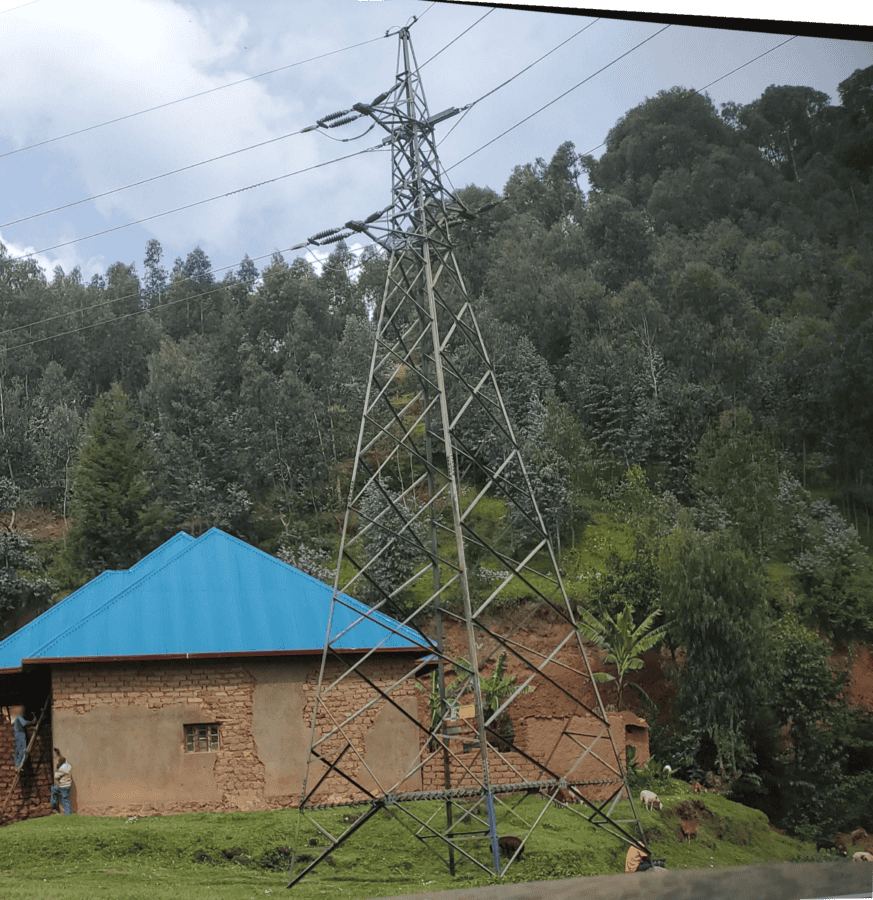
Part of the explanation lies in the physical demands of electrification: roads, concrete, power infrastructure, machinery and transportation are all needed to expand access, and all generate emissions. Building electricity networks across Rwanda’s famously hilly terrain can therefore produce emissions before a single household switches on a light.
The research team also tested whether the emissions spike could have been driven by non-energy sectors such as agriculture, land use or forestry. They conducted a second statistical analysis that isolated emissions linked specifically to electricity consumption.
“First, we estimated a regression to filter out non-energy variables and isolate the variation in emissions associated with electricity consumption. When we applied the Synthetic Control Method (SCM) to this…specific dataset, the results still showed a clear post-2016 emissions increase. This confirms that the emissions spike was a direct trade-off of the electricity expansion itself, rather than unrelated economic activities,” the researchers say.
It is only prudent to note that while the SCM is highly robust, the researchers cannot entirely rule out all unobserved, time-varying factors.
“It remains possible that concurrent, unmeasured events – such as other regional policy initiatives, separate donor-funded infrastructure projects, or political reforms – might have also influenced Rwanda’s real-world emissions trajectory independently of the NES,” they say.
The researchers argue that Rwanda’s “sustainability paradox” reflects a broader challenge facing developing countries: rapid electrification can bring environmental trade-offs, from infrastructure and development-related emissions to continued biomass use and the intermittency of renewable energy. Rwanda’s exceptionally rapid rollout amplified these tensions, while the pressure to keep electricity affordable can make cleaner alternatives harder to prioritise.
Rwandan Policy Reforms
Having not incorporated decentralised renewable energy, low-carbon grid planning, targeted subsidies and concessional finance into the 2016 strategy, the government now intends to make these changes.
In May of this year, Rwanda launched a USD 300 million energy financing program aimed at expanding access to reliable, clean and affordable electricity, with support from the African Development Bank (AfDB) and Asian Infrastructure Investment Bank (AIIB).
For African governments preparing massive electrification programmes, the researchers have a straightforward message: leaving climate considerations until after electricity infrastructure has been built can make the transition to a cleaner system more difficult and expensive.
The researchers also urge governments to tackle issues like household cooking directly, rather than assuming that grid access will automatically eliminate biomass use. Biogas, solar home systems, clean cooking technologies and targeted financing could help households move away from wood and charcoal without waiting for conventional grids to reach them.
As Africa rushes to electrify and connect hundreds of millions of people to the grid, the way that expansion is delivered could determine whether the continent’s development comes at the expense of its climate ambitions.