
On the Mutare-Masvingo highway, about 40 kilometres outside Zimbabwe’s eastern border city of Mutare, a woman and a child carrying bundles of firewood dash across the road as they make their way home.
They have been to a nearby forest to collect fuel for cooking; a routine that remains part of daily life for many rural households in this part of the country.
With limited access to electricity and other modern cooking fuels, families often rely on firewood, charcoal and other polluting fuels to prepare their meals. In poorly ventilated kitchens, the smoke can accumulate, exposing women, children and other household members to harmful pollutants and household air pollution.
Nearly one in four people still rely on polluting cooking fuels such as wood, charcoal and kerosene. Household air pollution from these fuels is a major health and environmental concern, contributing to more than 3 million premature deaths each year, according to the Clean Cooking Alliance (CCA). Household air pollution accounts for about 697,000 of those deaths, according to a study published in The Lancet Planetary Health by researchers led by Boston College’s Global Observatory on Pollution and Health.
But a potential solution may already be available in Zimbabwe’s countryside — in the form of animal manure and other organic waste.
Biogas digesters can convert livestock manure and other organic material into a combustible gas that can be used for cooking. Inside an enclosed digester, microorganisms break down organic material in the absence of oxygen, producing biogas made primarily of methane and carbon dioxide.
For rural households that keep cattle, pigs or other livestock, this offers an opportunity to turn what is often considered waste into a useful source of household energy.

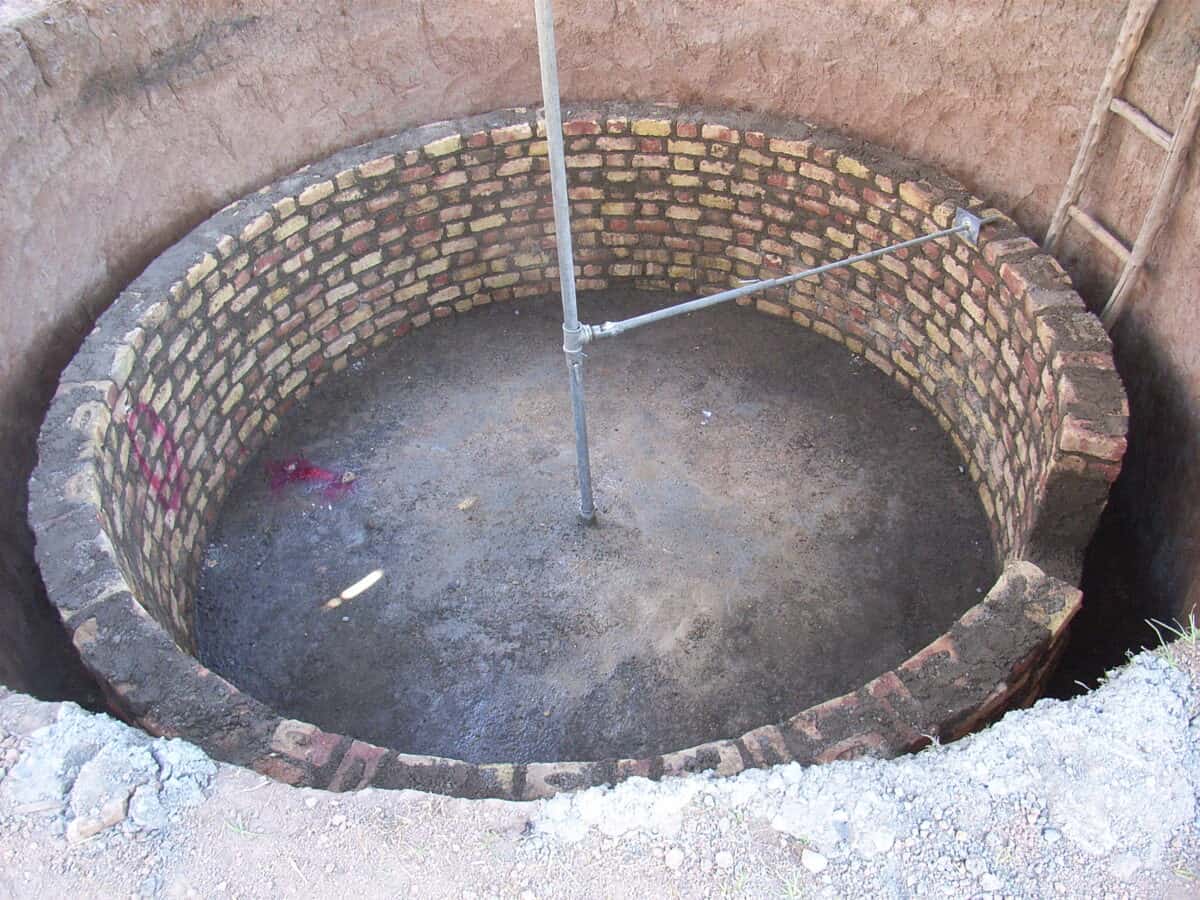
Instead of walking long distances to collect firewood, households with functioning biogas systems can feed animal manure into a digester and use the resulting gas on a purpose-built stove. The process also produces nutrient-rich slurry that can be used as fertilizer, providing an additional benefit for farming households.
Last year, Mohammad Taherzadeh, a professor of bioprocess technology at the Swedish Centre for Resource Recovery at the University of Borås in Sweden, told The Energy Pioneer that biogas can help manage waste while producing energy at a range of scales, from small household systems to large industrial reactors.
“It can produce gas for cooking, lighting, heating, etc., for electricity production by small engines and also to produce fertilizers for agriculture,” Professor Taherzadeh said.
He added that researchers were also developing more advanced systems capable of using the same process to produce animal feed for cattle and sheep.
Yet despite its potential as a cleaner cooking option, biogas remains relatively inaccessible to many farmers in Zimbabwe. Limited awareness, upfront costs and a shortage of technical knowledge and support have slowed its adoption.
“Farmers here don’t know much about biogas as a clean source of cooking energy. They still depend on firewood, while only a few farmers can afford LPG [liquefied petroleum gas]. We hope farmers can get information and knowledge from organisations involved in promoting biogas. We have plenty of farm waste that could be turned into cooking fuel,” Kwadzanai Nicholas Mukundidza, a farmer in Mutare district in eastern Zimbabwe, tells The Energy Pioneer.
Zimbabwe’s Ministry of Energy and Power Development and the Rural Electrification Agency (REA) have been tasked with developing programmes to promote the dissemination and use of renewable energy technologies, in collaboration with private-sector stakeholders.
The initiative forms part of the government’s National Renewable Energy Policy, launched in 2019 and aligned with Sustainable Development Goal 7, which calls for access to affordable, reliable, sustainable and modern energy for all.
REA, a parastatal operating under the Ministry of Energy and Power Development, is mandated to provide electricity and facilitate access to renewable energy technologies, including biogas, in rural areas of Zimbabwe.
“Since the launch of the renewable energy policy, REA first embarked on education awareness campaign programmes, building prototype digesters for demonstration purposes. Thereafter, the Agency started rolling out the biogas digester programme with support and expertise from development partners like the United Nations Development Programme (UNDP),” REA spokesperson Johannes Nyamayedenga tells The Energy Pioneer.
Nyamayedenga says the biogas digester programme has two components: domestic and institutional digesters.
Under the domestic programme, REA targets villagers with at least eight head of cattle, whose manure can be fed into a biogas digester. Villagers without cattle but with other sources of organic waste, such as chicken droppings or pig manure, can also qualify.
Beneficiaries are required to provide locally available materials, including bricks, pit sand, river sand, water and quarry stones, as well as undertake the excavation of the digester pit. REA provides a builder, cement, a gas stove and other accessories and carries out the necessary connections.
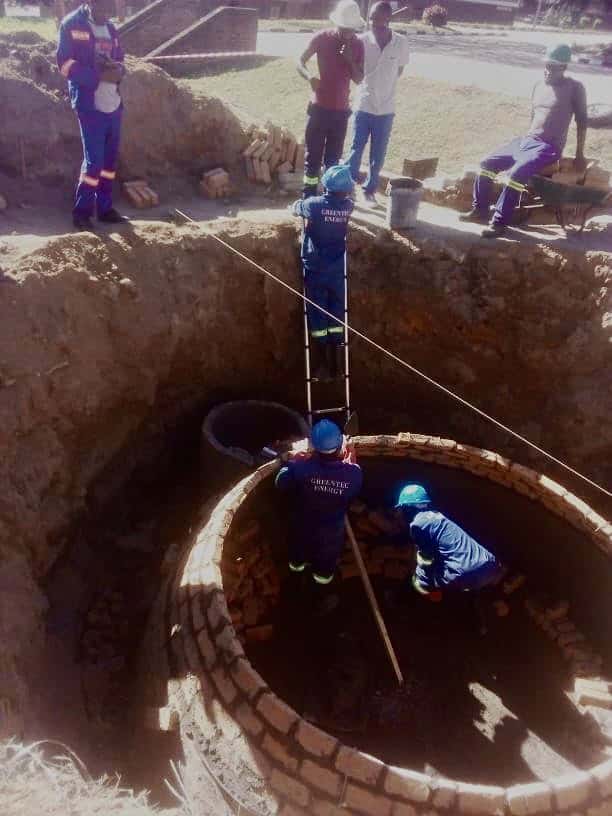
Both the beneficiary households and REA personnel conduct the initial feeding of the digester, Nyamayedenga says. Thereafter, the household can begin using methane gas for cooking.
“Villagers will spare the forests where they used to cut down trees for use as firewood, a bad practice which is against Zimbabwe’s Environmental Management Agency (EMA) and Forestry Commission’s (FC) forestry conservation and management programmes,” he says.
Institutional digesters operate on a similar model, with REA encouraging schools and hospitals to provide locally available materials for construction. These digesters are mainly fed with waste from ablution facilities and biodegradable food leftovers from kitchens.
Since the launch of the renewable energy policy, Nyamayedenga says about 440 domestic biogas digesters, ranging from 4 to 13 cubic metres, have been built and commissioned in villages across Zimbabwe. Another 78 are under construction or at various stages of completion.
At the institutional level, 150 biogas digesters have been completed at boarding schools and hospitals, while eight others are under construction, he says.
The REA continues to conduct awareness campaigns to address misconceptions and improve understanding of the technology, promoting biogas as a cost-effective and reliable source of energy.
To accelerate the rollout amid limited capacity among REA personnel, the agency is also training biogas digester builders within local communities.
“To date more than 612 builders have been trained in each of the 57 rural district councils and more are under training to meet the target of having a builder in every rural ward,” Nyamayedenga says.
For rural Zimbabweans biogas could provide a way to turn livestock and household waste into cooking fuel, reduce pressure on forests, improve household energy access and produce valuable fertilizer for farmers. The continued rollout of biogas will depend on ensuring that rural households have the knowledge, technical support and resources needed to adopt and maintain the technology.