
Five years ago, China announced that it would no longer build new coal-fired power projects abroad. Following similar announcements by Japan and South Korea, China’s pledge seemed to signal a landmark global shift and the beginning of the end for coal. At the time, the three countries were responsible for financing and building nearly all new coal-fired capacity throughout South, Southeast, and West Asia since 2005. This would have been transformational in reducing global greenhouse gas emissions.
As it turns out, it was only partly true. Japan and South Korea did, in fact, stop financing overseas coal-fired power plants and, for the most part, domestic ones too.
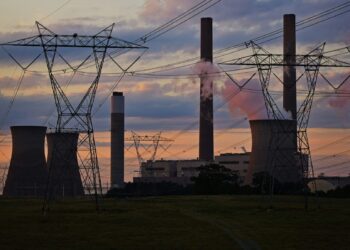
But despite President Xi Jinping’s claim that China “will not build new coal-fired power projects abroad”, the commitment applied only to grid-connected power plants. It did not apply to so-called captive coal plants that are not connected to the grid. Instead, these plants are built to supply power to industrial parks or energy-intensive factories, including smelters, nickel and lithium processing facilities, and electric vehicle factories.
China’s Coal Expansion Continues
According to a new report from the the Centre for Research on Energy and Clean Air (CREA), China has built more than 30 GW of coal plants abroad since the pledge, and still has 20.5 GW in planning for projects in Indonesia, Zimbabwe, Vietnam, and India. In Indonesia, where most of the Chinese captive coal has been built, this has led to increased emissions and health impacts from pollution.
Lizzie Frost, a China analyst at CREA, believes that China “must work closely with host countries to convert or cancel the remaining coal pipeline before construction starts and support a stable transition towards non-fossil power sources.”
Frost’s call reflects the difficulty of reversing coal investment once projects are under way. While plans that have yet to enter construction may still be cancelled or converted to renewable energy, plants already built can lock industrial facilities into coal use for decades.

The overseas projects are part of a wider picture. China consumes more coal than the rest of the world combined. In 2024, its consumption reached a record 4.9 billion tonnes, an increase that contrasts with declining coal use in countries such as the United States, Germany and Japan.
According to Bloomberg Global Coal Countdown data, China accounted for 80% of the world’s newly proposed coal-fired power capacity in 2025. It also accounted for 95% of the capacity of coal-fired power plants that began construction that year, and 80% of the capacity that became operational worldwide. While many, including CREA, hope that expanding additions of wind and solar will lead to coal peaking, it’s unclear what will happen. Recent data shows that 2026 is likely to be another record year for Chinese coal consumption.
“Coal power development in China…shows no sign of easing, leaving emissions on a high plateau and stranding coal in the system for years to come,” said Christine Shearer, a research analyst at the non-profit Global Energy Monitor.
Powering Indonesia’s Critical-Mineral Boom
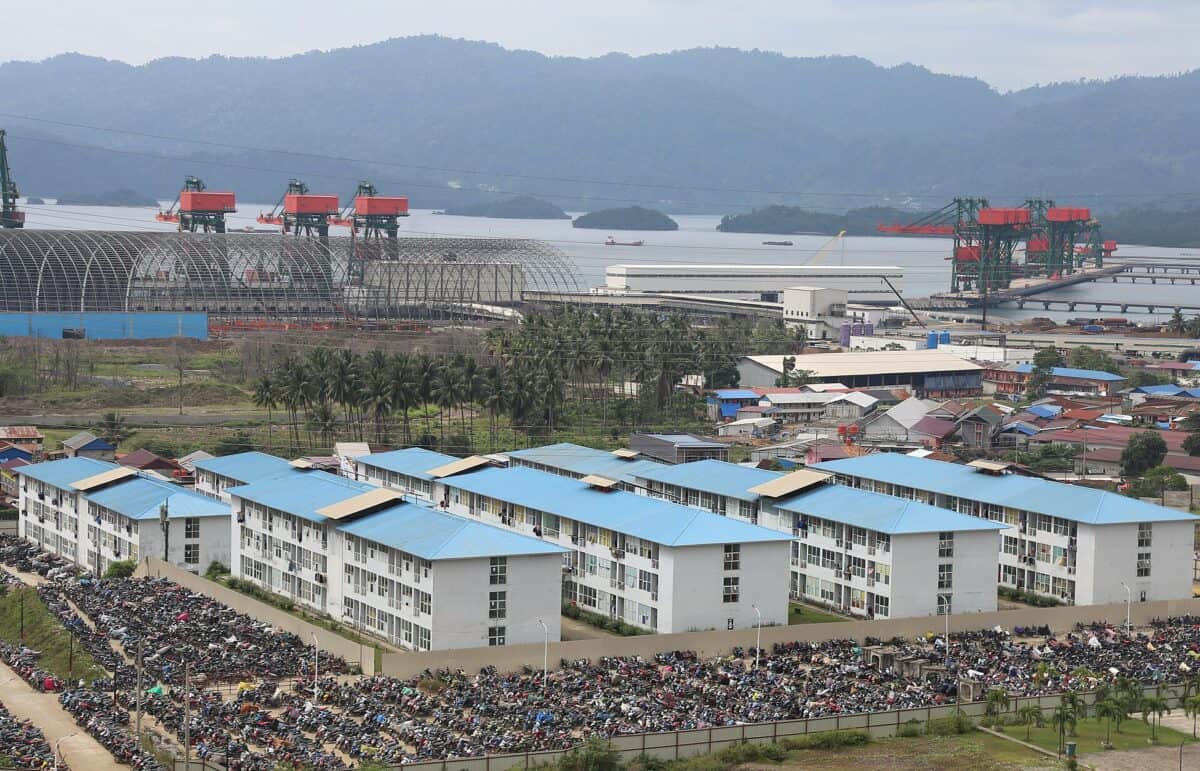
Outside China, Chinese companies continue to play a major role in the development of coal-fired power plants, particularly captive plants that supply Chinese-led industrial parks, factories and smelters. Chinese investors are involved in more than 70% of Indonesia’s captive coal-power capacity, according to a report by the University of Maryland and Indonesia’s Institute for Essential Services Reform. These facilities process minerals and other raw materials for Chinese manufacturing, including the production of electric vehicles. Indonesia’s three largest industrial parks alone have more than 12 GW of captive coal-power capacity.
Globally, China’s financing and support for coal-power projects abroad have helped facilitate the continued use of coal
At the centre of the captive coal push is Indonesia, one of the world’s largest coal producers. As export demand weakens and falling prices squeeze profits, coal-fired power plants supplying domestic industry are creating another source of demand. Much of this growth is tied to the processing of critical minerals such as nickel, an essential material for stainless steel and some electric-vehicle batteries. Indonesia’s metal-processing industries accounted for 31% of domestic coal consumption, reflecting how coal is helping power the country’s growing role in global manufacturing and critical-mineral supply chains.
“Indonesia’s energy infrastructure is a split system — amid efforts to restrict new coal-fired power on the national grid, electricity demand driven by industrial policy results in the building of massive amounts of captive off-grid coal power, much of which is funded by private Chinese companies,” said Katherine Hasan, an Indonesia analyst at CREA.
China’s established renewable energy industry and ability to scale up clean technologies mean it could also help countries develop alternatives to captive coal power. “China must immediately commit to a set of strong policies to phase down coal power development and shut down high-emission and low-efficiency coal units,” said Shearer.