
The Energy Transition and the Mineral Race
“The energy transition is reducing dependence on fossil fuels, but it is also creating new strategic dependencies around critical minerals. In that sense, energy security is not automatically disappearing, it is evolving,” explained Ibrahima Aidara, Deputy Africa Director at the Natural Resource Governance Institute (NRGI).
The transition away from fossil fuels is increasing demand for the minerals needed for electric vehicles, batteries, renewable energy infrastructure, electronics and defence technologies.
Christian-Géraud Neema, Africa Editor of the China-Global South Project and non-resident scholar at the Carnegie Endowment for International Peace, likened the shift to green energy to the Industrial Revolution.
“The one who controls the steam engine controls everything. And now that we are moving to green energy, who controls the product that makes green energy? China.”
The energy transition has created a new geopolitical competition, with countries attempting to secure access to the minerals needed for the future of their economies.
China’s Dominance

China began investing in critical mineral processing in the late 1950s, bearing the environmental costs of toxic refining processes and mining operations that polluted its waterways. Over the past six decades, China has accumulated and honed expertise across the entire critical mineral supply chain.
As Christopher Vandome, Senior Research Fellow and Lead on the Critical Minerals Initiative at Chatham House put it, this dominance, “didn’t happen overnight and it didn’t happen by accident.”
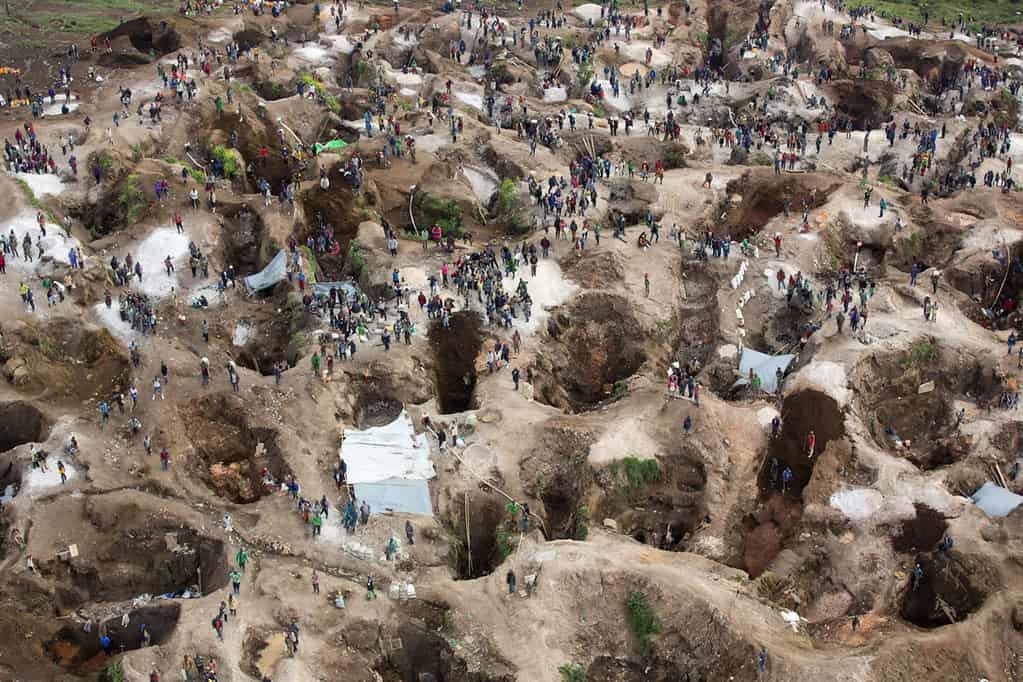
“China has spent more than two decades building an integrated presence across the DRC’s mining sector, not only through ownership of mining assets, but also through financing, infrastructure, processing capacity, logistics, and long-term commercial relationships. That level of integration cannot realistically be replicated within the next decade,” said Ibrahima Aidara.
Diversifying the US supply chain will require a strategy measured in decades, a challenge for a democracy where political power can change hands every four to eight years. China’s authoritarian system, by contrast, allows Beijing to pursue long-term plans that extend well beyond the tenure of any one leader.
Cobalt is one of the world’s most sought-after critical minerals, yet securing a reliable supply is difficult. The DRC dominates global cobalt production, and mining there comes with significant political and security risks. China has a stake in 15 of the DRC’s largest copper and cobalt mines.
But China’s upstream strategy extends far beyond the DRC’s cobalt mines. Chinese companies have acquired copper mines in Botswana, lithium mines in Mali and rare earth mines in Tanzania, as well as numerous other established mining operations around the world and domestically.
As for their downstream capabilities, China accounts for 87% of critical mineral refining and processing. The United States, by contrast, has undergone decades of deindustrialization, hollowing out its domestic manufacturing and mining capacity and shifting production and supply chains overseas.
China initially lacked significant refining capabilities, but as they began domestically manufacturing and mining critical minerals, American miners and industry experts followed.
“The Chinese government gave [American experts] incentives and conditionalities on a transfer of technology to train the Chinese. After China mastered downstream processing and manufacturing, they began to restrict foreign participation in the Chinese critical minerals sector. That’s how China became dominant. The United States and Canada lost the hardware, the technique and the know-how,” explained Paul Nantulya, Researcher and China Specialist at the Africa Center for Strategic Studies.
The dominance has granted China power over export restrictions on these commodities. As Nantulya put it, “The Chinese are still holding this gun, this weapon. We need to understand the gravity. Because the Chinese have started weaponising it. They weaponised it against Japan, they weaponised it against India. They weaponised it against the United States, and they can do it again.”
In October 2025, China announced that its export restrictions on rare earths imposed in response to US semiconductor tariffs would be suspended until November 10, 2026. With that deadline fast approaching, there has been no signal from the US government that the suspension will be extended or the restrictions abandoned.
The US handed China the tools it needed to dominate the supply chain, only to realize too late that it had helped create its own strategic vulnerability.
Washington’s Attempt to Catch Up
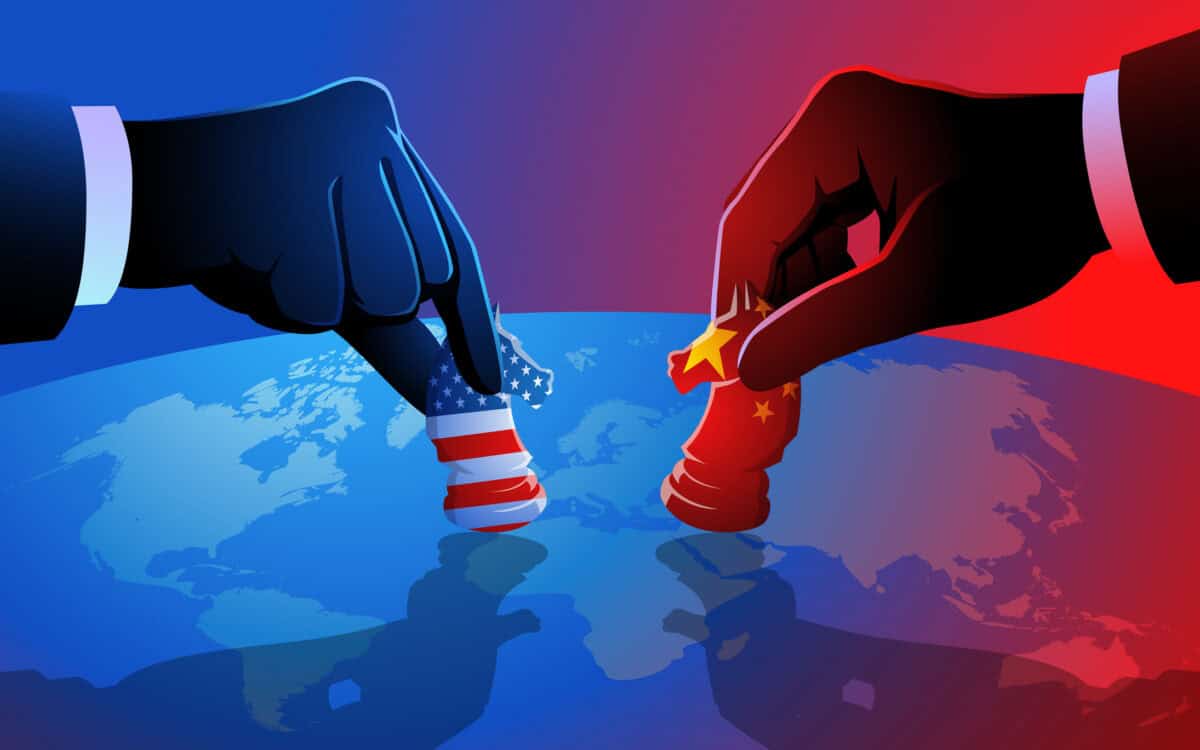
Countering China has been at the forefront of US critical mineral policy. The message Washington is sending has been clear: it wants to secure alternative supply chains.
Producing approximately 75% of the world’s mined cobalt and possessing substantial deposits of copper, coltan and uranium, the Democratic Republic of the Congo (DRC) has become a pawn in this competition.
In December 2025, the Trump administration hosted the signing of the Washington Peace Agreement between the Democratic Republic of the Congo (DRC) and Rwanda, aimed at bringing an end to the conflict involving the Rwandan-backed M23 militia in eastern DRC. Alongside the peace agreement, the US and DRC established a broader economic partnership centred partly on American investment in the DRC’s critical mineral resources.
The First Signs of American Investment:
The first sign of investment following the US-DRC agreement came in February 2026, when Glencore, a Swiss multinational mining company, disclosed that it had entered into a “non-binding memorandum of understanding” with the US-backed Orion Critical Mineral Consortium regarding the potential acquisition of a 40% stake in its Congolese mining assets, a transaction valued at around USD 9 billion.
Another US-based company, Virtus Minerals purchased Chemaf, a Congolese copper and cobalt mining company, in March 2026 for USD 700 million. Norin Mining, a Chinese subsidiary state owned enterprise offered USD 1.4 billion in June 2024, but were rejected by the Congolese in favour of the Americans despite offering double the amount of their American counterparts.
Chemaf is currently in debt by approximately USD 1 billion, and requires extreme infrastructure updates and modernization.
While Chemaf’s production accounts for 5% of global cobalt output, “Chinese companies own 80% of cobalt production in Congo-Kinshasa”, according to the US energy information administration, a federal statistical agency within the Department of Energy.
When asked about whether these deals will allow Washington to challenge China in the critical minerals supply chain, Neema confessed that, “It’s not very realistic. I mean, these projects are not even high profile projects. For lack of a better word they are modest projects.”
He added that Orion “still haven’t paid their share”, while Chemaf simply “attracted attention because of the geopolitical nature [of the deal]. [Whereby] the DRC pushed back a Chinese deal to choose an American firm with no mining experience.”
The reality is that despite Orion and Virtus’ initial interest they will still need to acquire research permits and expedition permits. Meanwhile, Chinese companies are already moving ahead with new projects: China has launched a lithium project in Manono, home to one of the world’s largest undeveloped hard-rock lithium resources.
Nantulya cautioned that “for all these countries that say that they want to compete, derisk and establish critical mineral supply chains that are free of Chinese control or investment or participation… That sounds like a very good policy, but it needs long term, over the horizon planning, otherwise it’s not easy to accomplish.”
In Aidara’s opinion the “objective appears less about replacing China than reducing strategic dependence on a single supplier or logistics network.”
But Neema doubts even this goal is achievable. “You haven’t seen any interests coming from any major, or what is left of any major US mining companies. So when you take all of that into account, you cannot realistically say that in the next decade we are going to see the US out perform China in the DRC.”
Washington’s Competition Narrative
The Lobito Corridor is a railway line that runs from Angola’s port of Lobito on the Atlantic coast into the Copperbelt of the DRC and Zambia.The US has mobilized over USD 4 billion, as a part of its wider strategy to create the fastest and most efficient route to extract critical minerals from the Copperbelt and send them onto the US and the EU.
In the US media, these efforts have been framed as evidence that Washington is beginning to challenge China’s dominance. Fox News ran an article titled ‘Trump gets major win against China in African rare earth minerals race’, highlighting US mining investments alongside US investment in the Lobito Corridor. The Washington Post also titled an editorial board opinion piece on the investment ‘In the new scramble for Africa, U.S. is on the right track’
But the railway itself does not amount to an alternative supply chain.
Vandome cautions against viewing infrastructure as a cure-all for Central Africa’s critical mineral challenges.
“There’s a lot of risk hedging going on or ‘so-called derisking’. This idea that the only reason that we can’t get material out of Central Africa at the moment is the lack of infrastructure. So, if we develop the railway line, it can go out. There’s some merit to that argument, but it’s not wholly accurate.” he explained.
Neema does not view Lobito as a competent adversary tool for the Americans.
“Lobito is just a railway. Explain how partially owning or investing in a railway means that somehow you are now competing with a country that’s owned minerals, mining rights, and mining permits?”
Neema went on to explain that from the perspective of Angola expanding and updating the Lobito railway is an economic strategy rather than geopolitical one.
“Angola has no reason to play the geopolitical card …the reality is that you do not have US companies present in the DRC and Zambia to replace the Chinese use of the railway.”
Is Washington Entering the Supply Chain at the Wrong Stage?
By entering the upstream of the critical mineral supply chain, the US is attempting to secure their assets; however “extraction alone captures only a limited share of the value created…Going forward, success will depend on supporting downstream investment, including mineral processing, battery precursor production, manufacturing, renewable energy infrastructure, enhanced environmental and social governance, and workforce development,” said Aidara.
Nantulya argues that China’s competitors have entered the supply chain at the wrong stage.
“China is not competing upstream. Actually in their upstream projects, the Chinese are very selective and very risk adverse. In other words it doesn’t matter who gets the stuff out of the ground. You still have to take it to Chinese refineries.”
For countries seeking to reduce their dependence on China, securing mineral deposits does not necessarily mean securing the supply chain. Without the refining, processing and manufacturing capacity to turn raw materials into usable products, countries can extract critical minerals while remaining dependent on China to process them.
While Canada and Australia have refining capabilities they currently lack the scale, infrastructure, and integrated supply chains needed to compete with China across the full critical minerals value chain.
The Tshisekedi Calculation
Security is a serious concern in eastern DRC, where armed groups, illicit mineral trading, and weak state presence continue to undermine stability. For President Félix Tshisekedi, the partnership with Washington offers more than access to investment.
“Tshisekedi needs legitimacy through partnership with the United States. That’s one of his primary motivations and what he is selling to his citizens. ‘There must be something correct that I am doing if the United States is willing to come on board’,” said Nantulya.
The partnership therefore serves two agendas simultaneously. Washington is seeking to reduce its strategic dependence on China, while Tshisekedi can present American engagement as evidence that his government is gaining international support.
But these two objectives do not mean that the agreement is in the best interests of the Congolese population.
The Congolese government has a legitimate interest in restoring security and state authority in the east, both for its own political interests and for the safety of the population. The United States, meanwhile, has a legitimate interest in securing critical mineral supply chains. But linking these interests together creates the question of who ultimately benefits from the partnership, and whether mineral access becomes more important than transparency, environmental protections and democratic oversight.
For Tshisekedi, playing the middle ground between competing powers may also offer an opportunity to bolster his international legitimacy, despite the serious questions surrounding his disputed 2018 election victory.
What’s the solution?
When asked how countries should mitigate China’s dominance, Neema argued that they need to accept the reality that “you’ve lost the competition. You have to come to peace and to terms with the fact that you’ve lost. What you can do now is work to reduce your exposure to China. But if you build your agenda based on out-competing China, you are wasting resources that you do not have.”
While reducing reliance is critical, Neema prompted more countries to consider “cooperation”.
China’s dominance of the critical mineral supply chain became a strategic problem when geopolitics entered the picture. Now, China can use that dominance to advance its geopolitical interests.
The US cannot realistically erase China from the critical mineral supply chain in the next ten years. China has spent decades building its position through mining, processing, infrastructure, manufacturing and expertise. The US and its allies are only beginning to rebuild capabilities that were lost through decades of deindustrialization.
According to Neema, “the world is waking up, 30 years later, to a country who was silently building supremacy in that space. Nothing can be done without China today.”