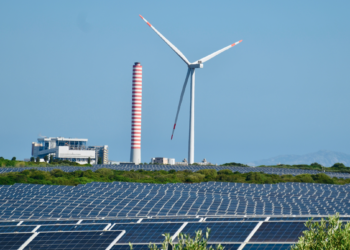

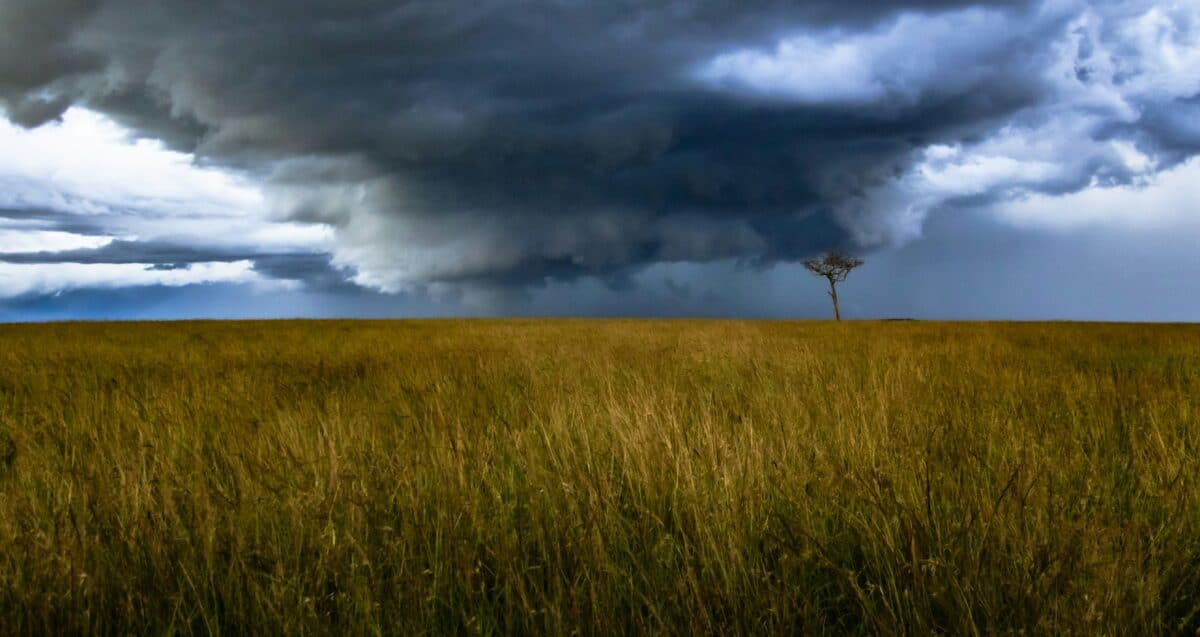
A solar mini-grid operator in Nairobi watches as a massive bank of clouds roll across the horizon. He manages a small local power network supplying electricity to nearby homes and businesses, balancing solar generation, battery storage, and backup diesel power. He hesitates, weighing whether to rely on the remaining battery reserves or switch on the expensive, polluting diesel generator.
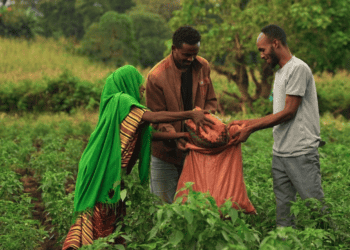
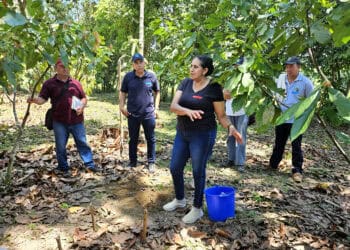
Thousands of miles away in Peru a farm manager stares out at a waterlogged, wilting field of blueberries. He tries to predict weather patterns by hand in a damp notebook, tracking crops, irrigation, disease risk, but accurate forecasts remain out of reach.
At first glance, these two scenes appear completely isolated, vignettes of separate operational struggles in different sectors across different continents. But both are shaped by the same underlying climate force: El Niño.
El Niño and the Importance of Data
El Niño is the warm phase of the El Niño-Southern Oscillation (ENSO), a recurring climate pattern driven by changes in ocean temperatures across the equatorial Pacific and linked shifts in the atmosphere. The ENSO cycle shifts every three to five years on average, though the range can span from two to seven years, and an individual El Niño event can last up to 18 months.
These shifts can lead to pronounced regional impacts, including torrential rain in some areas and prolonged dry conditions in others, disrupting historical regional weather patterns. The associated economic effects can be substantial. The 1997-1998 El Niño was estimated by the World Meteorological Organization to have contributed to global losses ranging from USD$32 billion to USD$96 billion.
Responding to climate volatility is not simply a matter of building more physical capacity, more solar farms, wind farms, carbon capture systems, larger utility grids, and expanded irrigation networks. While clean-energy infrastructure is being deployed at record speed, increasing climate variability is revealing a deeper constraint: systems designed for stable historical conditions struggle when those conditions no longer hold.

In some regions, patterns long associated with reliable sun are shifting toward unusually wet seasons, while wind regimes, monsoon cycles, and temperature patterns are becoming more erratic, with intermittent dry spells. Even snowfall and heat are appearing outside expected ranges. Against this backdrop, infrastructure alone is not sufficient.
True climate resilience depends not only on physical systems, but on the capacity to continuously gather and interpret climate data, and translate it into timely operational decisions. In increasingly volatile conditions, the ability to act on forecasts and live signals is as critical as the infrastructure itself.
The Moving Target of Solar Economics
For Dorcas Mwigereri, CEO of Kenya-based SolarJiji, a climate intelligence and solar power forecasting company, and a researcher at Aga Khan University in Nairobi, this challenge is central to her work. The financial stakes of this atmospheric volatility are measured in liters of fuel saved. Across many African markets, unreliable grid access keeps diesel generators central to backup power, making localized clean mini-grids the primary engine of rural electrification and development.
Mwigereri outlines that to make these projects economically viable, operators rely heavily on “solar-first dispatch”, meaning solar power is used as the primary source of electricity whenever it is available. These mini-grids maximise solar generation during peak daylight hours so users can avoid relying on expensive diesel backup systems. Poor forecasting does not just create an abstract efficiency problem; it directly threatens the commercial viability of the project.
She explains that “clouds have always been the hardest part of solar forecasting, but climate volatility turns them into a moving target.” When standard models fail to capture changing cloud thickness and localized movement speed, operators are pushed into guesswork precisely when the margin for error is smallest.
Without accurate forecasting, mini-grid managers cannot plan their battery cycles safely. To prevent blackouts, they are forced into conservative, reactive decisions, prematurely flipping the switch on backup generators. This operational friction bleeds cash, shortens battery lifespan, and directly undermines the financial bankability of clean energy in regions where international lenders are already highly risk-averse.
“Solar forecasting is not just about predicting the sun,” Mwigereri notes. “It is about enabling smarter decisions, reducing costs, and building resilient energy systems for Africa’s future.”
Translating Climate Data Into Decisions
A forecast only matters if it can be turned into timely, practical decisions.
Gabriel Savio, CEO of the climate forecasting platform Sipremo, is trying to fill that gap. Sipremo, whose core technology was developed in part with the US Department of Defense and the São Paulo State Civil Defense in Brazil, specializes in predicting weather conditions and mapping their direct operational impacts.
Savio challenges the common assumption that the primary obstacle facing these sectors is a simple lack of raw data or a deficit in advanced satellite sensors. “Years ago, I used to say that it was because we didn’t have enough information,” Savio reflects, “but nowadays I would say that we have sufficient information, but we don’t know what to do with it.”
According to Savio, a raw meteorological prediction is practically useless on its own. Telling a utility company that a major El Niño pattern change is arriving next month does not solve their problem; it merely creates anxiety. The true missing link is translating that complex meteorological data into the specific operational realities for the end user.
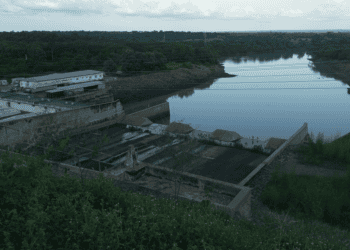
Furthermore, Savio emphasizes that this is a dual crisis of both information and physical infrastructure. In Brazil’s energy sector, where hydroelectrics generate more than 70 percent of the nation’s electricity, operators are highly sensitive to long-term hydrological variables. They need to understand water availability 6 to 24 months in advance to manage grid distribution, set consumer prices, and coordinate maintenance.
When an El Niño related shock alters rainfall patterns, the physical infrastructure, the dams and reservoirs, reaches its limit. If operators lack the tools to contextualize that threat, they cannot make proactive decisions, such as adjusting water dispatch or relocating field teams before a crisis hits.
Overcoming Disorganized Data on the Ground:
This exact same operational vulnerability is playing out across the Atlantic in the agricultural valleys of Peru and Chile, where El Niño-linked temperature spikes of up to 4°C above historical averages are disrupting the delicate flowering cycles of blueberries and accelerating pest populations. In agriculture, as in energy, water is no longer a simple baseline utility cost; it is a strategic risk.
Cesar Urrutia is the co-founder of Space AG, an agritech company that uses satellite data and AI to provide insights on agricultural productivity, and the founder of ThinkTank Perú, a policy-focused civic think tank. He observes that the primary barrier to building resilience is not a lack of willingness, but the raw, chaotic state of field-level information.
Many agricultural operations still run empirically, relying on loose paper forms and handwritten notebooks that are easily soiled, lost, or misinterpreted. This creates a massive wave of what Urrutia calls disorganized data, a fragmented cocktail of messy manual notes, scattered spreadsheets, and disconnected weather sensors. “The crucial issue is data specifically, how much usable, field-ready information you actually have to make a decision,” he says.
For Urrutia, the promise of advanced technologies like AI starts with a far less glamorous requirement: data quality. “To use artificial intelligence today, you have to have reliable data, clean data, structured data,” Urrutia explains.
When the ground is flooded and sensors are down, physical infrastructure like concrete canals collapse first. However, it is the information gap that makes the human response slow and ineffective. When a weather forecast arrives too late or is too generic to be applied to a specific crop, farmers cannot optimize their water use. In recent severe droughts in Chile, the cost of this combined physical and digital failure was total operational collapse, forcing desperate farmers to deliberately destroy high-value crops such as blueberries, avocados, and asparagus to save the rest of their land.
Savio predicts that within the next five years, climate risk and contextualization platforms will transition from a niche, specialized tool into a standard operating procedure across the energy, agricultural, and public sectors. “If you don’t have it, you will be out of the game, for sure,” he warns.
The next chapter of global development will not be defined solely by who builds the most physical capacity, but by who can master the data layer to help operators trust their infrastructure under uncertain skies.