
The ongoing attacks by the United States and Israel in Iran have triggered serious ripple effects across global energy markets, with Zimbabwe, a landlocked country in Southern Africa, feeling the impact through sharp fuel price increases.
On April 02, 2026, petrol prices in Zimbabwe surged to US$2.23 per litre, while diesel is now pegged at US$2.11 per litre—making them among the highest in the Southern African Development Community (SADC) region. The Zimbabwe Energy Regulatory Authority (ZERA), says diesel would have risen to US$2.65 per litre if the government had not scrapped certain taxes. ZERA also indicated that petrol prices are expected to decrease during the next review.
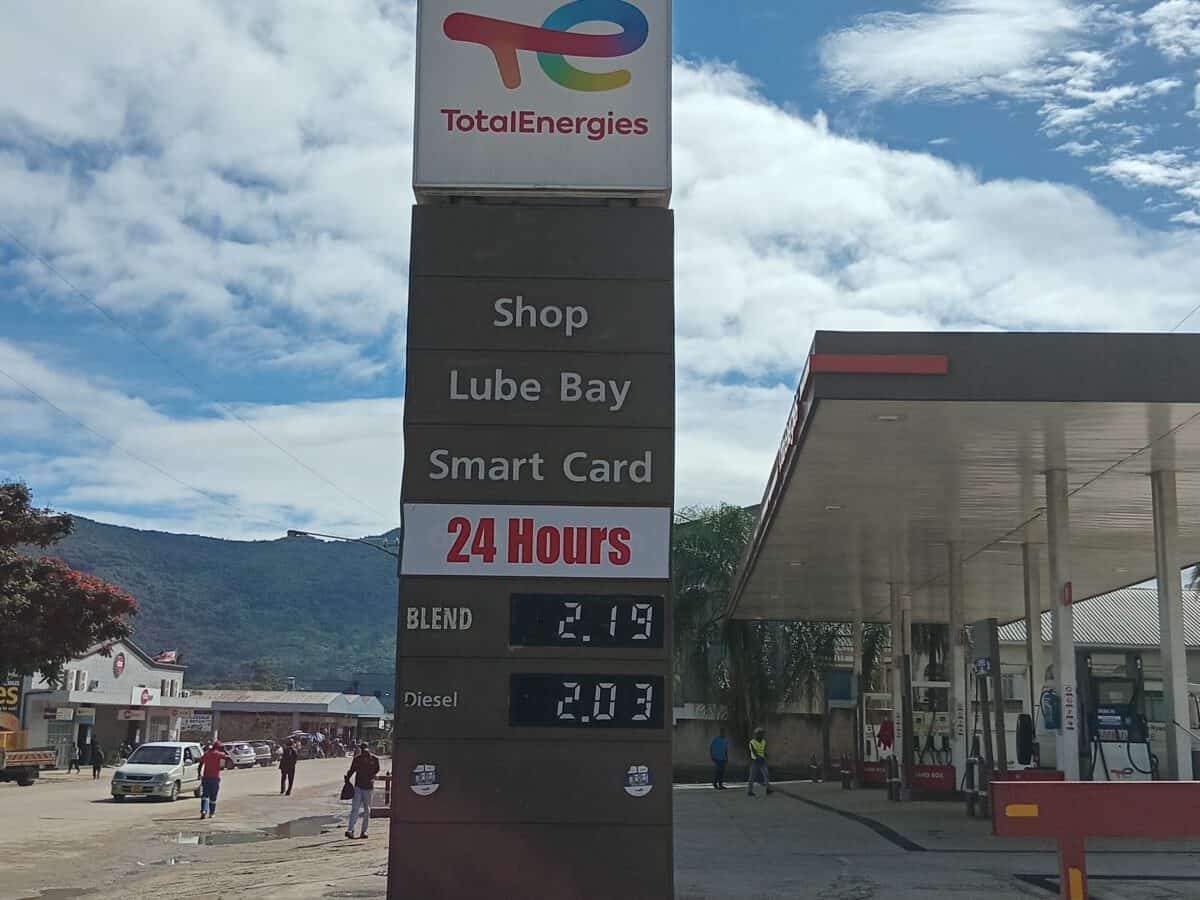
The increases of fuel prices have had a knock-on effect across the economy; driving up the cost of public transport and pushing up consumer goods prices, thereby intensifying inflationary pressures. In response, the Zimbabwe government is scrambling to cushion citizens from the economic shock. In March, the Zimbabwean Cabinet approved plans to review and reduce selected, time-bound fuel taxes as part of efforts to stabilise prices and protect consumers. And effective April 03, 2026, the Zimbabwe government scrapped taxes and levies on diesel, in an effort to stabilise fuel prices and shield critical sectors of the economy as global oil costs climb amid tensions in the Middle East.
The waived charges–namely excise duty, the Zimbabwe National Road Administration (ZINARA) road levy, carbon tax, and the strategic reserve levy–had been adding roughly US$0.54 per litre, driving diesel prices close to US$2.65 per litre in the absence of government action. The authorities are also exploring structural interventions to reduce fuel costs. One such measure under consideration is increasing ethanol blending in petrol from E5 (5 %) to E20 (20 %). This move is expected to lower the cost of fuel by reducing reliance on imported petroleum.
These policy responses follow assurances from Zimbabwe President Emmerson Mnangagwa that the government is actively implementing measures to shield the country from global economic disruptions caused by the West Asian conflict, which has strained international supply chains.
After a Cabinet meeting in Harare on March 24, 2026, Minister Zhemu Soda told reporters that the government had made a decision after reviewing the impact of the crisis on commodity prices.
“While price hikes have been observed in the transport sector, particularly among passenger vehicle operators, the Cabinet approved a review of selected, time-bound fuel taxes to contain inflationary pressures and safeguard consumer welfare,” Dr Soda said.

He added that the government is refining plans to increase ethanol blending to E20, a shift that could significantly reduce petrol prices on the domestic market.
“Appropriate refinements are underway, and the necessary fuel price adjustments will be communicated in due course,” he said.
According to local ethanol producers, moving from E5 to E20 could lower fuel costs by approximately US$0.18 per litre, offering meaningful relief to motorists and transport operators. In March this year, during a tour of Green Fuel, an ethanol producer in Chisumbanje, south-east Zimbabwe, Vice President Constantino Chiwenga said: “This is Zimbabwe’s direction [fuel blending]. We want to sustain ourselves amidst current challenges.” He also called on the company to ramp up production and storage to support an uninterrupted E20 blend.
But Tendai Munhundarima, a car expert, told Zimbabwean newspaper NewsDay Weekender that the shift to E20 fuel presents technical challenges for vehicles calibrated for E5 or E10 blends.
“The change is subject to technical challenges on older cars because ethanol is a powerful solvent. Components designed for E10 are often not robust enough to handle the higher chemical aggression of E20,” Munhundarima said.
And he added that “higher ethanol content can lead to internal corrosion of the fuel pump and may cause deposits to break loose from the fuel lines, potentially clogging the nozzles of fuel injectors.”
However, some experts argue that the current fuel crisis should serve as a wake-up call for Zimbabwe to accelerate investment in alternative energy solutions, particularly investment in electric mobility.
Echoing this sentiment, President Mnangagwa’s spokesperson, George Charamba has called for a shift toward electric vehicle (EV) mass transit systems. Posting on X (formerly Twitter), Charamba suggested that Zimbabwe should prioritise the introduction of electric buses in urban centres as part of a long-term strategy to reduce dependence on fossil fuels.
“A key transition we need to make amidst the current turbulence in the Middle East and Persia is to introduce EV buses as mass transit for our urban centres,” he wrote under his handle @jamwanda2.
Charamba noted that EV infrastructure, particularly charging stations, would be relatively easier to deploy for urban mass transit systems due to their centralised nature.
“It will be a double whammy: we beat the energy crisis by transitioning to clean energy; we cushion vulnerable groups while reintroducing an efficient public transport system to de-congest our cities,” he added.
He further emphasised the need for collaboration between local government authorities and the Ministry of Transport to fast-track the initiative.
Drawing regional comparisons, Charamba pointed out that South Africa has already placed orders for electric buses assembled in Uganda. He suggested that Zimbabwe could explore importing semi-knocked-down kits for local assembly, leveraging the country’s existing expertise in bus manufacturing.
“This is a quick win for Zimbabwe,” Charamba said, highlighting the potential for both economic and environmental benefits.
Uganda is already manufacturing its own electric buses, known as the Kayoola EVS, which are produced by the state-owned company, Kiira Motors Corporation (KMC). These eco-friendly buses are equipped with state of the art amenities which include WiFi and USB ports. They have a range of up to 300km on full charge, helping to reduce carbon emissions and promote sustainable public transport. And in a major development for African automotive innovation, Uganda secured a deal to supply 450 electric buses to South Africa. At the same time, a Kayoola bus recently completed a 13,000km demonstration journey.
But Zimbabwe energy expert Eddie Cross tells The Energy Pioneer that: “I do not see any short-term solution to our dependence on carbon-based fuels. Given the shortage of electricity and the rapid increase in demand for power, any shift to electric based systems [EVs] will simply exacerbate the present shortfall.”
However, in the face of rising global uncertainty, Zimbabwe’s latest fuel price surge underscores the country’s deep vulnerability to external shocks. While short-term measures such as tax cuts and increased ethanol blending may offer temporary relief, they do little to address the structural dependence on imported fossil fuels. The growing call to invest in EVs, particularly urban mass transit systems, signals a potential shift toward a more resilient and sustainable energy future. But transitioning to electric vehicles will require more than political will; it demands significant investment in infrastructure, reliable electricity supply, and coordinated policy implementation. If pursued strategically, this shift could not only reduce exposure to volatile global oil markets but also modernise Zimbabwe’s public transport and stimulate local industry.
Ultimately, the current fuel crisis presents Zimbabwe with a critical opportunity; to move beyond reactive solutions and embrace long-term reforms that redefine the country’s energy and transport landscape.