
According to the American Lung Association’s annual State of the Air Report, California consistently ranks as having some of the worst air pollution in the country, with the Oakland, San Francisco, San Jose metro area ranked 14th among US metropolitan areas for ozone pollution in 2026. In the public imagination, smoggy skies are linked to factors like high motor vehicle dependency and wood burning. But the San Francisco Bay Area actually has a more hidden source of air pollution: buildings.
A New Rule for Building Emissions: Rule 9-6

The Bay Area Air District was established as the first regional air pollution control agency in the United States, dating back to 1955. The Air District aims to reduce stationary sources of air pollution for the roughly 7 million residents within the nine-county region surrounding San Francisco Bay. Local elected officials from each county make up the Air District’s voting body, its Board of Directors. By contrast, the California Air Resources Board regulates mobile air pollution sources.
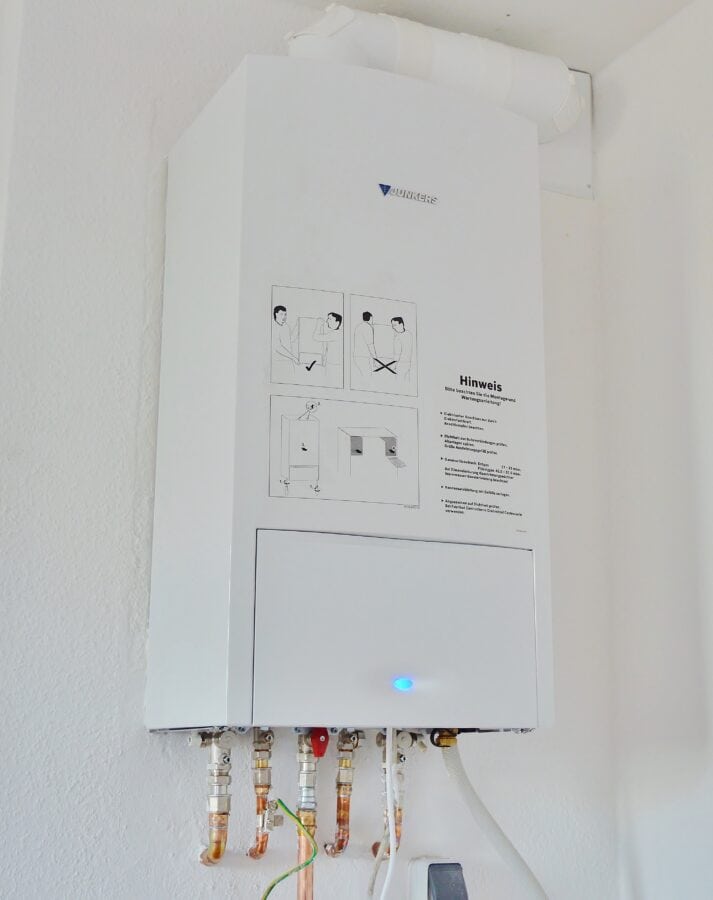
Roughly two-thirds of all households in the region have appliances that still run on natural gas. To target this pollution source, the Air District adopted rule amendments in 2023, including Rule 9-6, which strengthens emissions standards for water heaters in certain commercial and residential settings. How does this affect a typical family? Rule 9-6 requires that new water heaters sold or installed in the Bay Area after the compliance dates must not emit nitrogen oxides (NOₓ), a class of pollutants that forms ground-level smog and causes irritation to the human respiratory system.
Currently only electric appliances satisfy the zero-NOx emissions standards set by Rule 9-6. Though the rule amendments passed unanimously, the compliance date of Rule 9-6 is in limbo, with the leading recommendation being January 1, 2028. An accompanying rule, Rule 9-4, which sets standards for space heating in buildings, is slated to roll out in January 2029. The Air District estimates that about 120,000 existing water heaters will break down and need to be replaced each year, representing roughly 12% of the region’s water heater stock.
What Isn’t Included in Rule 9-6?
Rule 9-6 applies only to water heating and not to other types of natural gas-powered appliances. Stoves, ovens, dryers, fireplaces, or other cooking appliances are not subject to Rule 9-6. Water heaters that run on propane will be exempted. And because only replacements trigger the rule, older working appliances aren’t affected, including existing appliances that break and are successfully repaired. Both traditional resistance heaters and modern heat pump water heaters (HPWHs) can meet the zero-NOx standard, meaning the rule does not favor one technology over another.

How the Rule Will Benefit Public Health
While most of us intuitively understand the harms of breathing tailpipe exhaust, we might not appreciate that buildings can also emit significant levels of pollution. According to regional air quality authorities, the Bay Area’s buildings represent a larger share of NOₓ pollution than that of passenger cars. And while recent trends like the expansion of the electric vehicle market and the shift towards remote and hybrid work have continued to chip away at vehicle-related pollution, the transition from gas appliances to non-NOx-emitting alternatives through existing building retrofits has lagged behind.
Cumulative emissions from millions of household appliances vented to the outdoors compromise the Bay Area’s air quality. According to the Air District’s 2022 staff report estimates that up to 15,000 asthma attacks, 85 premature deaths, and USD 890 million in health costs could be averted every year once the gradual replacement of NOx emitting water heaters and space heaters in the Bay Area is complete.
The phaseout would also significantly reduce PM2.5 exposure, fine particulate matter, especially in frontline communities of color. Medical professionals further warn that the developing lungs of youth and teenagers are particularly sensitive to NOx exposure.
Managing Cost Concerns
Transitioning to zero-emission appliances does require a greater up-front investment, averaging about USD 3,500 more, but several factors make the switch more accessible. Most homes will not need to replace or upgrade their electrical panel, which distributes electricity throughout the house, because new water heaters will be able to run on standard household electrical circuits.
Considerable rebates are available to cover the upfront cost, including USD600 to more than USD3000 from the Bay Area electricity providers known as Community Choice Aggregators, often combined with additional city rebates. Several counties also offer local financing options, including zero-percent interest plans. The Air District recently announced that USD 85 million in heat pump and energy efficiency incentives are currently available to residents across the region.
Heat pump water heaters are incredibly efficient, using three to four times less energy than standard gas models, so many residents could see a drop in their monthly utility bills. Payback can be achieved over the 15-year HPWH lifespan, especially if rebates are factored in. Policymakers are starting to cut red tape around HPWH installations. Unlike gas water heaters, they do not require combustion venting, and new state policies are lowering permit fees and shortening inspection processes. In addition, emergency water heater loan programs can also help ensure that replacements are installed quickly, minimizing the time residents are without hot water.
For projects that are not economically or structurally feasible , like those requiring major electrical panel modifications or limited by a lack of space, specific exemptions will protect homeowners. These “flexibility” measures will help minimize friction as municipalities transition to more zero-NOx appliance installations.
A Big Decision with Big Impact
With Rule 9-6, the Bay Area will be taking advantage of an economic phenomenon known as the ‘California Effect.’ As the fifth-largest economy in the world, California has an outsized influence on the marketplace when it sets environmental standards on everything from vehicle fuel efficiency to solar mandates for new construction. Manufacturers don’t quit a market this lucrative, they innovate. By leveraging the purchasing power of 7 million Bay Area residents, Rule 9-6 is designed to spark that same shift for the building appliance industry.
This regional market transformation ultimately helps everyone’s wallet. Manufacturers ramping up production to meet the Bay Area’s new baseline could create economies of scale, driving down the per-unit cost of HPWHs throughout California and beyond. Evidence from international markets shows how scaling up can drive down costs. In Switzerland, where building electrification is more mature, researchers have documented ‘learning rates’ over time for heat pump installations. A 2024 study found learning rates of 18% to 26% in Switzerland, meaning that each time the country’s installed heat pump capacity doubled, the total cost fell by roughly a quarter. By growing the market for HPWHs through Rule 9-6, the Bay Area could experience similar cost reductions. And as local plumbers and contractors install thousands of these units annually, the soft costs of labor, permitting, and supply chain logistics will decrease as the industry gains experience, making zero-emission appliances even more accessible.
An Equitable Transition
Affordability has been top of mind for regulators, who created the financial exemption pathway for low-income or costburdened homeowners in order to address the higher upfront costs of zero-emission appliances. Under the current version of Rule 9-6, it only applies to property owners, and the Air District is actively exploring tenant protections to ensure the costs of these necessary upgrades are not unfairly passed on to renters.
Let’s not leave climate out of the equation. Electricity generation in the state of California is remarkably clean and increasingly fossil-free. Water heating accounts for about 25% of residential buildings’ CO2 emissions from natural gas, so switching to electric appliances could significantly reduce these emissions. Frontline communities have historically borne a disproportionate share of poor air quality and climate impacts, and could see meaningful improvements to their air quality as a result.
In early November of this year, the Air District’s Board will take a formal vote on the Rule 9-6 implementation framework and lock in compliance dates. Unfortunately, documented misinformation campaigns by fossil fuel interests have been used to discourage and delay building electrification in California, in the South Coast Air District’s rulemaking as well as the Bay Area’s. If it can overcome these setbacks, Rule 9-6 could produce tangible public health benefits for the whole region. Those impacts could grow as the Bay Area provides a useful blueprint for other cities and regions across the US to follow.