
The Energy Pioneer
No Result
View All Result
  • Home
  • Clean Tech
    • Electric Vehicles
    • Energy Efficiency
    • Green Hydrogen
    • Smart Grid
    • Battery Storage
  • Green Finance
    • Public Financing
    • Private Financing
    • Carbon Markets
  • Policy
  • Renewable Energy
    • Wind
    • Solar
    • Hydropower
    • Nuclear
    • Hydrogen
    • Fossil Fuels
    • Geothermal
  • Regions
    • Africa
    • Asia
    • Europe
    • North America
    • Latin America
    • West Asia
    • Oceania
  • Features
  • Who We Are
    • About Us
    • EP Network
    • Contact Us
  • Home
  • Clean Tech
    • Electric Vehicles
    • Energy Efficiency
    • Green Hydrogen
    • Smart Grid
    • Battery Storage
  • Green Finance
    • Public Financing
    • Private Financing
    • Carbon Markets
  • Policy
  • Renewable Energy
    • Wind
    • Solar
    • Hydropower
    • Nuclear
    • Hydrogen
    • Fossil Fuels
    • Geothermal
  • Regions
    • Africa
    • Asia
    • Europe
    • North America
    • Latin America
    • West Asia
    • Oceania
  • Features
  • Who We Are
    • About Us
    • EP Network
    • Contact Us
No Result
View All Result
The Energy Pioneer
No Result
View All Result
  • Home
  • Clean Tech
  • Green Finance
  • Policy
  • Renewable Energy
  • Regions
  • Features
  • Who We Are
Home Features

The Era of the Big Fix

byFeatured Expert: Craig Segall
September 8, 2026
Reading Time: 5 mins read

July didn’t just break heat records—it broke our sense of what’s normal. Across the United States, people woke to air quality alerts from wildfire smoke, farmers watched as crops scorched in the fields, and we canceled plans because it was simply too hot to go outside. The power grid strained, public dollars were diverted from long-term investments in the energy transition. With each passing disastrous summer, public costs rise, and disruptions worsen.

RELATED POSTS

How Power Tanks Are Keeping Nigeria’s Small Businesses Running Amid Persistent Grid Failures

How SPARK Uses Closed-Door Dialogue Under the Chatham House Rule to Advance Southeast Asia’s Energy Transition

ClimateTech Series: An Ode to Sodium Ion

In this era of climate consequences, more frequent and more extreme disasters are costing taxpayers trillions, pulling away the funds and focus we need to complete the energy transition. That’s the reality: global disasters don’t magically accelerate emissions reductions. Instead, they all too often lead to political disruption, inflation, and affordability crises that derail us from solving the core problem. 

Derailment risk is growing because we are trapping more heat than the Earth can release, pushing other Earth systems beyond their limits. Most critically, the planet is reflecting less sunlight, so the Earth absorbs more heat—so much so that lost reflectivity is now driving bonus warming on the same scale as our greenhouse gas emissions. If we want to get back on track, we need to expand our focus. 

The good news is that as we continue the essential work of cutting emissions and preparing communities for climate impacts, there are a wide array of new tools we can use to reduce the near-term climate risks we face.

Doom is a Choice—But So is a Big Fix   

Right now, we’re driving into increasingly dangerous conditions with the windshield fogged over. Research is what clears the glass to help us choose the safest route. Unsung decades of scientific work underlie growing efforts by governments to stabilize Earth systems that are starting to buckle as the planet heats up. 
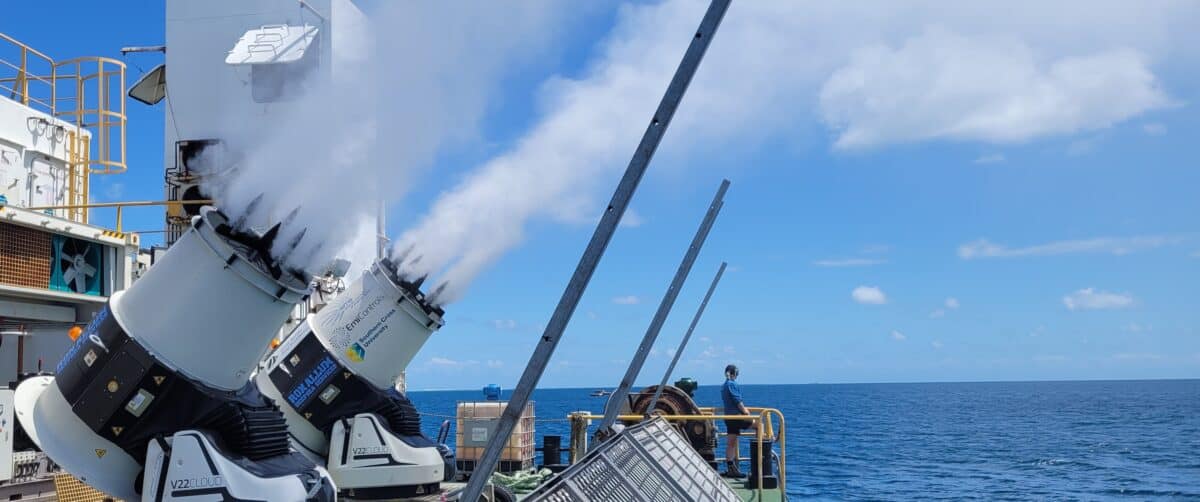
A pair of marine cloud brightening generators (V22 model) release plume of sea water-Photo by Southern Cross University

Researchers are already exploring whether targeted, science‑based interventions could help stabilize the climate system. Some teams are studying glacier stabilization, which aims to slow the collapse of critical ice sheets. Others are advancing marine cloud brightening, where ships spray fine seawater mist into low‑lying clouds to temporarily increase their reflectivity, which could protect coral reefs from extreme marine heat. And others are investigating stratospheric aerosol injection, modeling how different particles might safely increase planetary reflectivity and reduce warming. 

Buy JNews
ADVERTISEMENT
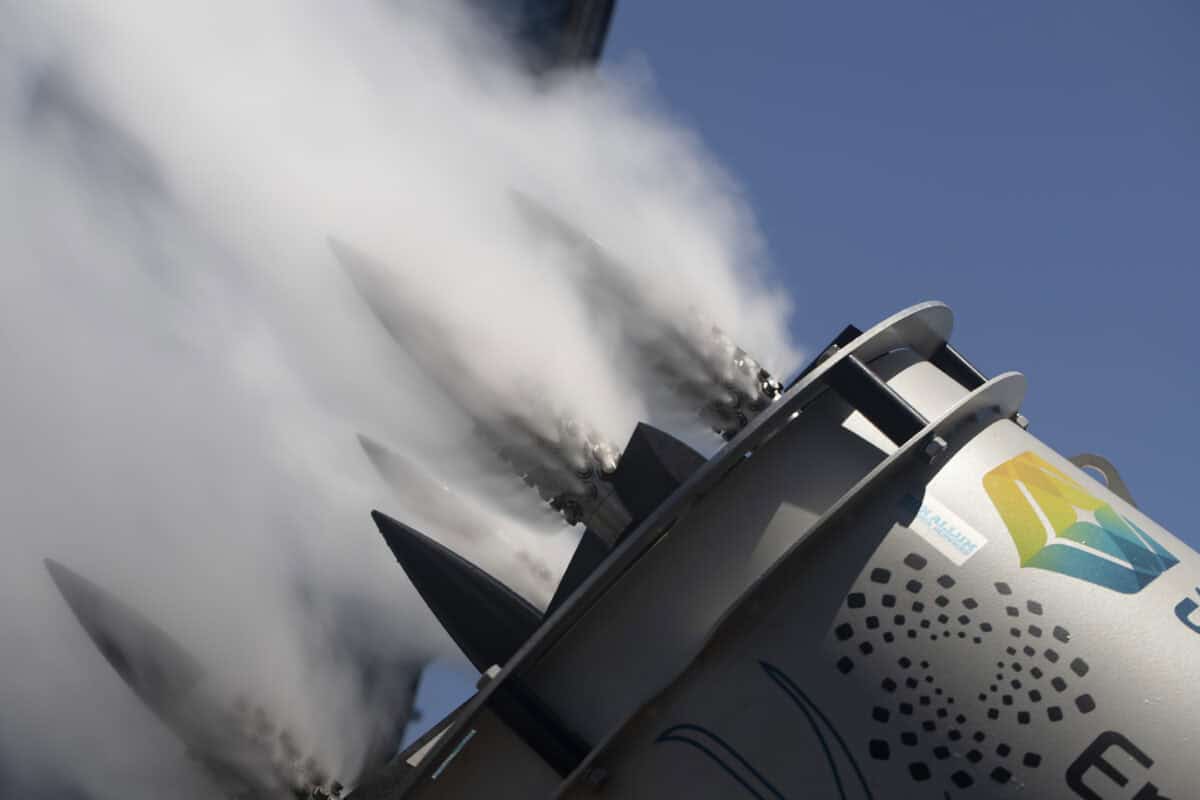
Close-up showing the nozzles in action on the marine cloud brightening sprayers. Fieid trial 2024, Broadhurst Reef off Townsville, Great Barrier Reef-Photo by Southern Cross University

A growing toolbox offers hope, and governments are taking notice. From India’s  efforts to protect Himalayan glaciers and explore sunlight reflection, to mapping Antarctica’s ice melt, shading the Great Barrier Reef, and the UK’s work on rebuilding sea ice and on reflecting heat back into space, creative scientific efforts are emerging around the world. Governments are starting to build out full‑spectrum climate risk‑management approaches that aggressively reduce emissions while investing in research on stabilization options.

Taken together, these efforts can help build a roadmap for protecting both the climate and the transition ahead. Exploring these ideas does not mean committing to them. Some may prove impractical, risky, expensive or unnecessary. But we need to understand the possibilities before policymakers are forced to make decisions under crisis conditions. Inaction is a decision too—and often the most dangerous one.

A Full Stack Transition

It’s past time to get us back on track. Global temperatures have risen by 1.4 °C above pre-industrial levels, and the impacts of this year’s super El Niño are threatening cities and ecosystems everywhere. As this summer continues to bring record-breaking heat and more frequent heatwaves, one thing is clear: we don’t know exactly what the next decades will bring, but we know the climate is changing faster and in more interconnected ways than our institutions are prepared for.

Research on stabilization is an insurance policy. It doesn’t compete with the fundamental work of cutting emissions and advancing adaptation, and it doesn’t require shifting funds away from either. We need all three, including a robust effort to pull greenhouse gases back out of the atmosphere to permanently get us to safety.

We can imagine a future that combines these possibilities. Economic and policy choices could drive down emissions and accelerate electrification. Adaptation investments protect nature and critical infrastructure from climate impacts we can no longer avoid. Stabilization work reduces the scope of that harm—the seas don’t rise as much, the planet doesn’t hit three degrees, the coral reefs make it through. And we buy the time, capacity, and resources we need to both complete the clean energy transition and begin atmospheric repair by cleaning out the carbon.

That’s a big lift. But it’s one we do together, with more tools than we thought we had —rather than standing back with fingers crossed that major Earth systems don’t collapse before we can complete the energy transition. Rather than derailment, we can choose the Era of the Big Fix. And that starts with building out our map of options, so we can choose together, democratically, justly, and with care.

Tags: Climate Changeglacier stabalizationmarine cloud brighteningplanetary reflectivitystratospheric aerosol injectionthe Great Barrier Reef
ShareTweetShare
Featured Expert: Craig Segall

Featured Expert: Craig Segall

Craig Segall is a director at Climate Hub and a senior advisor to the Federation of American Scientists. A long time climate professional, he is the former Deputy Executive Officer of the California Air Resources Boad and is academically affiliated with the University of California and the University of Edinburgh.

Related Posts

How Power Tanks Are Keeping Nigeria’s Small Businesses Running Amid Persistent Grid Failures
Energy Efficiency

How Power Tanks Are Keeping Nigeria’s Small Businesses Running Amid Persistent Grid Failures

September 2, 2026
How SPARK Uses Closed-Door Dialogue Under the Chatham House Rule to Advance Southeast Asia’s Energy Transition
Features

How SPARK Uses Closed-Door Dialogue Under the Chatham House Rule to Advance Southeast Asia’s Energy Transition

September 4, 2026
ClimateTech Series: An Ode to Sodium Ion
Clean Tech

ClimateTech Series: An Ode to Sodium Ion

August 28, 2026
Mobilizing Climate Finance Through Multilateral Collaboration with E3G
Green Finance

Mobilizing Climate Finance Through Multilateral Collaboration with E3G

August 21, 2026
What’s Next for Green Steel?
Features

What’s Next for Green Steel?

August 19, 2026
ClimateTech Series: Software Advancements and Energy Use
Clean Tech

ClimateTech Series: Software Advancements and Energy Use

August 19, 2026

Popular Stories

  • The Race to Host AI: Data Centres in Water-Scarce India

    The Race to Host AI: Data Centres in Water-Scarce India

    0 shares
    Share 0 Tweet 0
  • Vietnam’s Oil Buffer Faces Pressure as the Iran War Disrupts Global Oil Flows

    0 shares
    Share 0 Tweet 0
  • Caught Between India’s Military Ambitions and Green Promises: The Future of the Andaman and Nicobar Islands

    0 shares
    Share 0 Tweet 0
  • The Philippines’ Nuclear Gamble

    0 shares
    Share 0 Tweet 0
  • The Sargassum Paradox: Why the Caribbean’s Clean Energy Hope is a Supply Chain Trap

    0 shares
    Share 0 Tweet 0

Actionable Info

From The Energy Pioneer

Where the energy transition connects.

Journalists, investors, companies, and clean energy leaders — all in one network.

Explore EP Network →

The Energy Pioneer

The Energy Pioneer covers the global energy transition — from clean tech and green finance to policy and renewable energy.

Recent Posts

  • The Era of the Big Fix
  • ‘Synthetic Rwanda’ Reveals the Unexpected Emissions Cost of Electrification
  • Trump Trade War Could Be a Catalyst to Speed Canada’s Energy Transition, Experts Say

Quick Links

  • Home
  • Clean Tech
  • Renewable Energy
  • Green Finance
  • Policy
  • Regions
  • Features
  • Who We Are

© 2026 The Energy Pioneer | All Rights Reserved. |

From The Energy Pioneer

Meet EP Network.

Enter your email and our team will reach out — or sign up directly.

Please enable JavaScript in your browser to complete this form.
Loading
or sign up directly →
From The Energy Pioneer

You read about the energy transition. EP Network connects you to it.

Leave your email and our team will reach out.

Please enable JavaScript in your browser to complete this form.
Loading
or
Sign up now →
No Result
View All Result
  • Home
  • Clean Tech
    • Electric Vehicles
    • Energy Efficiency
    • Green Hydrogen
    • Smart Grid
    • Battery Storage
  • Green Finance
    • Public Financing
    • Private Financing
    • Carbon Markets
  • Policy
  • Renewable Energy
    • Wind
    • Solar
    • Hydropower
    • Nuclear
    • Hydrogen
    • Fossil Fuels
    • Geothermal
  • Regions
    • Africa
    • Asia
    • Europe
    • North America
    • Latin America
    • West Asia
    • Oceania
  • Features
  • Who We Are
    • About Us
    • EP Network
    • Contact Us

© 2026 The Energy Pioneer | All Rights Reserved. |