
Carbon capture and storage (CCS) has continued to grow within the climate technology landscape, but the market around it has been anything but stable. Even as the energy transition accelerates, renewable energy and electrification will not eliminate all sources of CO2, particularly in industrial sectors like cement, steel, and chemicals. Voluntary carbon markets, compliance credits, government policy, and investment have also shifted in recent years, influencing how companies develop and finance CCS projects. The technology itself has evolved alongside these changes, leaving the industry navigating a market that is still taking shape.
Developments across the carbon industry have been closely tracked by the Carbon Capture Coalition. Jessie Stolark, Executive Director, and Sangeet Nepal, Senior Specialist for Technology & Markets, of the Coalition offered insight into the changes the carbon capture industry has faced over the last several years during a July call with The Energy Pioneer. Stolark explained how the 45Q Tax credit played a critical role in developing the industry by providing financial incentives for carbon capture and storage, with its expansion also increasing support for direct air capture technologies.
Additional policy measures, including carbon capture technologies developed in collaboration with the Department of Energy, federal research, and investment in direct air capture hubs, has been important in advancing the technology. However, both Stolark and Nepal, outlined how economic realities continue to challenge the sector. Removing carbon from the atmosphere is expensive, and costs will need to come down to meet net-zero targets. While policy incentives have driven significant advancements, they will need to remain available for longer periods as these technologies continue to evolve.
Despite these market challenges, both modular and utility-scale carbon capture projects have advanced in recent years.
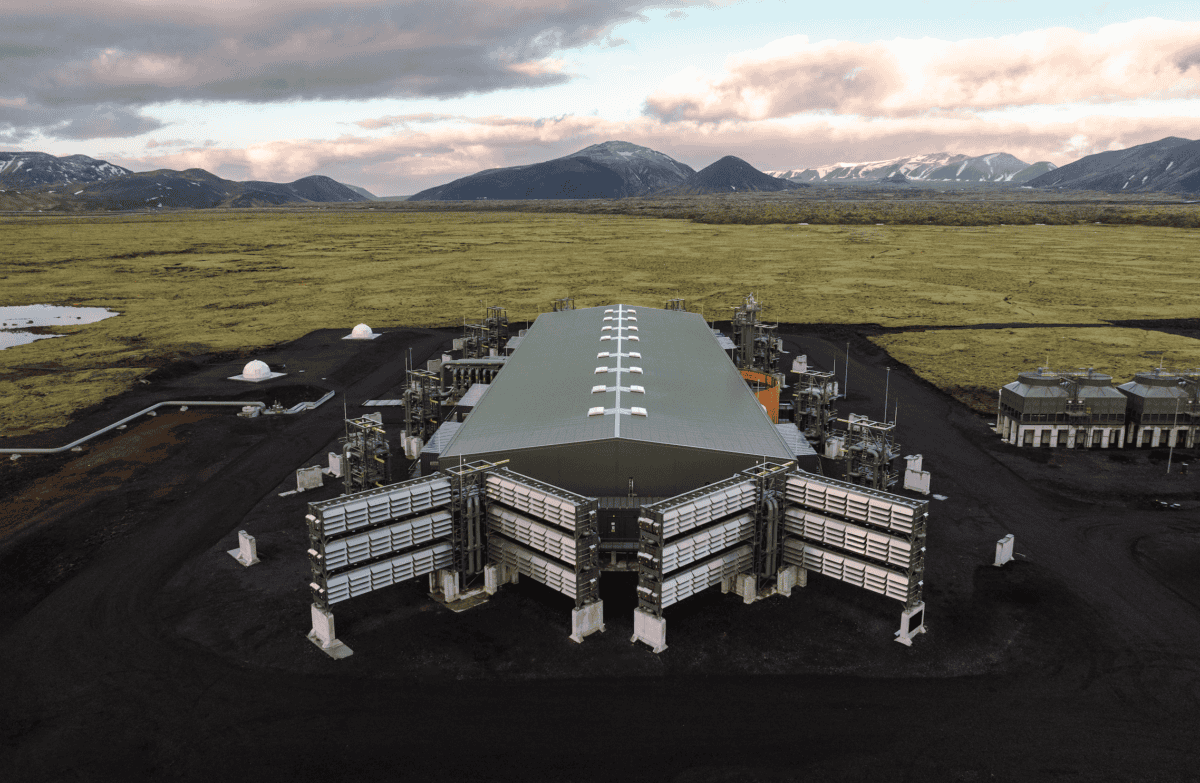
In the case of utility projects, Tristan Lebleu, Lead for External Relations at Swiss Carbon Capture pioneer Climeworks, explained that demand for carbon capture has increased across a number of sectors. Industries such as aviation, shipping, telecommunications, and retail are seeking to offset their residual emissions. As Climeworks continues to scale its capture capacity, the growing number of buyers is welcome news; more than 100 first-time buyers entered the market in 2025. MSCI reports that investment and offtake commitments across the carbon-credit market reached $22 billion in 2025, up 72% from 2024
Alongside growing demand, Lebleu explained that for carbon capture, “deployment drives learning”.
As Lebleu explains, “building and operating facilities at increasing scale allows companies to improve performance, optimize designs, and reduce costs over time.”

Alongside the direct air capture (DAC) facilities operated by Climeworks is the modular direct air capture approach developed by Carbon Collect.
During a conversation with Carbon Collect CEO Pól Ó Móráin, he explained that their direct-air carbon capture technology, the MechanicalTree, enables easy scaling from one machine to multiple machines. As a direct-air capture technology, the MechanicalTree captures CO2 directly from ambient air, allowing flexibility in location. Individual units can be configured into clusters to expand capacity. This lowers the barrier to entry for potential customers, allowing them to develop comfort with the machine before a larger commitment.
Carbon Collect’s modular approach enables rapid product iteration, as the company has already begun designing an 18-tree Gen III cluster. By analyzing field results, Carbon Collect can quickly improve efficiency and drive down the cost curve.
The modular approach for carbon capture has seen applications across both DAC and point-source capture. While DAC can remove carbon from ambient air, point-source capture captures emissions from industries including power generation, steel and cement fabrication, fertilizer production, and hydrogen production at the origin. This offers DAC location flexibility inaccessible for point-source technologies
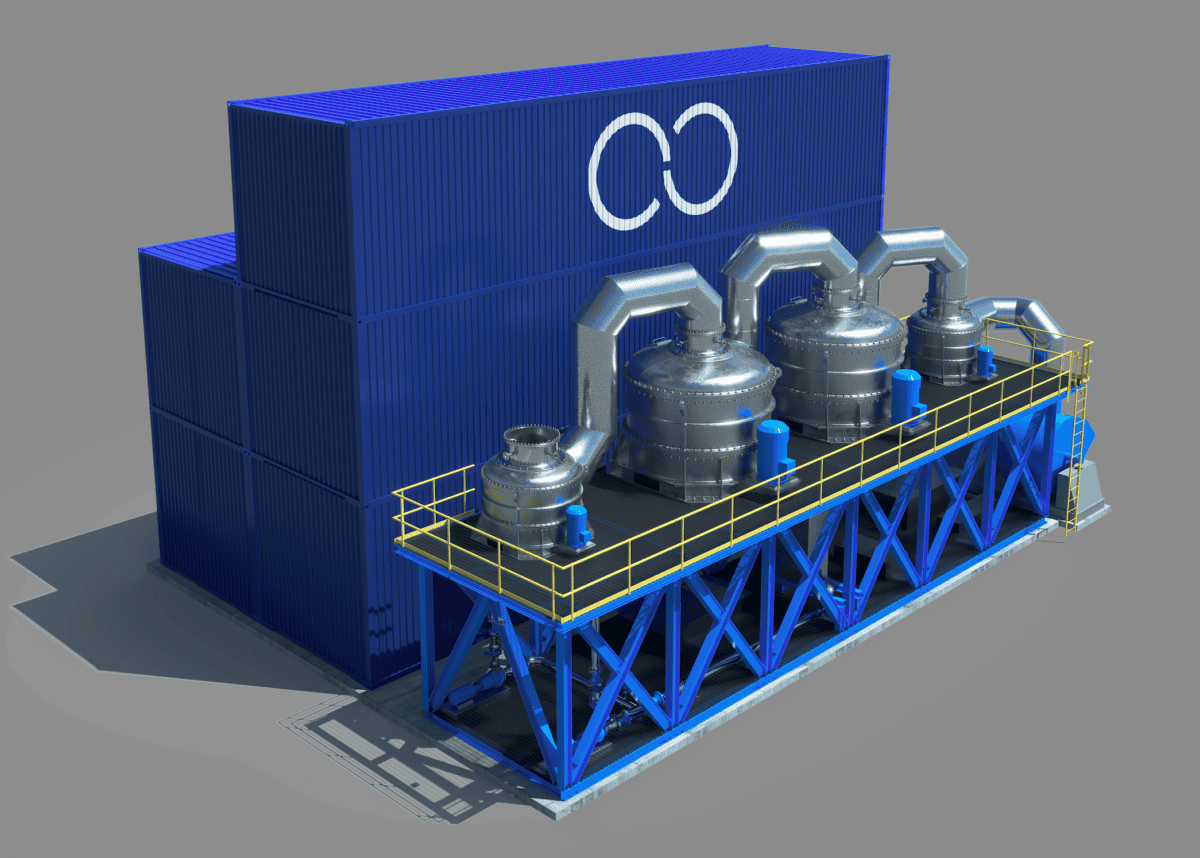
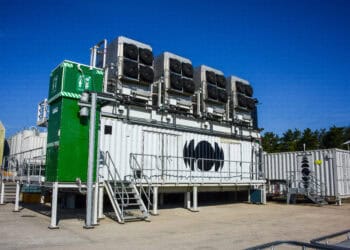
Aniruddha Sharma, CEO and co-founder of Carbon Clean, a UK-based company specializing in point-source technology, believes that their team has found a solution to the inherent geographic challenge of point-source capture. Sharma explained during an August call with The Energy Pioneer that, by compressing the equipment to fit inside a shipping container, they can optimize placement to work directly with heavy industries looking to decarbonize.
So far, remote power-generation sites have proven to be an optimal market for the technology, but Sharma explained that the emergence of data centers has created an exciting new market. Since data centers are often located in centralized locations, these modular systems are far more feasible to incorporate alongside them, as they require significantly less space and less specialized construction and operation than an industrial facility.
Alongside developments in carbon capture technology have been advancements in carbon storage technologies. Bergur Sigfusson, Chief System Officer at Carbfix, offered an analysis of the strengths and weaknesses of the current storage systems. As Sigfusson explained, storage technology can now scale, meaning it is no longer the bottleneck. Carbfix consistently has greater carbon storage capacity than the amount of carbon delivered, suggesting storage capacity is already sufficient as carbon capture continues to scale.
However, this is not to say that the storage industry does not currently face a range of challenges. Interestingly, the combination of regulations, public sentiment, and required applications is slowing carbon storage. By continuously demonstrating the technology through partnerships with carbon capture companies and manufacturing facilities, storage companies can assuage lingering fears about carbon sequestration.
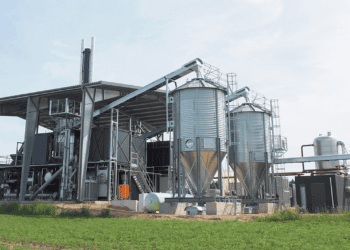
Graphyte, a carbon-storage company, has developed a system for carbon storage that takes advantage of the natural ability of biomass to store carbon. Biomass naturally stores carbon, which is then released into the atmosphere either through burning or decomposition. Graphyte has developed a technology that heats biomass to remove all moisture content and stop microbial decomposition. The biomass is then densified and encapsulated to prevent water infiltration. Graphyte then utilizes decommissioned surface mines to store the material.
With low energy requirements and an abundant supply of both biomass and storage locations, the company is well positioned to expand its capacity. Hannah Murnen, Chief Technology Officer of Graphyte, explained that the technology is in position to scale; what matters now is growing demand within the carbon credit market. To increase storage capacity as carbon markets continue to grow, Graphyte is currently building a second storage project utilizing wildfire fuel thinnings in Arizona.
Fortunately for the carbon capture and storage industries, although less so for the rest of us, there is no shortage of carbon to capture and store. Efficient carbon capture and storage will play a significant role in achieving net-zero targets.
Readers can also join our climate and clean energy network for updates and developments from across the sector, including Carbfix, Carbon Clean, Climeworks, Carbon Collect, Graphyte, the Carbon Capture Coalition, and other organizations working in the space.