
Argentina is emerging as a new copper frontier as demand for the metal rises with the energy and digital transitions. The country has yet to produce copper at scale, but dozens of projects are advancing along the Andes, drawing growing interest from China, Europe and the United States.
Over the past five years, Argentina has begun to see copper as a new source of foreign currency. Once a secondary mineral, with only one active mine in the country, copper is now becoming a central part of Argentina’s mining strategy. The mining industry and both provincial and national governments increasingly see copper as one of the country’s most promising long-term mining assets because of its importance to technologies associated with the energy and digital transitions.
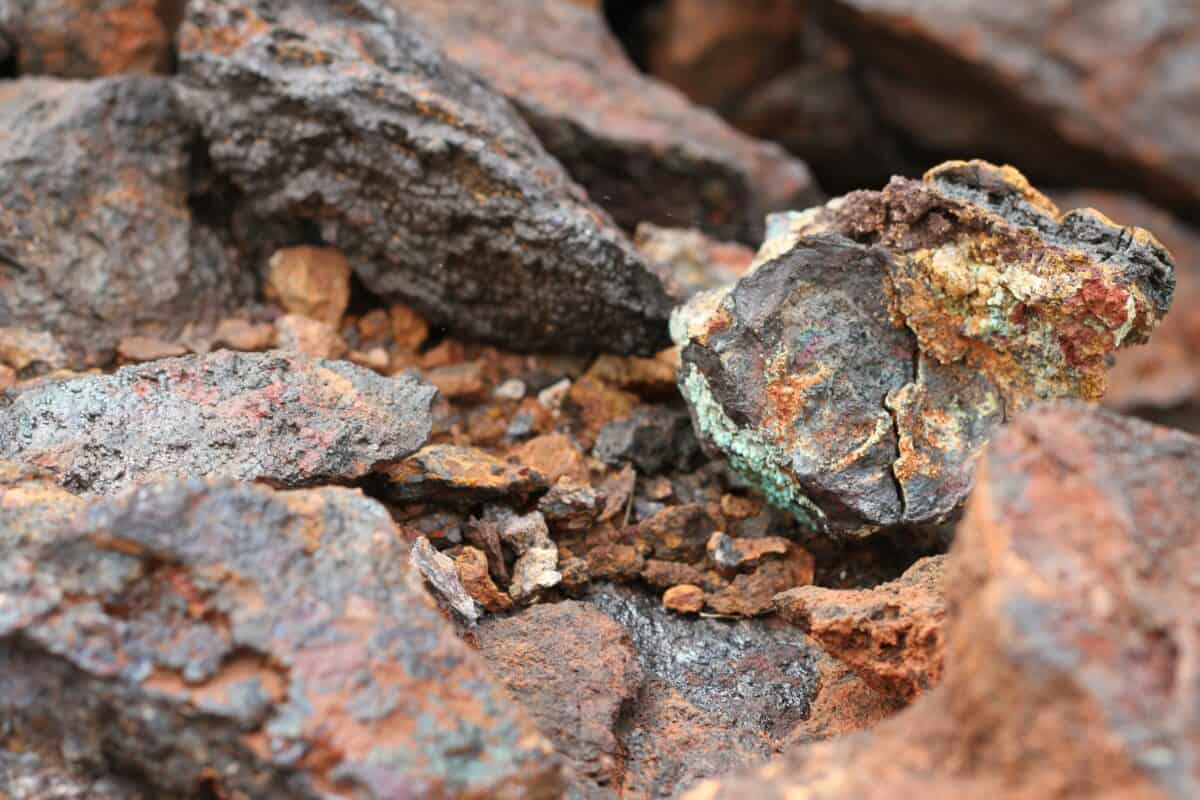
“Several metals are needed for the energy and digital transitions, but copper is irreplaceable,” said Leonardo Pflüger, an adviser and former national director of mining sustainability in Argentina. According to the Organization for Economic Cooperation and Development (OECD), copper is among the minerals expected to see the strongest growth as the energy transition advances. Demand linked to clean-energy technologies could account for between 24% and 45% of total copper consumption by 2040.
Today, the European Union, the United States and China all classify copper as a critical mineral. Last year, copper-related stocks rose more than 30% on the London Metal Exchange. Demand is being driven not only by electric vehicles, batteries and solar panels, but also by military spending. By 2025, the European Union had doubled its defense investment compared with a decade earlier, while the United States continued to have the world’s largest military budget. So where are the largest deposits?
According to José Cabello, a Chilean geologist with more than 50 years of experience in mining development in the region, the countries stretching along the Andes are among those with the greatest potential for copper resources.
Chile and Peru are already the world’s leading copper producers. Several projects that had been abandoned have also resurfaced as copper prices and expectations for future demand have increased. Across the region, however, this new activity is taking different forms.
A look at the region’s copper-producing countries reveals another pattern: China has become a major trading partner for much of Latin America. Chile and Peru, for example, send roughly 50% and 70% of their exports there, respectively. Brazil and Panama also count China as their largest buyer.

Mexico remains primarily oriented toward the United States, but some of its production also heads east. Nearly every copper-exporting country in the region supplies both China and the United States to varying degrees. But what happens in countries where the industry is only beginning to develop?
The geopolitics of copper
According to Argentine international affairs analyst Juan Gabriel Tokatlian, the world appears to be moving toward a “post-Western model” in which Asia could become the new center of global economic power. By 2030, the region is projected to account for about 50% of global GDP. Since joining the World Trade Organization in 2001, China has gone from having limited trade relations with much of the world to becoming the main trading partner of numerous countries. In Latin America, the economic center of gravity is increasingly shifting eastward.
The impact of this shift on global power remains difficult to measure, but there are growing signs that Western countries — particularly the United States — are responding to China’s expansion in strategic sectors. Since 2020, President Donald Trump has repeatedly argued that China’s control over critical minerals poses a threat to US security.
“The weakening of domestic production and the lack of access to secure and reliable critical-mineral supply chains affect the production of advanced weapons systems, energy infrastructure and everyday consumer goods,” Trump said on January 14. The statement came 11 days after Operation Absolute Resolve, in which US forces captured Nicolás Maduro and Cilia Flores in Venezuela. That same weekend, Trump publicly renamed the historic Monroe Doctrine the “Donroe Doctrine,” explicitly reframing US influence in the Western Hemisphere.
Thea Riofrancos, a political science professor at Providence College and co-director of the Climate and Community Institute in the United States, has described the shift in US policy as an effort to reduce dependence on China and refocus attention on Latin America. Tokatlian has cautioned, however, that although the US government has framed the situation in terms reminiscent of Cold War-style blocs, the current dynamics are not the same.
China, meanwhile, has spent decades pursuing what it calls its “peaceful rise” through the Belt and Road Initiative. In 2008, the Chinese government published its first policy document on relations with Latin America and the Caribbean, outlining trade and development goals. Since then, China’s presence in the region has involved not only trade but also Chinese companies and infrastructure projects in strategic locations.
The most visible examples include commercial zones around the Panama Canal and the Megaport of Chancay in Peru, which opened two years ago. In copper, China has become the world’s largest consumer while also emerging as a major provider of manufactured infrastructure for the region’s energy transition, particularly electricity generation and transmission.
A Chinese policy document on Latin America published in December 2025 described plans to deepen cooperation on critical minerals, including greater “green” development and use of mineral resources and potential long-term supply agreements. Tokatlian highlighted a key element of this approach: China can offer infrastructure, training and financing that the United States may no longer be able to provide as it did during the 1990s.
Argentina’s path
Argentina does not yet have an established copper industry, but dozens of projects are under development. Nine have already moved beyond exploration, while another 68 are waiting in the pipeline. All are located along the Andes.
The companies controlling these projects are primarily Canadian and Swiss, with Australian capital also involved. Only one project is operated by an Argentine mining company. Four exploration-stage projects have Chinese participation, but none currently contains what is considered high-grade copper. At the same time, environmental groups and other voices are questioning policies they see as weakening environmental protections and raising concerns over competition for one of the country’s most essential resources: water.
According to records from Argentina’s national mining secretariat obtained by this reporting partnership, the most advanced projects are located in San Juan (4), Catamarca (2), Mendoza (1) and Salta (1). Seven of them contain the country’s largest copper deposits, together accounting for 117.9 million metric tons of copper resources and 19.97 million metric tons of reserves, according to the national mining secretariat’s copper catalog. They include José María, Filo del Sol, Los Azules, El Pachón, Agua Rica, Taca Taca, and La Alumbrera. San Jorge is also among the projects, although on a smaller scale. Despite their level of development and the size of their resources, none has yet entered production.
A recent analysis by Climate Tracker found that at least six of the projects listed by the national mining secretariat explicitly link copper extraction to the energy transition. Another 11 refer to issues such as energy efficiency, renewable energy and global climate goals.
Although this narrative was also promoted under the Peronist government of Alberto Fernández, mining became a central part of Argentina’s development strategy under President Javier Milei. The main tool for attracting investment is the Large Investment Incentive Regime, known as RIGI, which was included in one of the first major bills sent to Congress in late 2023.
The regime grants tax and other fiscal exemptions for 30 years to projects investing more than USD200 million in five strategic sectors: hydrocarbons, mining, energy, agriculture and forestry. According to the latest report from the RIGI Observatory, produced by several civil society organizations, 21 mining projects have been approved or are seeking approval under the regime, including six copper projects. Those six projects represent USD34.011 billion in investment, or 70% of all mining investment under RIGI.
All of these projects are located along the Andes, where water is naturally scarce. Most communities in the region depend on seasonal snowfall and snowmelt. The areas where the most advanced and largest projects are located have also experienced a prolonged drought for more than a decade. Water has consequently become a source of tension between parts of civil society, government officials and mining companies.
Conflicts on the ground
The Milei government has not only used RIGI to promote five strategic sectors. It has also sought to loosen or reduce funding for environmental policies and regulations.
More than two years later, the government has successfully modified only the Glacier Protection Law. The reform grants provincial governments the authority to determine which glacier areas perform strategic water-reserve functions and therefore merit protection.
According to two experts consulted by The Energy Pioneer, the change could weaken safeguards in previously protected areas and facilitate extractive projects, particularly mining operations. It represents the first major national environmental protection law to be relaxed during the Milei administration, although additional reforms remain under consideration.
Mining projects have also generated conflicts with local and Indigenous communities. According to the Global Atlas of Environmental Justice, at least 40 conflicts linked to mining activities have been recorded in Argentina over the years.
One of the most prominent current disputes involves the San Jorge copper project, located near Uspallata in western Argentina. Local residents and environmental groups have opposed the project for years, arguing that large-scale mining could threaten a scarce water supply. In December 2025, Mendoza’s legislature approved the project’s environmental impact assessment, allowing it to move forward. The decision sparked new protests and legal challenges, with activists reporting 41 arrests.
San Jorge is also a symbol of Mendoza’s rapid expansion into copper mining. For years, the province was known for its opposition to large-scale mining, but it now has 65 copper exploration projects and one under construction. The shift is particularly sensitive because Mendoza is one of Argentina’s driest provinces, receiving about eight inches of rain a year, while its rivers and irrigation systems depend heavily on snow and glacier melt from the Andes.