
Critical Programs Face Severe Cuts Amid Climate Crisis
Since taking office, President Milei’s administration has cut up to 84.5% of federal environmental agency budgets, undermining wildfire response, forest conservation, and renewable energy projects, while inflation and budget underexecution deepen the crisis. All federal agencies involved in environmental policy have experienced cuts of at least 30%, with some facing reductions exceeding 80%. These budget cuts have had tangible impacts on essential operations — from disaster response and wildfire management to forest and biodiversity protection, as well as the development of the energy transition — according to multiple sources inside and outside the public administration, as reported to The Energy Pioneer.
The reasons include the broad budget cuts driven by the Ministry of Deregulation and State Transformation — Argentina’s equivalent of the U.S. Department of Government Efficiency — and a deliberate disincentivization of environmental policy. This shift is tied to both a lack of understanding and the “cultural battle” promoted by the current administration. That battle is tinged with an anti-globalist stance, in which the 2030 Agenda is frequently discredited and disparaged.
A recent report made by the Argentine NGO Natural Resources and Environment Foundation (FARN) shows that during the first year of the administration, the entire federal budget was significantly eroded by inflation, which surged 84.5% between January 2023 and January 2024. Moreover, the federal budget was not adjusted last year because Milei’s administration chose to keep it unchanged by decree, adhering to its zero-deficit policy. Normally, the budget must be submitted to Congress for approval.
Matías Cena Trebucq, an economist and author of the report, warns that this erosion is just one factor contributing to what he describes as one of the most fragile moments for environmental and climate policy in recent history. The report reveals that the budget for the environmental office was slashed far more severely than the average government cut of 26.3%. Worse still, Trebucq points out that not only has the budget floor dropped significantly, but it is also being underexecuted.
Ariel Slipak, research coordinator at FARN, believes this may stem from a lack of political interest, or even a deliberate attempt to weaken environmental and climate policies on the public agenda. For example, one year after being downgraded from a Ministry to a Subsecretariat, the Environment office — now part of the Secretariat of Tourism, Environment, and Sports — suffered a 79.4% cut to its budget in real terms.
In Slipak’s view, the consequences could be serious. As he explained, “the defunding of essential programs such as fire management, native forest protection, and the promotion of renewable energy reveals a lack of long-term environmental planning, in a context where the impacts of the climate crisis are increasingly evident.” Many employees in offices tied to the environmental and climate agenda fear losing their jobs and, as a result, their department’s ability to function effectively.

“In March last year, 50 staff members left, and across the entire Secretariat, another 150 followed in February this year. Many had their contracts left unrenewed, but others left on their own. Salaries are low, and the working conditions are extremely precarious”, explained a technician from the Subsecretariat of Environment, who preferred his name off the record. Since January 2024, all public administration contracts have been limited to three months, leaving many employees unable to plan beyond that horizon. Most don’t know whether they’ll be retained or let go.
The technician from the Subsecretariat of Environment also explained that the vast majority of staff within the Subsecretariat are hired under the monotributo —a simplified tax system for small, independent workers—or as “contracted” workers, terms used for those not part of the permanent staff. According to her, these workers face the greatest uncertainty regarding job stability. “Many are leaving because they have no job security at all”, she added. A Journalist from The Energy Pioneer attempted to contact the Subsecretary of Environment, Fernando Jorge Brom, but was unsuccessful.
The situation described by the technician is mirrored across several departments, including the National Park Administration and the National Fire Management Service. Alejo Fardjoume, national coordinator of the Association of State Workers – National Parks division, reports that there are currently only 350 firefighters in the department. “A report dated December 31, 2023, stated that the minimum number of brigade members National Parks should have is 700,” Fardjoume explained.
According to ATE, the number of brigade members available for firefighting is critical. “Cristian Larsen [director of the agency] requested Federico Sturzenegger [the minister of Deregulation and State Transformation] to increase the National Parks brigade staff by 150, but only 20 were approved,” Fardjoume said. The union estimates that the total number of firefighters battling fires across National Parks, the National Fire Management Service, and provincial forces does not exceed 2,000.
The report also highlights the halt of various infrastructure projects within the natural areas managed by the agency, including trails, bike paths, and conservation beacons. The Energy Pioneer attempted to contact the National Parks Administration for their response, but as of this publication, no reply had been received.
According to FARN, the underexecution of the budget is evident in both the lack of preventive policies for potential climate emergencies and in the inadequate response to disasters when they occur. One example highlighted in their report is the National Fund for the Enrichment and Conservation of Native Forests.
This fund, established under the Native Forests Law (Law 26.331), was created primarily to finance Argentine farmers to support conservation projects and help prevent deforestation and wildfires. FARN considers this fund to be the core of its forest protection policy. However, last year the executive branch failed to allocate the necessary funds for the 2024 budget, and even the funds that were allocated went unspent.
Slipak emphasized that the forest fund represents preventive measures against environmental threats, but there are also funds aimed at emergency response. The FARN report highlights the National Treasury Contribution Fund (Fondo de Aportes del Tesoro Nacional, or ATN), created under the Federal Revenue Sharing Law (23.548), which is used, among other things, to “address emergency situations and financial imbalances in provincial governments.”
In 2024, the ATN fund collected approximately USD 591 million, of which only about USD 43 million was spent. By March 31, 2025, about USD 182 million had already been collected, but only about USD 41 million had been disbursed. “Imagine terrible wildfires in Patagonia and a devastating flood in Bahía Blanca. And for the latter, they only allocated about USD 8.7 million,” Slipak highlights.
A few weeks ago, another disaster struck the country. In the northern part of Buenos Aires province, a severe storm caused widespread flooding across more than five towns. Although National Security and Defense ministers Patricia Bullrich and Luis Petri promised that funds would be sent “directly to the victims,” the exact amounts have yet to be confirmed.
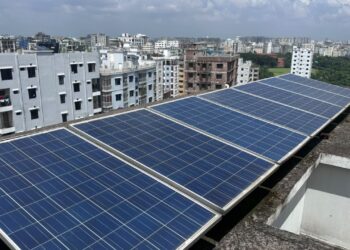
Another critical area flagged by the FARN report is the sharp decline in the budget for promoting renewable energy. Although the Ministry of Economy includes a Subsecretariat for Energy Transition and Planning, Argentina’s government is increasingly stepping back from advancing this globally promoted shift. The environmental organization highlights the closure of the Renewable Energy in Rural Markets Project (PERMER), which, since 1999, has received funding from the World Bank to implement renewable energy solutions in off-grid areas. According to a press release by the National Audit Office published in June last year, the executive branch decided to shut down this program. A journalist from The Energy Pioneer interviewed PERMER’s last national coordinator, who outlined how the project’s discontinuation threatens the energy access of 293,243 beneficiaries.