
Nurse Miriam Konya doesn’t know how her household food pantry would have fared in 2024 were it not for the cheap, portable Chinese-made lithium-ion battery that powers her mini-fridge.
“We only get electricity for 5 hours daily in this township. Our stored food and medicines go bad quickly,” she says from Lunzu, Blantyre, the commercial capital of Malawi in south-east Africa.
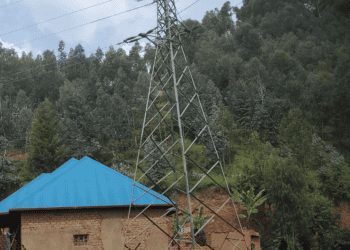
Lunzu, a dusty low-income area on the edges of Blantyre, is a neglected place in terms of infrastructure, and without state support, residents must think on their feet for solutions.
‘Wasted electrons’
The worst climate drought in 50 years hammered the entire southern Africa region of countries Malawi, South Africa, Zambia, Botswana, and Zimbabwe throughout 2024. The heat dried up crucial riverways and dams that complement thermal coal power stations to produce electricity for millions of homes, factories, and schools.
But in good and bad times, Malawi, like most African nations, faces a series of dilemmas. It doesn’t matter much whether they produce lots of clean solar, wind, or biogas energy. There is a lack of big transmission grids to bring the thermal, hydro, or renewable energy to homes and factories. Additionally, when renewable energy is brought to end users, there is a lack of robust storage to save and use it efficiently.
“A significant chunk of energy harvested in Malawi from hydro dams and solar panels becomes ‘wasted electrons. That is power lost, not only via limited transmission lines, but for lack of storage capacity,” explains Rigatto Zomba, a former senior engineer with the Electricity Supply Commission of Malawi.

Though 70% of Malawi’s current installed capacity already comes from renewable sources, “too much excess energy storage is lost,” adds Zomba.
Solution
Fortunately, a solution is taking shape. Cheap lithium-ion power batteries from China are helping preserve whatever renewable energy watts Malawi’s households, schools, and clinics can harvest from panels mounted on their roofs.
“For just $100 a battery once-off, we can power our small fridges and cool medicines, and baby food. It is a lifesaver,” Konya says.
For Konya and other members of her community, the typical 80Ah lithium batteries are deployed in private homes and small institutions to maintain items in 10V fridges for a couple of days until normal hydro electricity supplies are stabilized.
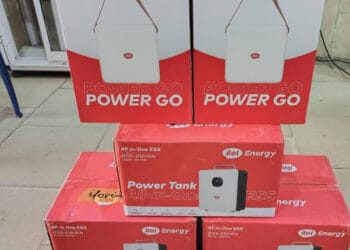
Portable energy storage batteries are doing brisk business in Malawi. Twenty-three thousand batteries were imported from China by small businesses, households, or government departments in 2024, outlines Nico Mwale, a customs manager with the Malawi Revenue Authority. Seeing a trend of solutions emerging, authorities have lowered the threshold of customs taxes on portable power batteries from 15% to just 7%. The most popular Chinese portable battery brands, Jackery, EcoFlow, Bluetti, and Anker, are the leading battery pack sellers in Malawi. The batteries come packed in containers directly from China – or are routed via South Africa or the nearby Port of Beira in Mozambique.
“Malawi is not a technologically advanced country like China, where cities can deploy 2GW standalone batteries for modular energy storage solutions. However, by providing small portable batteries that are cheap, hold as little as 100 AH, we can see mini-power grids rolling inside each Malawi house,” says Xin Zhechou, leader of the Chinese Business Forum, an informal alliance in Lilongwe, the capital city of Malawi. The Chinese traders offer credit whereby households can buy a $100 portable battery in four installments spread over eight months.
Crisis
Alongside cost, lack of technical skills, and technology, there is also extreme weather, which is stressing Malawi’s hydropower sources.
Unlike its neighbors, Zimbabwe, South Africa, and Mozambique, Malawi has no substantial coal deposits to run thermal energy power stations. It therefore relies on the Shire River to generate 88% of its hydroelectricity, according to the International Hydropower Association. Yet the climate is stressing the Shire River in various ways. Extreme rainfall can cause the river to flood out and overwhelm the country’s old power stations downstream. On the other hand, severe droughts, which now recur frequently, knock out the volumes of water needed to keep hydro stations dependent on the Shire River running.
“It’s a catch-22 situation,” explains Zomba, the former state electrical engineering manager and now a private consultant for Chinese companies seeking to develop solar power fields across Malawi’s driest districts.
“The electricity situation is vexing in Malawi. Though the country has installed up to 10MW of renewable energy, it doesn’t always make a big impact because we need storage to maximize whatever is coming from new green energy sources – hence the critical importance of lithium-ion batteries in private homes and businesses”. Zomba outlines.
Grand scale
At a macro-level, private money is already at play in Malawi, deploying modular battery solutions at a vast scale, unlike the small efforts that households are making for themselves. For example, the Golomoti Solar and Battery Energy project, backstopped by UK government blended finance and Canadian private equity, is already switched online, storing 5MW of power from a solar farm in central Malawi.
“This is welcome, but these are big corporate energy storage solutions (that) millions (of) us rural residents in Malawi can’t afford to tap into. That power is mainly for big corporate and government offices, what about us in low-income townships?” says Konya.
Yet, in the absence of serious battery energy storage infrastructure, it is cheap, small, Chinese-made lithium batteries that are powering small clinics and ordinary homes, for now.
“At least we have a mix of affordable solutions now,” she concludes.