

Climate Group is the international non-profit behind RE100, a coalition of more than 400 companies committed to sourcing 100% renewable electricity. In this Q&A, Ollie Wilson, Head of RE100 and Energy Operations at Climate Group, discusses how companies are responding to energy market shifts, what is slowing renewable deployment, and what needs to change to accelerate the transition.
Q: Given the scale of corporate investment in renewables over the past decade, how do you see that progressing in light of the Iran War?
A: The world’s leading companies have been driving the shift to renewables for years. Long before this latest fossil fuel crisis, they’ve been investing billions in pursuit of secure, home-grown clean electricity, because it makes business sense. Right now, that business case is even more compelling. And everything is speeding up.
In the near-term, we’re likely to see a sharp rise in onsite solar and battery energy storage installations, as organisations of all sizes look for fast, practical ways to hedge against sudden price spikes in fossil fuels. If the price of oil and gas stays high, we will see even more and faster structural shifts in corporate energy decision-making towards renewables.
But companies keen on cheap, abundant renewables, like the 400+ members of our RE100 coalition, can’t get them fast enough, because in most economies barriers remain. Governments need to urgently break these down.
Q: What are the biggest changes companies still need to accelerate renewable deployment at the pace required?
A: Companies need favourable policy environments for renewables; that’s what RE100 is pushing for in markets around the world. Governments need to set ambitious renewables targets in their national energy plans, because that’s what’s driving investment and infrastructure development. They need to create market structures that support private investment in new generations, and allow for direct trade between suppliers and corporate buyers of all sizes. And they need to work with utilities and suppliers so there’s a wide range of options for corporate sourcing.
Right now, major companies are voting with their wallet for markets that can offer them cheap, abundant renewables. The national and sub-national governments that act fastest in creating and advancing favourable policy environments will attract the world’s leading companies looking for energy-secure, competitive locations.

Q: South Korea has a 2050 net zero target, yet renewables still made up only about 6% of electricity in 2024, with RE100 members sourcing far less renewable power than the global average. Despite sustained engagement from RE100 and Climate Group on PPAs, grid access and targets, what is still the main structural barrier preventing corporate renewable procurement from scaling in South Korea?

A: The current government in South Korea entered office with a bolder direction on renewables, and the initial signs are positive. The government is prioritising its goal of deploying 100 GW of renewable energy by 2030. The power grid will be expanded, with new ‘Energy Highways’ expanding renewable energy use across industries.
In a distinct win for RE100 members, the Renewable Energy Power Purchase Agreement (PPA) framework was updated in line with one of our policy recommendations. And the Government is increasing accessibility by piloting a PPA brokerage market and removing minimum capacity requirements for on-site PPAs.
But South Korea’s renewables roll-out is still far too slow for its booming corporate demand. RE100 members consistently tell us they want to source more renewables via PPAs, because of the price stability and supply certainty they provide compared to fossil fuel energy. But PPAs are still extremely difficult to access and, as a result, those that exist are complex and expensive. The key issue here is that permitting barriers are limiting the renewables supply available for corporate use, and that’s driving up costs and stifling investment. The government must urgently address this.
One interesting development is the development of RE100 industrial complexes – industrial parks that run on 100% renewable energy. These industrial zones are being seen as a key component to the next phase of the energy transition, and South Korea is already positioning itself at the fore.
Q: China is both one of the world’s largest carbon emitters and the single biggest driver of global renewable deployment. Do you see China’s model evolving into a blueprint for industrial decarbonization, or is the sheer pace of industrial demand still outstripping the impact of its renewable expansion?
A: Speaking of industrial zones, China is currently showing us just how effective Industrial Development Zones (IDZs) can be in providing a practical platform for accelerating renewable electricity adoption at scale. With Climate Group’s IDZ Initiative, we’re working with partners to explore how internationally recognised Technical Criteria can be applied within China’s renewable electricity market, and for these zones specifically.
China’s approach reflects its own market and policy context, but the experience generated could offer practical insights for other markets looking to accelerate industrial decarbonisation through renewable electricity.
So, rather than a single blueprint, we see this as an opportunity to generate practical lessons that can inform different transition pathways elsewhere.
Q: Indonesia is targeting 75GW of new renewables by 2040 and a coal phase-out by the same date, yet wind and solar still make up just 0.24% of generation. Is it realistically possible to scale renewables fast enough to meet those goals, and what would that actually look like in practice floating solar, grid sharing, new market structures, or something else?
A: The current pace and scale of the energy transition, driven by energy security concerns and the cost competitiveness of renewable power, shows us what’s possible in a short space of time for countries committed to making the switch.
Indonesia’s President is targeting 100GW of new solar by 2030. That’s ambitious, but achievable – if policy support for renewables keeps up. The pledge can position Indonesia as a global clean energy investment destination, strengthening competitiveness and attracting new economic opportunities.
But the government must now create a clear implementation roadmap for the100GW pledge, including expanding options that enable increased corporate renewables investment in Indonesia. 130 RE100 member companies operate in Indonesia, all hungry for more renewable power, but if they’re to directly support and finance the build-out of new renewables capacity in the country, they need quicker permitting procedures and shared use of the country’s grid to send new renewable power to their business hubs. Our report and new one-pager with IESR, just out, has more on why this is so important.
Q: Data centres are becoming the physical infrastructure of the digital economy and one of the fastest growing drivers of electricity demand. How is corporate renewable procurement evolving when renewables are no longer just a climate solution but a requirement to continued digital infrastructure development?
A: Companies across sectors, including data centre companies, are choosing renewables because they are fast and cheap to build. Combine them with ever better storage solutions and you have a pragmatic choice to power the vital infrastructure of the digital economy.
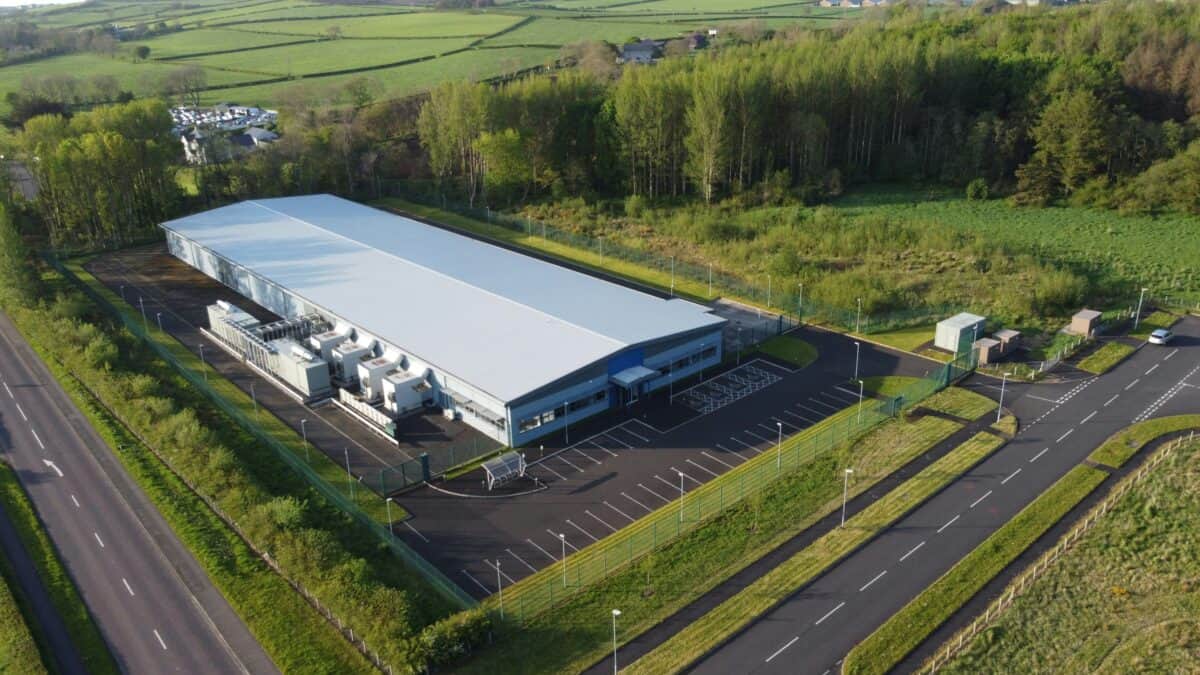
But for the scaling of renewables to match the growth in power demand from data centres, governments will need to accelerate significant grid upgrades, streamline permitting, and increase grid flexibility to meet demand.
Another, often overlooked, component is energy efficiency. Smarter cooling systems and better management can significantly cut consumption.
That’s why this is such a critical moment for the global energy transition: a growing network of forward-thinking companies and governments are approaching renewables, cost-effective battery storage, innovative tech, energy efficiency, and smarter systems as one integrated way to deliver what all corporates are craving: better energy security and future-proof competitiveness.