
On a crowded morning on the outskirts of Cairo, the monorail glides quietly above the city, passing over roads packed with cars and minibuses. Up here there are no roaring diesel engines or thick clouds of exhaust. For many, the scene feels like a sign that Egypt is entering a new era of modern transportation.
The full-trip fare for the East Cairo Monorail, officially inaugurated in April 2026, currently stands at 80 Egyptian pounds (around USD $1.5). This sparked criticism on social media, with some citizens saying it is unaffordable for daily commuting by lower-income groups and is instead more suited to higher-income passengers seeking a cost-saving, congestion-reducing alternative to private cars.
The launch of the East Cairo Monorail forms part of a wider portfolio of transport projects in Egypt aimed at expanding electric and mass transit infrastructure, including the Light Rail Transit (LRT), the expansion of the metro, electric bus systems, and high-speed rail development.
The government says these projects aim to reduce congestion and emissions while improving quality of life in cities, especially amid growing challenges related to pollution and fuel consumption in a country with a population exceeding 100 million.
A Strategy for Green Transformation
Energy sectors, including electricity, transport, and industry, account for around 70% of greenhouse gas emissions in Egypt. Transportation is the second-largest source of carbon emissions after electricity, accounting for approximately 23% of the country’s total energy-related emissions.
Egypt’s Ministry of Transport has developed a strategy to transition toward environmentally friendly green mass transit systems by expanding modern electric-powered urban transportation projects. These include the 103 kilometer Light Rail Transit (LRT), which connects eastern Cairo with the New Administrative Capital and surrounding satellite cities, as well as two monorail lines linking central Cairo to expanding urban communities east and west of the capital.

The country is also expanding the Cairo Metro network through several new lines and extensions connecting densely populated districts across Greater Cairo, including 6th of October City in the west and New Cairo in the east. In addition, authorities are introducing a 110 kilometer Bus Rapid Transit (BRT) system along Cairo’s Ring Road to reduce dependence on private cars and informal microbuses by offering a faster and more sustainable public transport alternative.
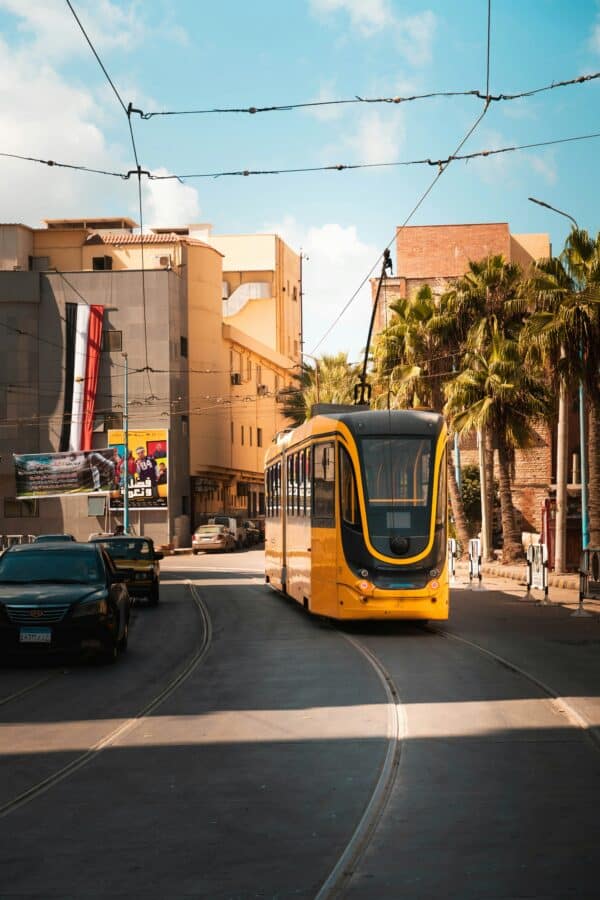
Beyond Cairo, Egypt is upgrading public transportation in the Mediterranean city of Alexandria through the redevelopment of the Abu Qir railway line and the rehabilitation of the historic Raml Tram. The country is also developing a 2,000-kilometer electric high-speed rail network that will connect major cities and economic hubs nationwide.
Alongside infrastructure projects, the government is working to modernize public transport fleets by introducing environmentally friendly buses powered by electricity and natural gas.
Preliminary studies estimate that these projects could reduce carbon emissions by approximately four million tons annually.
Egyptian Minister of Transport Kamel El-Wazir previously stated that the ministry’s vision goes beyond merely transporting passengers and goods to actively contributing to sustainable development by balancing social, economic, and environmental needs. To achieve this vision, the ministry has adopted what it describes as a flexible and comprehensive development strategy involving investments worth 1.7 trillion Egyptian pounds, approximately USD $32 billion.
The minister added that the government is also encouraging private-sector investment through partnership opportunities in the transportation sector, in line with Egypt’s broader strategy to increase private-sector participation to around 65% of total investments over the coming three years.
Dr. Hesham Eissa, board member of Dcarbon Global, an environmental climate consultancy, said that projects such as the monorail, metro, and electric trains use electricity rather than diesel or gasoline, helping reduce urban air pollution, noise, and carbon emissions.
However, he noted that the environmental impact of electric transport depends largely on how the electricity is being generated.
“If the electricity used to operate public transportation systems such as the monorail is generated from natural gas or fossil fuels, then emissions do not disappear, they are simply transferred from vehicle exhaust pipes to power plants. Therefore, the “greenness” of electric transport is directly linked to the share of renewable energy within the national electricity grid”, Eissa said.
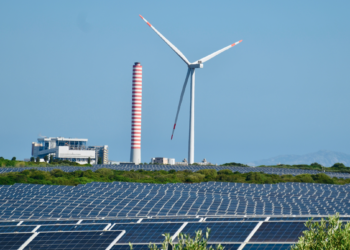
He noted that Egypt is already expanding solar and wind energy projects and aims to increase the contribution of renewable energy to the electricity mix in the coming years. As a result, the carbon footprint of electric transportation such as buses and the monorail is expected to decline gradually as reliance on clean electricity increases.
Egypt’s total renewable energy production rose to 9 gigawatts in 2025, accounting for 12% of the country’s energy generation mix, according to IRENA. The nation’s strategy aims to increase the share of renewable energy to 42% by 2030.
Eissa explained that even when electricity comes from fossil fuels, metro systems and monorails are generally more efficient, as they can carry a much larger number of passengers per journey.
The Future of a Low-Carbon Transport System
Eissa believes that Egypt possesses genuine potential to transition toward a low-carbon transport system and may be among the leading countries in the region in terms of the foundational elements required for such a transformation. However, full success depends on the speed of integration between energy systems, transportation, urban planning, and economic policies.
He explained that Egypt has rapidly expanded electric mass transit infrastructure in recent years through projects such as the Cairo Metro, the New Administrative Capital Monorail, the LRT, and high-speed electric railways. These projects provide a strong foundation for reducing dependence on private vehicles and conventional fuels.
Eissa noted that the country also possesses major renewable energy advantages, including high solar irradiation levels and strong wind corridors, particularly in the Gulf of Suez and the Red Sea region. As a result, Egypt is emerging as a promising regional hub for solar energy, wind power, and green hydrogen production. “The greater the share of renewable energy in the national grid, the lower the emissions associated with electric transportation”, Eissa added.
Egypt’s geographic location between Asia, Africa, and Europe also positions it to become a regional center for low-carbon transport and logistics through the development of green ports, electrified logistics services, and cleaner marine fuels.
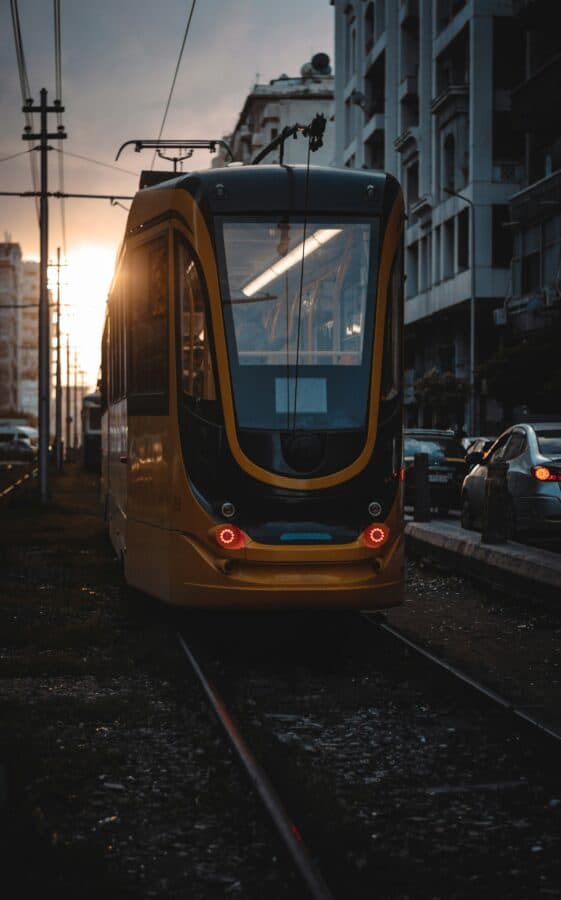
Still, Eissa stressed that major challenges remain, including the high cost of electric infrastructure, continued partial dependence on fossil fuels in electricity generation, urban congestion, weak integration at times between urban planning and public transport, the need to localize battery and electric component manufacturing, and the expansion of smart charging networks.
He added that achieving truly sustainable transportation does not simply mean replacing conventional cars with electric ones. Instead, it requires redesigning transport systems, energy networks, and cities in a fully integrated way to become more energy-efficient, environmentally sustainable, and socially equitable.
“This includes continued expansion of metro systems, electric railways, and monorails, modernization of public buses, improved connectivity between different transport modes, and ensuring that public transportation remains affordable, safe, and accessible. It also requires reducing commuting distances between housing, workplaces, and services, increasing pedestrian and cycling infrastructure, incentivizing electric vehicles, and lowering public transport ticket prices”, Eissa added.
Egypt’s transition toward electric transportation reflects a broader attempt to balance urban growth with environmental sustainability. Yet the true success of this shift will depend on how quickly clean energy and inclusive mobility policies advance together.