

How can philanthropic capital fill the role of first-loss capital when developing energy projects and how does this catalyze additional capital into regions that might not attract investment without philanthropic dollars?
Philanthropic capital is catalytic capital. When looking at opportunities, we look at where we can fund projects early on to help make them more attractive to others. For example, our work on nuclear energy has led to our work with Temasek Trust on the Global Coalition for Nuclear Philanthropy, which is bringing in other funders to further nuclear energy research.
We also consider where we can fund innovative technologies or business model pilots that private sector investors consider too risky, but we believe have promise. This allows us to help move these projects forward, and provide proofs of concept that brings in other, larger investors.
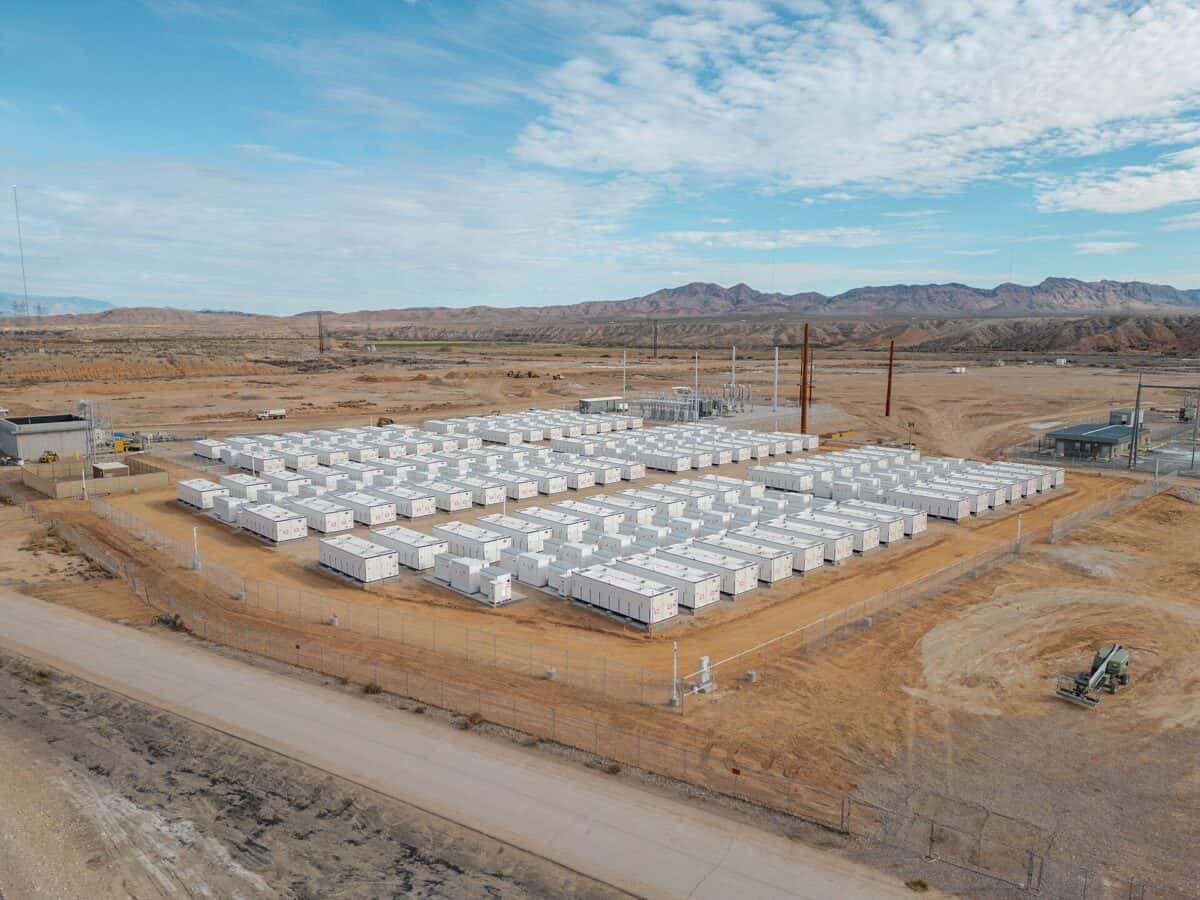
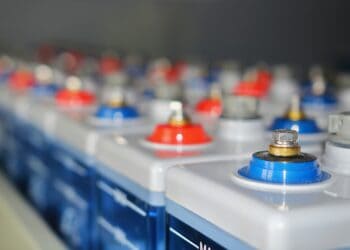
For example, the Global Energy Alliance has developed a first-of-a-kind standalone Battery Energy Storage System (BESS) facility in Delhi, India that has served as a testbed for both the technology and for proving out the cost economics. This 40 MWh facility is helping to boost energy capacity in one of the densest neighborhoods in India by providing electricity during times of highest demand. The Global Energy Alliance is replicating this with similar projects in Malawi and Barbados. These sorts of standalone BESS projects are exactly the types of endeavors that can be derisked by philanthropy and then be funded by private capital.
What does the grant making process look like? What measures does the foundation take to ensure the efficient use of capital from grantees?
Since 1913, The Rockefeller Foundation has used grantmaking as a tool to make big bets and deliver results for people in the United States and around the world. Our current work aims to harness technological innovation, bold new ideas, and the power of unlikely partnerships to help improve public health, create nutritious and sustainable food systems, achieve universal energy abundance, and advance meaningful economic opportunity.
Our grantmaking is rigorous: we have a finite amount of capital to deploy and we evaluate proposals based on impact potential and the opportunity to drive innovation and tackle big challenges. With our grantees, we set milestone-based performance expectations, and track outcomes at the grant and portfolio level, from capital mobilized to people reached with new or improved access to energy to emissions reduced.

The proof is in the results. Through the Global Energy Alliance for People and Planet, which we helped found in 2021, more than $503 million in grants has helped unlock more than $7.8 billion in financing. That ratio, roughly 15:1, is what effective philanthropic capital deployment looks like.
How does The Rockefeller Foundation’s involvement develop the work of the Global Energy Alliance? Why does philanthropic capital play such a significant role in electric grid infrastructure development?
We helped found the Global Energy Alliance in 2021 because there was a need for a true alliance-building organization that could align the energy development work happening around the world. Too often, we see that energy stands as the single biggest blocker to development progress across agriculture, health, industrialization, and other measures, and yet most development strategies treat energy as a given. That’s the gap the Global Energy Alliance is designed to fill. To date, the Global Energy Alliance is estimated to contribute to improving access for 91 million people, supporting jobs and livelihoods for 3 million additional people and reducing an estimated 296 million tons in carbon emissions. That’s catalytic capital in action.
Grid modernization is a great example of this. Across emerging markets and developing economies, public utilities are fiscally strained and grids are aging. Philanthropic capital fills that gap — funding the technical assistance, policy reform, and pilot infrastructure that commercial investors can’t yet justify. Modern grids are also the foundation for everything else: integrating solar and battery storage, connecting large loads like data centers, and preparing for future technologies like small modular reactors. You can’t get to universal energy abundance without them, and so we are proud to support the important work Global Energy Alliance is doing in this area.
How does locally led research in programs such as Energy Capacity Futures impact the Power team’s grant-making and awarding process?
Energy access challenges are inherently context-specific, varying significantly across countries. What works in Nigeria won’t work in Indonesia, and no solution designed in New York or Geneva will be as durable as one owned by the people closest to the problem. Addressing them effectively requires deep local knowledge and strong in-country capabilities. Our approach has therefore prioritized not just building capacity but organizing existing capacity so that it can be deployed in a more coordinated and impactful way, and investing in the people and institutions on the ground already doing this important work.
Strong expertise already exists across the Global South, in universities, research institutions, and entrepreneurial ecosystems, but it’s often fragmented and disconnected from the needs of governments, regulators, utilities, and developers. Our work is designed to bridge this gap by supporting the development of talent to better meet the needs of institutions, and deliver the energy systems of the future.
For example, our grant to the African School of Regulation focuses on building a locally led and locally owned institution to strengthen regulatory capacity across the power sector. Similarly, the African Energy Futures initiative is aimed at enhancing the ability of African universities to serve as energy modeling hubs, generating the data and analysis needed to inform energy planning and investment decisions across the continent.
Together, these investments ensure that grant-making and awarding processes are grounded in locally led research and institutions, enabling more relevant, credible, and actionable outcomes.
How does the organization juggle the juxtaposition of developing climate technologies in new fields such as nuclear and DAC with the need for immediate grid transmission improvements and renewable generation in emerging economies?
All our work ladders up to one core belief: that everyone needs access to reliable, affordable, and sustainable energy to thrive in the 21st century. We call this universal energy abundance.
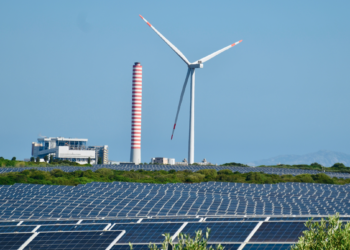
To achieve universal energy abundance, we need an ‘all of the above’ approach, where power generation comes from a variety of sources. As part of this approach, a study commissioned by the Foundation last year found that renewable energy generation can benefit when nuclear energy is also incorporated into the system. This makes generation from nuclear energy complementary to wind, solar, and battery storage.
At the same time, optimizing the day-to-day operation of power grids can provide huge efficiencies and lower costs for both utilities and end users. Through our work with the Global Energy Alliance, we have been exploring how AI can help modernize energy grids and provide more reliable, affordable power for people around the world.
The Rockefeller Foundation strongly believes that project deployment and policy are equally important and self-reinforcing levers, and that both are critical to achieving universal energy abundance. For example, we are proud to partner with the World Bank, African Development Bank, Sustainable Energy for All, and the Global Energy Alliance on Mission 300, an ambitious initiative to bring electricity to 300 million people in Africa by 2030. Through Mission 300, we are working on both project deployment, increasing connections, and policy, enabling the regulatory environment to support those connections. These two pillars cannot be done in siloes.