
Early Morning Journey to Olkaria
At five o’clock in the morning, we set off by bus from Nairobi, Kenya’s capital, heading towards the Olkaria Geothermal Power Complex. The journey takes approximately two hours. As we arrive, we are greeted by baboons roaming freely around the station grounds. It was my first time seeing these animals up close.
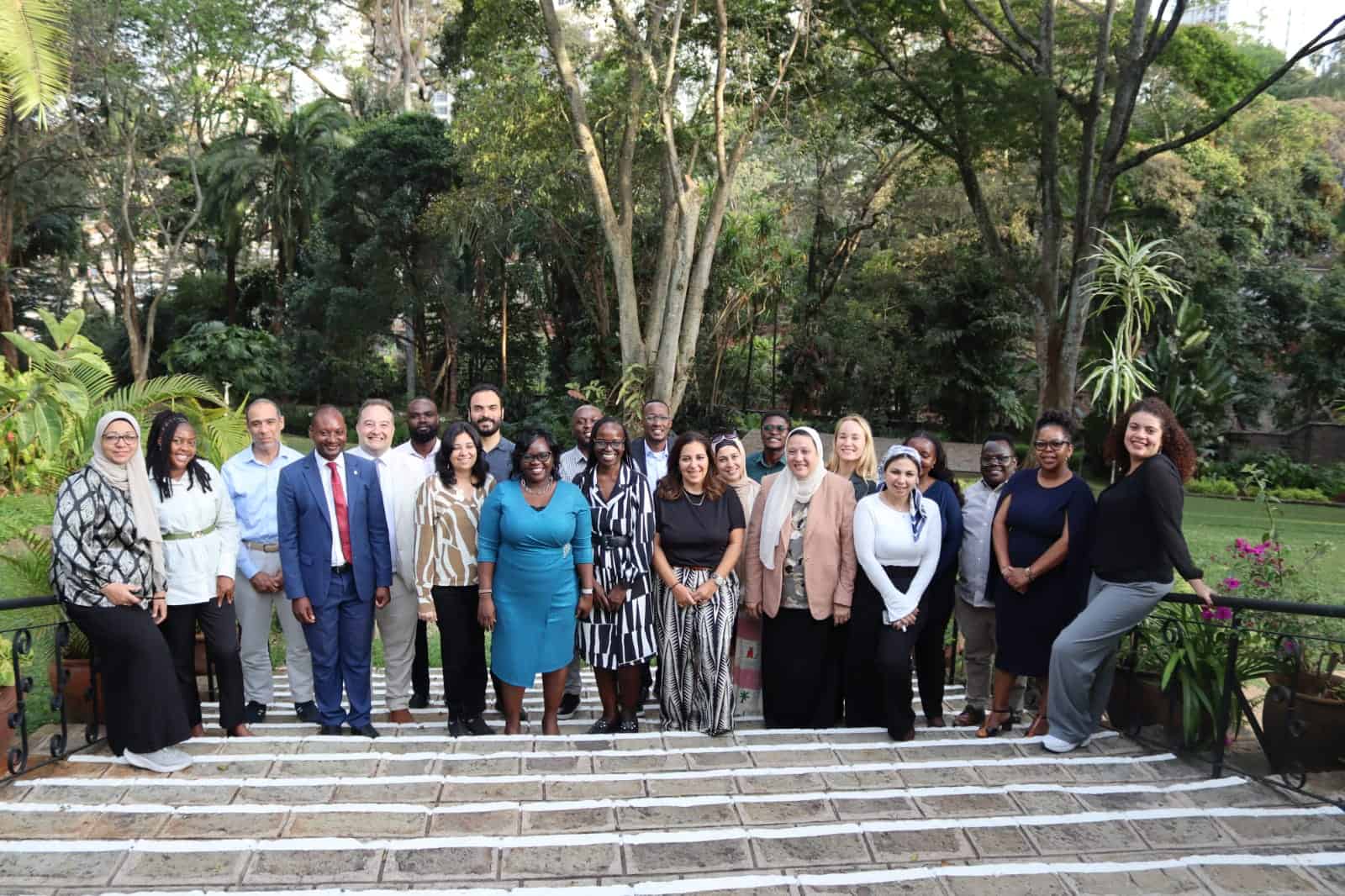
Our group brought together journalists, researchers, civil society representatives and academics from Egypt, Kenya and Germany. We had gathered under the Cairobi Initiative, launched by the German Embassy in both countries to promote the exchange of different expertise in renewable energy.
The visit was an opportunity to explore one of Kenya’s most important renewable energy resources: geothermal power. Kenya has already achieved approximately 80% renewable energy in its electricity mix and is pursuing an ambitious target of reaching 100% by 2030.
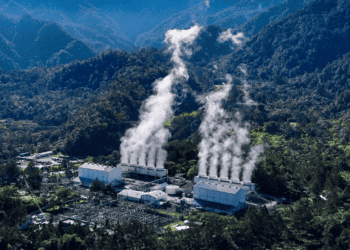
At Olkaria, we got a closer look at how the country is transforming the natural heat beneath its surface into a major source of electricity.
KenGen: A Pioneer in Geothermal Development
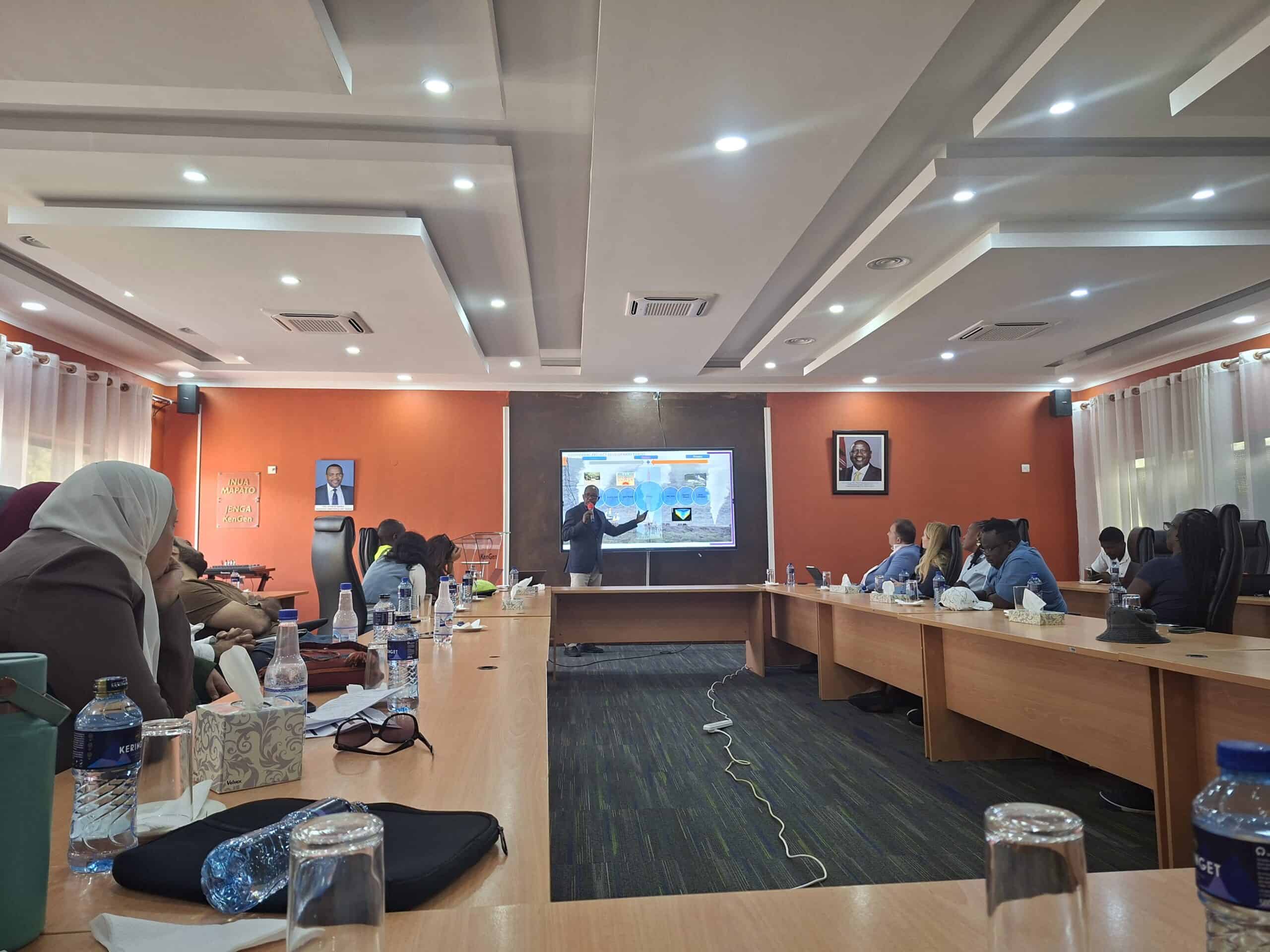
During our visit, Bernard Kigen, Assistant Manager at Kenya Electricity Generating Company PLC (KenGen), delivered a presentation introducing the company’s geothermal operations, the history of the Olkaria fields and their contribution to Kenya’s energy sector.

Established in 1954, KenGen is East Africa’s leading electricity producer, supplying more than 60% of Kenya’s electricity. The company develops, manages and operates power plants across the country, with an energy portfolio that includes hydropower, geothermal, wind and thermal generation.
According to the information presented during our visit, the Olkaria geothermal fields have a total installed capacity of 799 megawatts (MW), making them a major center of geothermal electricity generation in the region.
Kenya’s geothermal journey began with exploration activities in Olkaria, where the country drilled its first three geothermal exploration wells in Africa. The first 15 MW generating unit at Olkaria was subsequently installed, and the station reached a total capacity of 45 MW in 1985.
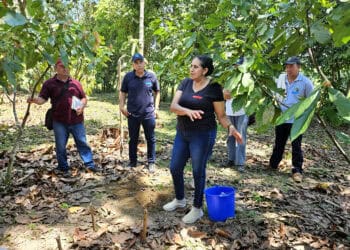
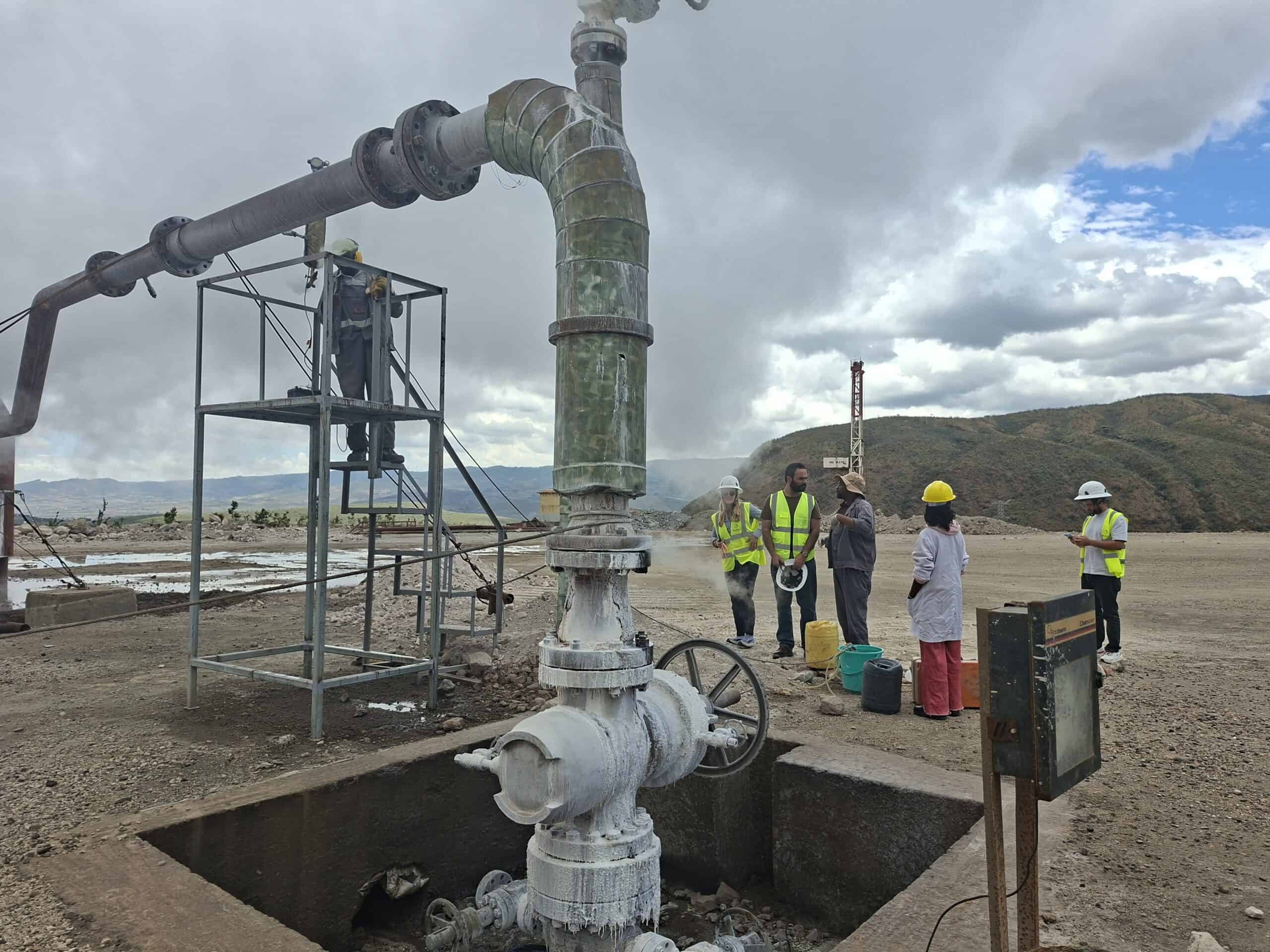
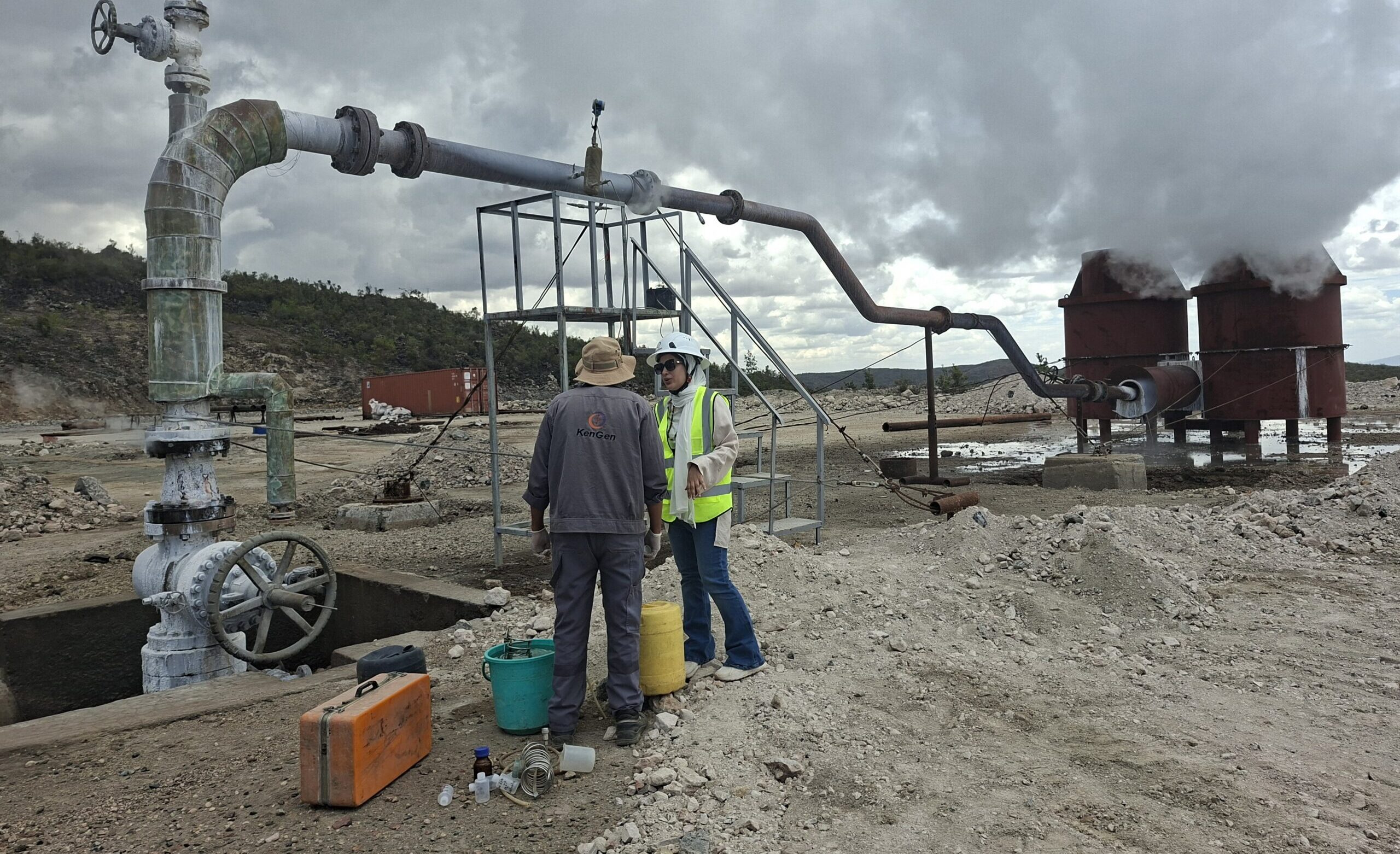 Rahma Diaa speaks with workers at the Olkaria Geothermal Power Station Photo by Rahma Diaa
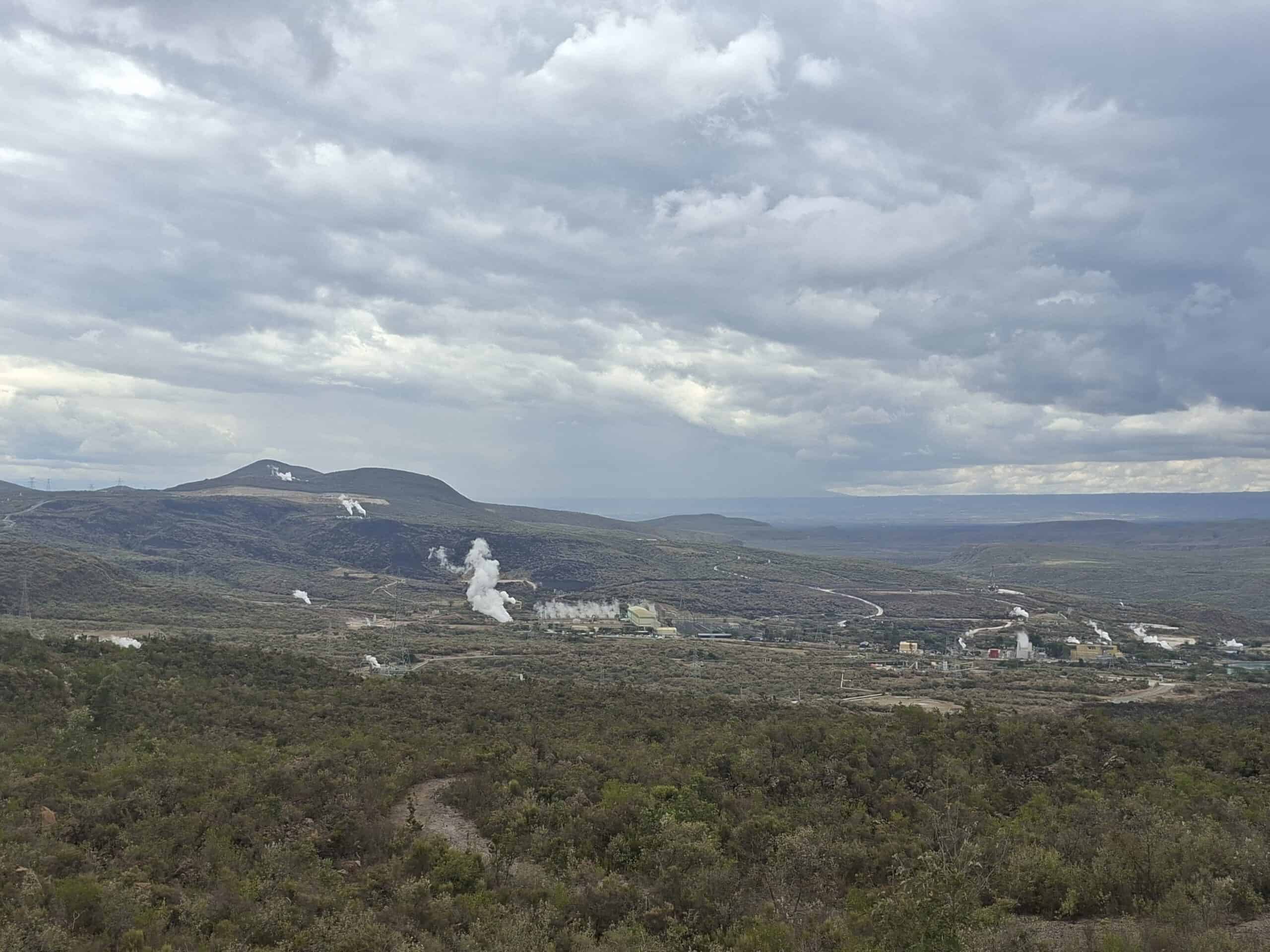
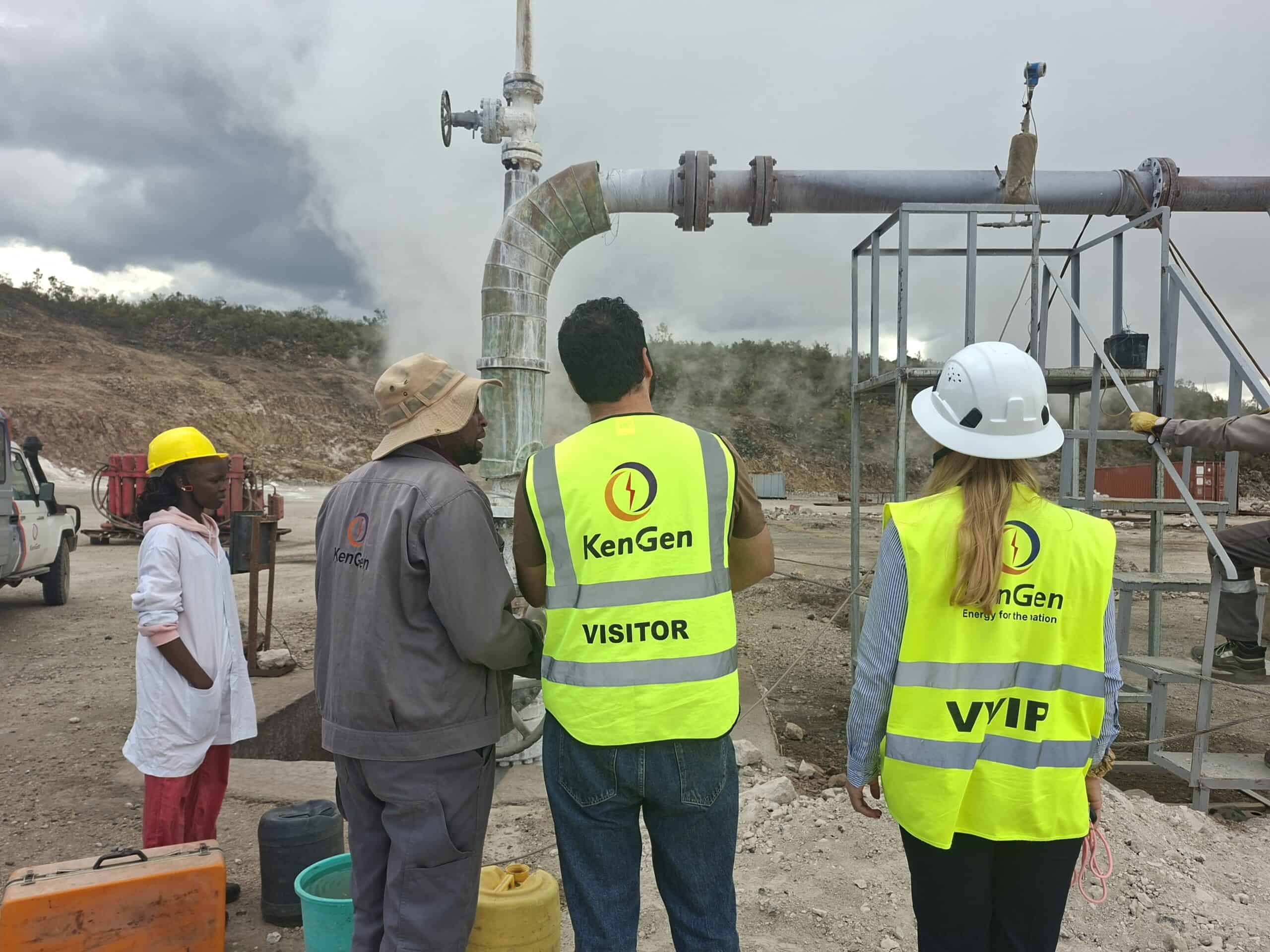
Today, KenGen continues to expand and manage geothermal resources through exploration, drilling, testing and infrastructure development.
How Geothermal Energy Turns Underground Heat into Electricity
Geothermal energy harnesses heat stored beneath the Earth’s surface. In geologically active areas, underground reservoirs contain hot water and steam that can be brought to the surface through specially drilled wells.
During the presentation, we learned how this process works. Wells are drilled into underground reservoirs, allowing steam and hot fluids to rise through pipelines and drive turbines connected to electricity generators. After passing through the turbines, the steam is cooled and condensed back into water. The water is then returned underground through reinjection wells, helping maintain reservoir pressure and support the long-term sustainability of the geothermal system.
The process requires extensive scientific and engineering expertise, from identifying suitable geological formations to drilling, testing and managing underground reservoirs.
KenGen provides specialized well-testing services, including well design, supervision of testing operations, injection and flow tests, pressure build-up tests and data analysis.
Its drilling operations involve developing production and reinjection wells that can reach depths of up to 3,500 meters, where underground temperatures may exceed 250°C. Engineers continuously monitor drilling conditions, including pressure, temperature and fluid losses, before conducting discharge tests to assess steam flow rates and the potential of each well.
These measurements help determine how much electricity can be generated and how geothermal resources should be managed.
Beyond power generation, the company’s activities also include infrastructure development, technical research, consultancy and specialized geothermal training.
Inside the Drilling Site: 343 Geothermal Wells Across Kenya
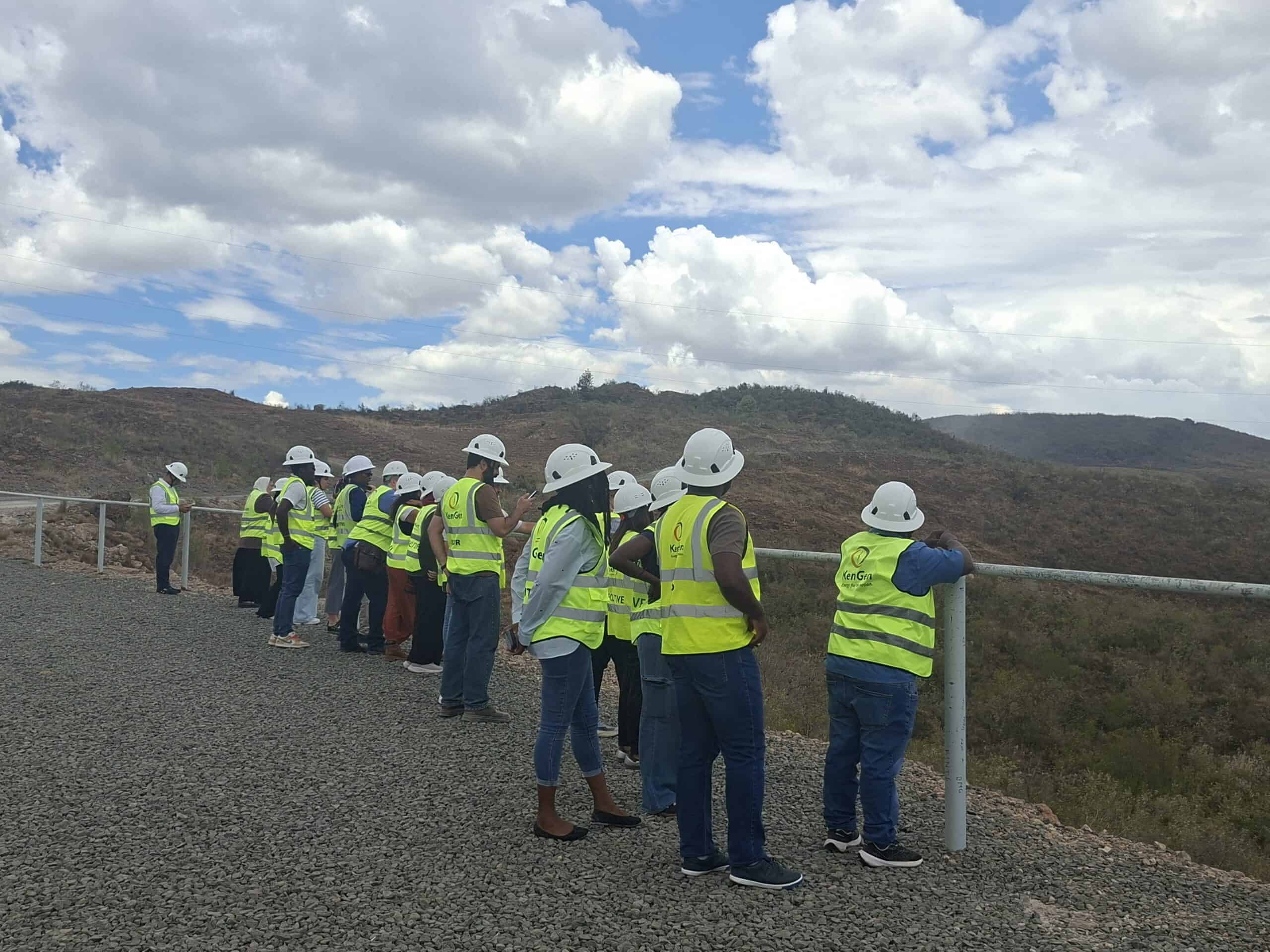
Following the presentation, we were provided with protective equipment, including safety helmets and jackets, before heading out for a field visit.
Our first stop was a newly drilled geothermal well. I spoke with Cyrus Ndiranuu, an Analytical Chemistry Technician at Olkaria Naivasha Geothermal, who explained that drilling at the site had reached approximately 300 meters.
He pointed out that the steam rising from the well indicated the presence of underground geothermal heat. Further drilling and testing would be necessary to assess the resource and determine its suitability for electricity generation before proceeding with the next stages of development.
His work involves monitoring and measuring emissions, including carbon dioxide, to assess their levels and identify potential environmental risks.
As we continued along the site, we passed several wells from which steam was visibly rising. According to Ted Juma, Test Engineer at Strathmore Energy Centre, Kenya has drilled a cumulative total of 343 geothermal wells to date. However, this figure does not represent the number of wells currently in operation, but rather the total number of wells drilled, including exploration and appraisal wells, reinjection and monitoring wells, and those that were unproductive or have since been retired.
At the end of the tour, we visited an operational geothermal power facility. The contrast with the newly developing drilling site was clear: larger buildings, more extensive infrastructure and established generation facilities. We observed different stages of the power generation process and spoke with employees about their daily work.
The visit offered a practical illustration of the journey from underground exploration to electricity production, showing that geothermal development is a long-term process involving scientific assessment, engineering and substantial investment.
Geothermal Energy at the Heart of Kenya’s Renewable Mix
The field visit followed a two-day workshop held at the German Embassy in Nairobi, organized under the Cairobi Initiative, where participants discussed Kenya’s renewable energy experience and its ambitions for the future.
During the discussions, Caroline Kimathi, Renewable Energy Manager at the Eagle Africa Centre, associated with the Energy and Petroleum Regulatory Authority, presented figures illustrating the composition of Kenya’s renewable electricity mix.
According to the figures presented, renewable energy accounts for approximately 80% of Kenya’s electricity mix: Geothermal energy contributes 26.37%, while hydropower accounts for 24.38%. Wind power represents 12.19%, and solar energy represents 12.38%. Bioenergy makes up the remaining 4.58%.
The final 19.83% of Kenya’s electricity mix is supplied by electricity imports (10.60%) and thermal power generation (9.23%), which relies primarily on petroleum fuels.
Kimathi mentioned that geothermal energy plays a particularly strategic role because it can provide a continuous and relatively stable supply of electricity, unlike solar and wind power, which depend more directly on weather conditions. This makes it an important resource for meeting electricity demand and supporting the stability of the national grid.
Kenya’s geographical location along the Great Rift Valley gives it considerable geothermal potential, making this resource central to its long-term energy strategy. According to the figures presented, its installed electricity generation capacity stands at 3.3 gigawatts (GW), while peak demand reaches approximately 2.5 GW. Annual electricity consumption is estimated at 15.7 terawatt-hours (TWh).
However, developing geothermal resources requires substantial investment. Drilling a single well can cost millions of dollars, and exploration does not always guarantee commercially viable results. Institutions such as Kenya’s Geothermal Development Company (GDC) and financing mechanisms such as the Geothermal Risk Mitigation Facility (GRMF) help reduce exploration risks and encourage investment in the sector.
Beyond Generation: Communities and Energy Access
Geothermal development also involves social and environmental considerations. In some areas, communities living near proposed drilling sites and infrastructure projects may need to be relocated.
During the visit, we learned about efforts to improve conditions for affected communities through employment opportunities in geothermal projects, better housing, schools and access to essential services. These measures are intended to help local communities benefit from development and facilitate the relocation process.
At the same time, access to affordable electricity remains a challenge for some Kenyan households. During our stay in Nairobi, I spoke with Hellen Shikanda, a journalist specializing in health and climate issues, who shared her experience with electricity costs.
“I pay approximately 7,000 Kenyan shillings a month, equivalent to around $50, even though only two people live in my household,” she explained.
She noted that electricity costs vary between cities and neighbourhoods, and that low-income households can struggle to afford their bills. She estimated that a low-income individual might earn around $150 a month, making electricity a considerable expense.
During our stay, Nairobi also witnessed demonstrations over the rising cost of living and fuel prices, highlighting some of the wider economic pressures facing households.
These challenges underline the importance of ensuring that renewable energy expansion is accompanied by continued efforts to improve electricity access and affordability.