
Monpura Island and the Impact of Solar Energy
On Bangladesh’s coastal island of Monpura, solar energy has already begun to transform daily life.
“My business has expanded with solar power. It has become much more profitable than before. Earlier, the electricity cost of the generator was very high. But my electricity cost has come down a lot. My daily working hours have increased a lot.” These were the words of Mobarak Hossain, a 45 year old businessman from Monpura.
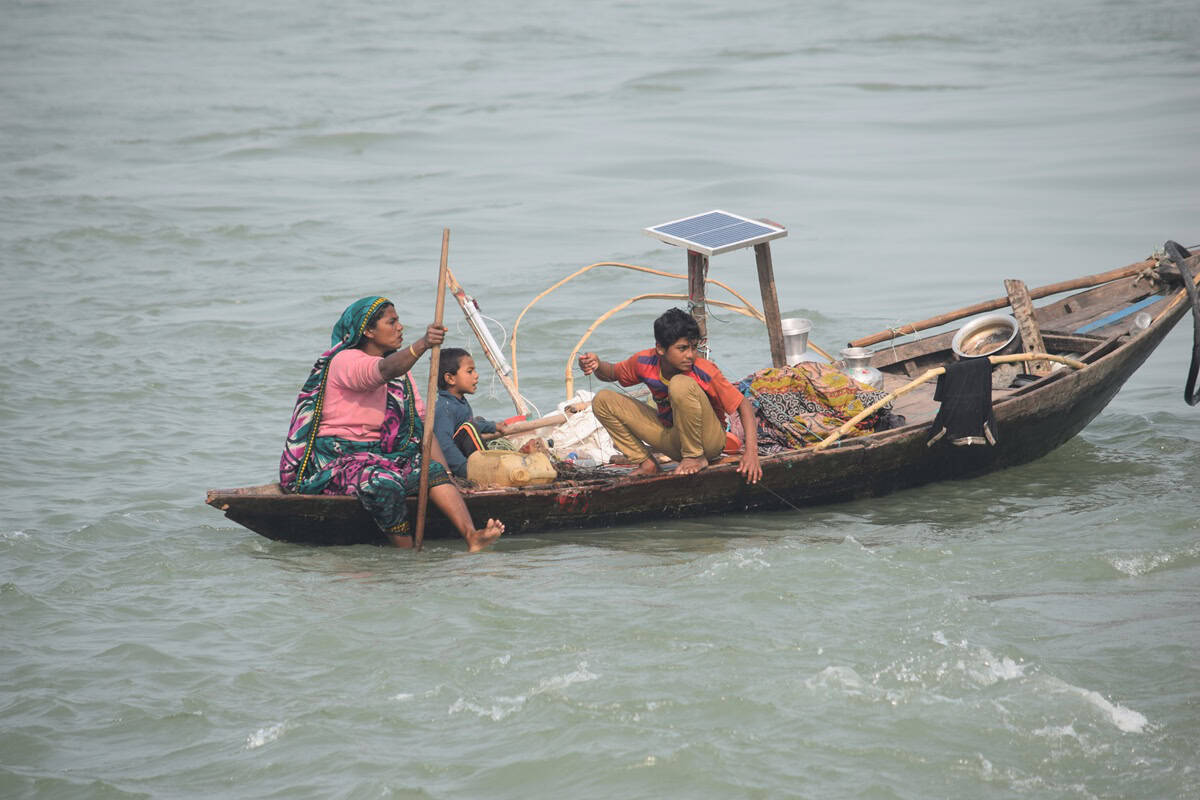
Nuruddin Ahmed, 48, a fisherman, said the changes have transformed his work: “We used to catch fish from the sea and rivers and send them to the city as quickly as possible, because there was no opportunity to store fish. But now with electricity, we are able to store fish and get good prices for fish. My fishing boat is illuminated by the light of solar power. I get more working hours. I am able to benefit from my profession.”
Like Mobarak Hossain and Nuruddin Ahmed, many other residents from the coastal island of Monpura have benefited from solar-powered renewable energy. The island’s residents have long relied on kerosene lamps and generators for their energy needs, but solar power is now making life significantly easier.
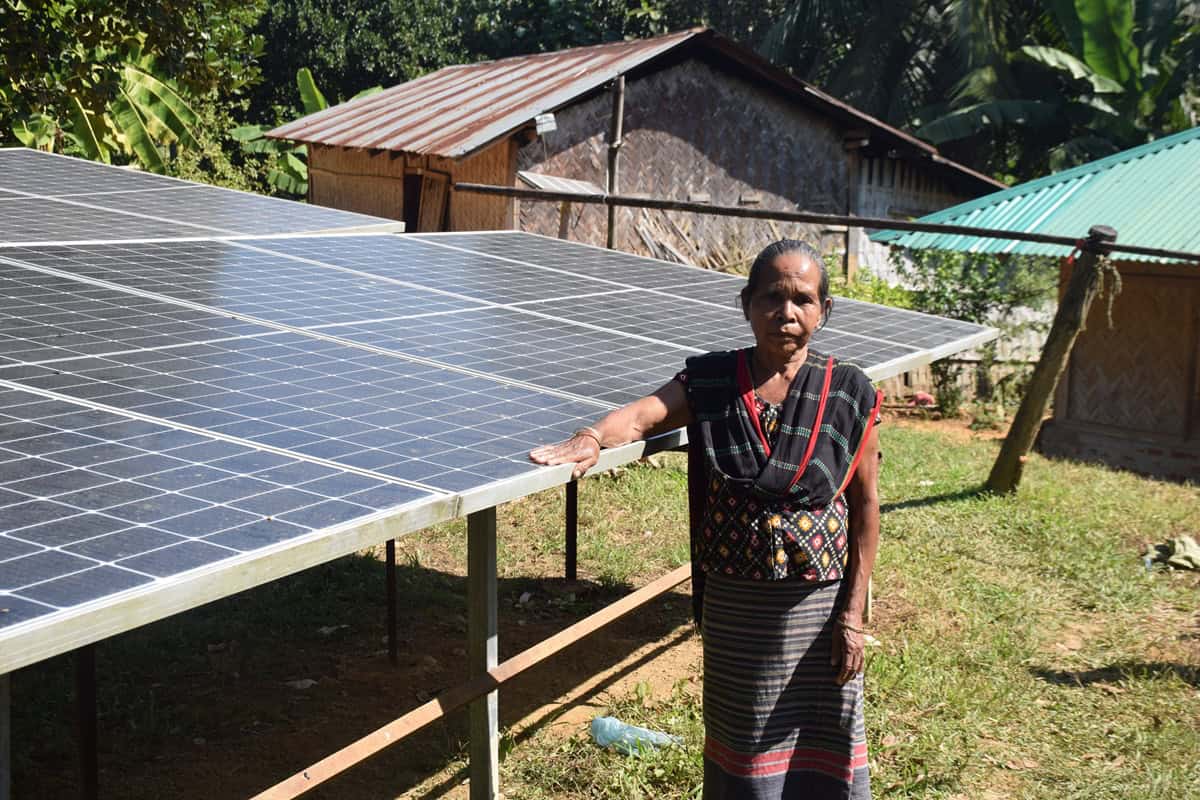
Solar panels have been installed in many homes across the island, extending the hours residents can carry out daily activities. Household solar systems have brought electricity to many previously unserved homes, improving daily life. With reliable electricity, people can work more flexibly and children are now able to study at home after dark. Monpura has therefore emerged as an example of how decentralised solar energy can improve living standards in off-grid and remote areas.
Early Success, Slowing Momentum

The solar home system programme in Bangladesh began in 2003 as a pilot covering around 50,000 households, with the aim of providing electricity in off-grid rural areas through small-scale solar installations. It later grew into one of the world’s largest off-grid solar programmes, bringing electricity to millions and improving living conditions in remote communities.
However, momentum in solar expansion has slowed in recent years. Rooftop solar, seen as critical to overcoming Bangladesh’s land constraints, has struggled to scale up. High import duties on solar panels and inverters, along with limited access to affordable finance, have made projects more expensive and difficult to implement. Complex loan approval processes and limited lending for smaller systems have further constrained uptake.
Bangladesh’s Renewable Energy Gap in Regional Context
Climate change is intensifying globally, but its impacts are uneven. In Bangladesh, where flooding, cyclones, and rising seas affect much of the country, renewable energy offers a way to mitigate these impacts and build resilience against future natural disasters. Despite its renewable potential, especially in solar, Bangladesh lags behind its South Asian neighbours in clean energy adoption.
In 2023, clean energy accounted for 50% of Sri Lanka’s electricity generation, with hydropower alone contributing to 38% of the energy mix. In India, just over 20% of electricity generation came from renewable sources, including hydropower, wind, and solar, although coal remained the dominant source of power.
Meanwhile, only about 4.6% of Bangladesh’s installed electricity capacity comes from renewable sources, and in terms of actual electricity generation, renewables account for just 1.96% of the electricity mix.
Despite being among the world’s most climate-vulnerable countries and ranking ninth in the 2024 Global Disaster Risk Index, Bangladesh is lagging in renewable energy expansion. While many countries are accelerating the transition away from fossil fuels, progress in Bangladesh has remained slow.
Structural Barriers Slowing the Transition
Solar power is the primary source of renewable energy potential in Bangladesh, but progress in expanding it has been slow. Limited investment and land constraints have hindered efforts to meet the country’s renewable energy targets, including its aim to generate 40% clean energy by 2040.
The Center for Policy Dialogue (CPD) estimates that Bangladesh will need to install 35,753 MW of renewable energy capacity to meet its 2040 target, requiring investment of around $35.2-42.6 billion. Achieving this goal will also require upgrading the national grid and gradually phasing out fossil fuel-based power plants.
Structural challenges in developing renewable energy projects have also slowed progress, particularly in securing and allocating land for large-scale solar projects in such a densely populated country.The energy sector is also under financial pressure from rising costs linked to imported fossil fuels, along with delays in payments to independent power producers. The lack of coherent policy, adequate financing, and reliable infrastructure has slowed renewable energy expansion.
M. Zakir Hossain Khan, chief executive of the Change Initiative, said Bangladesh should not rely solely on expanding its national grid due to the high cost. He argued that greater emphasis should be placed on decentralised energy solutions, including off-grid systems and rooftop solar installations.
He added that industrial rooftops in particular represent a significant untapped source of electricity generation, capable of contributing thousands of megawatts if fully utilised, and reducing reliance on more expensive backup power generated from fossil fuels.
Governance Concerns in Project Development
A recent study by Transparency International Bangladesh (TIB), an international anti-corruption NGO, highlights governance issues in the approval process for renewable energy projects in the country. It draws attention to concerns over the project approval and procurement processes in Bangladesh’s renewable energy sector. Many projects have been approved through unsolicited bidding rather than competitive tendering, with special legal provisions enabling direct negotiations. According to the study, this has contributed to higher electricity tariffs, as international standards are not always followed in tariff setting. Electricity prices in Bangladesh are also significantly higher than in neighbouring countries such as India, Pakistan, and China.
TIB also reported instances of corruption involving the reclassification of agricultural land for project development and the overinflation of land valuations. It added that objections raised by environmental and regulatory bodies were not always fully considered during project approvals. These factors have contributed to higher project costs and weakened oversight in the renewable energy sector.
High Solar Potential, Underused Capacity
Bangladesh’s location in the tropical belt gives it consistently high levels of solar radiation throughout the year. The country receives around 300 days of annual solar radiation equivalent to far more energy than its current total consumption.
If even a small fraction of incoming solar energy were utilised, it could meet the country’s total annual energy demand.
However, this reflects theoretical potential based on solar availability, whereas actual generation depends on land use, infrastructure, storage, and investment, which is still significantly lacking.
Dr. Badrul Imam, energy expert and retired professor at Dhaka University, said Bangladesh’s renewable potential is stronger than many countries. “With our… weather, renewable energy is right at our fingertips,” he said. “By utilising this, we can go a long way in the renewable energy sector.” He added that Europe has already made significant progress in integrating renewables: “We should go that way.”
Despite earlier success in off-grid electrification, the expansion of solar energy has lagged behind. Without decisive action, Bangladesh risks falling further behind in the global energy transition despite having abundant natural resources for solar power.