
Across much of the developing world, the same pattern repeats: energy utilities accumulate losses, governments respond with tariff increases in the name of financial recovery, and the burden ultimately shifts onto consumers least responsible for the system’s failures. Ghana is one of the clearest examples of this dynamic.
Since 2020, residential electricity tariffs in Ghana have more than doubled. Yet the Electricity Company of Ghana, lost nearly a third of all the electricity it purchased in 2024 through theft, meter tampering, billing failures, and political interference.
A Global Crisis
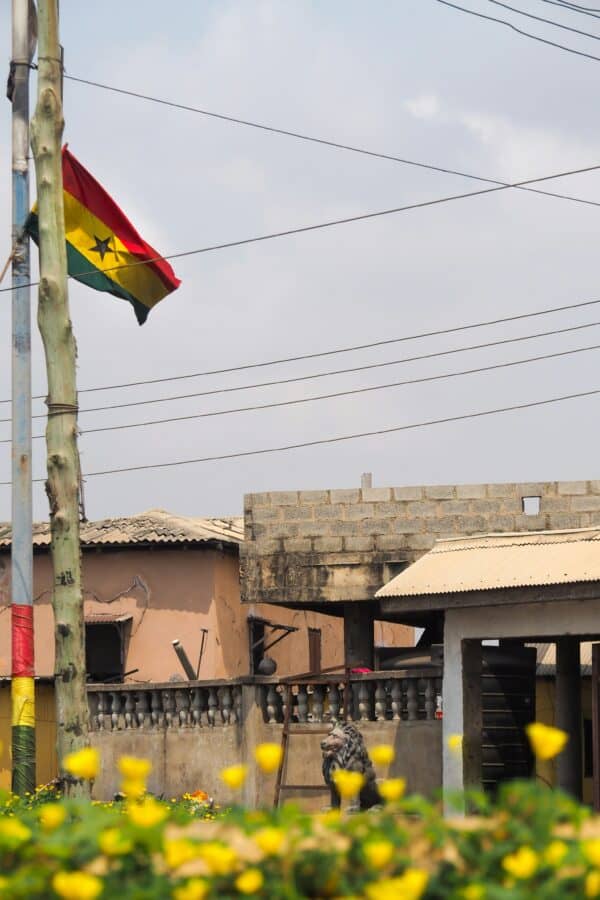
In boardrooms from Washington to Brussels, the energy transition is discussed in the language of megawatts, carbon credits, and investment cycles. The International Energy Agency’s 2025 projections show that over 700 million people worldwide still lack access to electricity, the vast majority of them in sub-Saharan Africa.
Ghana is one of Africa’s electrification success stories, with a national access rate of 89%, placing it well above the sub-Saharan average. But what counts as success on paper does not always translate into justice on the ground.
The Ghanaians who have electricity are increasingly unable to afford it. What Ghana is living through is not unique. Nigeria, Kenya, Pakistan, and Bangladesh have all confronted versions of the same dilemma: energy sector debts accumulate, tariffs are raised to address them, and the cost falls hardest on those who earn the least.
When a country’s energy system fails, who really pays?

Human Stories
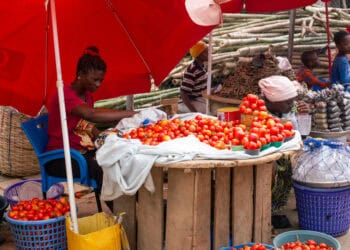
In early 2026, small business owners across Ghana gathered at The People’s Forum in Accra to speak about what rising electricity bills were doing to their livelihoods. What emerged was not a policy debate. It was a litany of survival decisions.
Barbers reported shrinking customer numbers. Cold store operators said their refrigerators, which are essential to their trade and to food safety in Ghana’s heat, were becoming financial liabilities. Families watched their monthly electricity bill rising despite no change in consumption.
These are not marginal stories. Across the developing world, the International Energy Agency has documented how electricity unaffordability even where access technically exists constitutes a second tier of energy poverty. Being connected to the grid but unable to pay the bill is a form of exclusion the global access statistics often miss.
In Ghana, approximately one in four health facilities operates without stable electricity. Power outages disrupt surgeries, destroy vaccine cold chains, disable diagnostic equipment and have been directly linked to patient deaths. A generator that fails to start in a critical moment is not a technical glitch. It is a governance failure with a human cost.
Debt, Theft, and Political Interference
Speaking before the Parliamentary Committee on Energy, ECG’s Acting Managing Director, Julius Kpekpena, disclosed that Members of Parliament, District Chief Executives, and Municipal Chief Executives, had been actively facilitating the installation of illegal electricity meters in their constituencies.
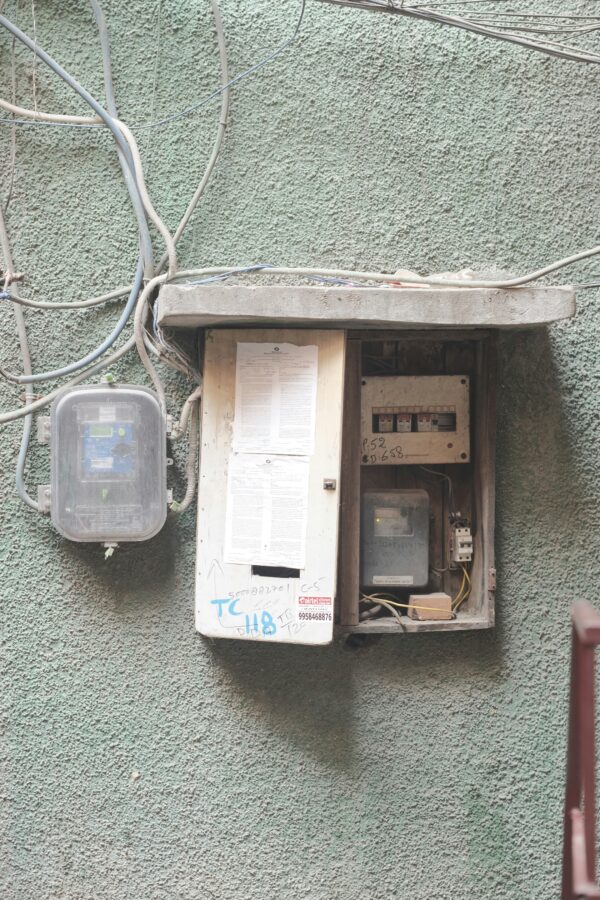
An illegal meter looks like a legitimate device but does not measure consumption. Households connected through one use power freely, their usage invisible to ECG and impossible to bill. The electricity flows. The revenue does not.
Ghana’s elected and appointed local leaders are sourcing and distributing illegal meters to constituents as electoral patronage. Voters receive “free” electricity, politicians receive votes. The practice has been documented since at least 2016, but has only recently been acknowledged in Parliament.
Across the Global South, distribution losses in utility networks often run well above international norms and they are consistently passed on to consumers through tariff increases rather than recovered through institutional reform.
ECG’s average collection rate between August 2023 and July 2024 was just 43%, meaning less than half of the electricity supplied was actually paid for. The paying customer subsidises the non-paying one. And without adequate revenue, load-shedding or blackouts which Ghanaians popularly call “dumsor” return.
The Tariff Trap
In 2025, electricity became nearly 20% more expensive. On January 1, 2026, a further increase of nearly 10% took effect as part of a five-year tariff framework.
Inflation projections used to calculate 2025 tariffs were later found to be significantly overestimated, meaning consumers paid more than they would have under a correctly applied formula. The Centre for Environmental Management and Sustainable Energy estimated an overcharge of approximately GH₵1.5 billion (US$129 million) in a single quarter.
Ghana’s lifeline tariff, a subsidised lower rate for small consumers meant to protect the poor, has been found by researchers at the International Growth Centre to be imperfectly targeted, sometimes benefiting wealthier households in small apartments while entirely missing rural communities that remain unconnected.
What Ghana’s Story Tells the World
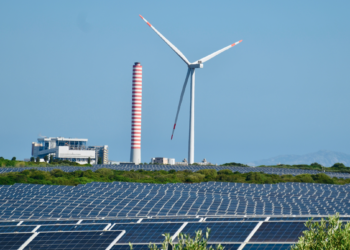
The global energy access agenda is often framed as a supply problem: build more generation, extend more grid, install more solar, as if expanding capacity alone settles the question.
Ghana’s experience challenges that framing. The country has generation capacity. It has a grid that reaches 89% of its population. The crisis is not primarily about supply. It is about the governance of energy; about who controls the system, who benefits from it, and who is made to pay when it fails.
International development institutions pour billions into generation and grid extension projects across the Global South. But if the utilities receiving that investment are unable to effectively collect revenue, new megawatts will not solve the underlying problem. They may simply add to the debt that is eventually passed on to the consumer.
Energy poverty is not only the absence of electricity, it is the experience of a hairdresser in Kumasi who cannot afford to run her dryers. It is a hospital in the Northern Region that loses its cold chain when the generator fails. It is a printing press owner who nearly lost his business not because there was no power but because he could not afford the costs attached to it.
As African countries continue to negotiate their energy futures at COP summits, in International Monetary Fund assessment meetings and in their own parliament buildings, the Ghanaian experience offers a warning and a lesson. Connecting people to electricity is not the end of the story. Keeping that electricity affordable, reliable, and governed with integrity is the harder and more consequential task.