
As renewable energy deployment accelerates, its inherent intermittency is increasing the need for technologies that can bridge energy generation, consumption, and storage. Batteries serve as a critical link, driving rapid growth in production and, in turn, intensifying pressure on the mining industry to provide the necessary minerals.
Battery recycling offers an economically viable and environmentally preferable alternative to direct extraction. A Stanford Report found that the battery recycling process, compared with mining and processing new chemicals, used between 77 and 89 percent less energy, 58 to 81 percent fewer greenhouse gas emissions, and 72 to 88 percent less water.
With countries around the globe continuing to increase their share of renewables and battery storage capacity to strengthen energy security, reliance on raw material imports is becoming a political concern. The potential of developing battery recycling processes to enhance the supply of critical minerals, create a circular economy, and reduce landfill waste has spurred significant advancements in recovery technologies and business practices.
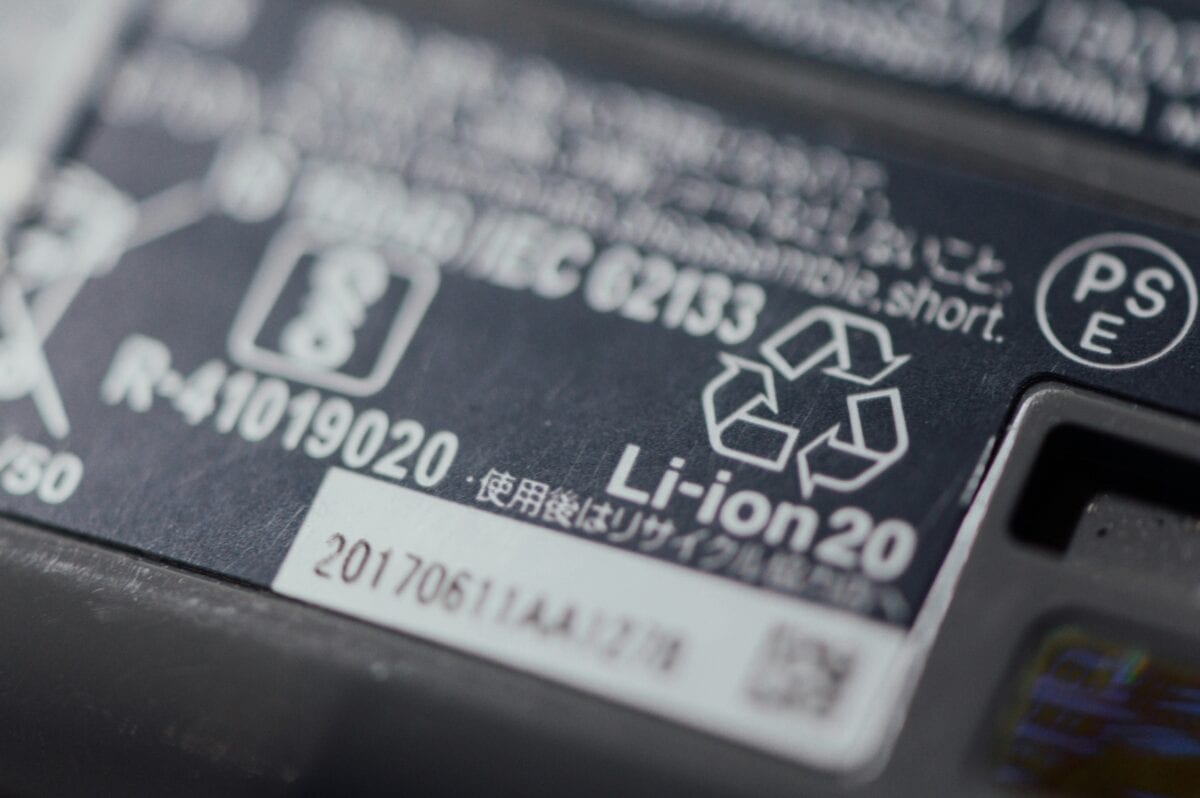
As Nitin Gupta, Co-founder and CEO of Attero, explained, the lithium-ion battery market in India will exceed 2 million tonnes by 2035. Attero, India’s largest critical minerals firm, focuses on recovering rare earth elements (REEs) and critical minerals and has therefore been at the forefront of lithium-ion battery recycling in the country. However, they still face challenges with the upcoming wave of decommissioned batteries. To meet expected demand for recycling lithium-ion batteries, Attero is scaling its lithium-ion battery recycling capacity to 50,000 tonnes per year.
This growth is driven in large part by the expansion of electric vehicles and the storage required to accompany the growth of renewable energy. Compared with the extraction of virgin materials, battery recycling can reduce energy consumption and greenhouse gas emissions for several critical battery materials.
Achieving higher battery recycling rates requires stronger policy implementation and improved economic feasibility. One of the largest roadblocks to the widespread adoption of battery recycling is the cost of recycling processes, which has become a focal point for technological and commercial innovation. Companies in the space have faced high operating costs due to transportation, landfilling, and electricity expenses as they work to make battery recycling profitable.
Aqua Metals, a Nevada-based lithium-ion battery recovery company, has been developing a closed-loop metals recycling process known as Aquarefining. Matt Roberts, Director of External Affairs, explained in a call with The Energy Pioneer how their process has addressed industry growth in lithium battery decommissioning. As Regan outlined, the company has shifted its primary focus from lead-acid to lithium-ion batteries and adapted several of its prior technological practices to suit the new chemistries.

One of the key components of reducing the cost of recycling lithium-ion batteries is reducing chemical waste streams such as sodium sulfate, which is expensive to treat and dispose of in North America. The AquaRefining Technology developed by Aquametals enables recycling of the chemicals used in their process, reducing landfilling and byproduct treatment costs. AquaRefining utilizes renewable electrons as the reagent, enabling a cleaner battery recycling process than chemical reagents.
The continued development of recycling facilities operating at a commercial scale highlights the rapid advancement of the battery recycling industry. Aqua Metals’ planned Headwaters ARC facility represents this shift toward deployment at an industrial scale, which is designed to support the anticipated increase in lithium iron phosphate (LFP) battery production, a type of lithium-ion battery, and the corresponding future demand for battery recycling and materials recovery.
This electrochemical approach leverages abundant electricity in the United States as an alternative to the chemical-heavy recycling processes common in much of Asia. By replacing chemical reagents with electricity as the primary input, the process can reduce reliance on hazardous chemicals and lower associated emissions, particularly as the electricity grid continues to incorporate more renewable energy sources. Modeling by Aquametals has found that this process can reduce per-ton costs of black mass by over $1,000 compared with standard hydrochemical flow sheets in the United States.
The company cylib, a German-based battery recycler, likewise uses water as a solvent, recovering 90% of the battery’s active elements while reducing emissions by 80%, and has developed advancements across different battery chemistries. They have developed specialized recycling lines, an almost reverse assembly line, for both LFP and NMC (Nickel Manganese Cobalt) at their pilot line in Aachen, Germany. They are currently bringing this process into industrialization at their Dormagen facility, where each line will have a capacity of 30,000 tonnes.
Alongside innovations in the recycling process itself, companies such as Princeton NuEnergy have developed a modular approach to battery recycling, which reduces the capital expenditure required to build a recycling facility. Stephen Snyder, Chief Strategy Officer at Princeton NuEnergy, explained that the modular approach enables on-site recovery at existing battery manufacturing plants, allowing immediate recovery and reuse of production scrap while also reducing shipping costs for material recovery. The Princeton NuEnergy modular recycling lines process 2,500-3,000 tonnes annually and can be positioned near or co-located with battery manufacturing facilities. The modular facility system is combined with a 97% material recovery from their Cathode-to-Cathode™ plasma-assisted direct recycling process to create a cheaper and more efficient battery recycling commercial opportunity.
Alongside reducing costs through modular plants, which allow for localized recycling and less commissioning time, has been the challenge of lowering traditional energy requirements for battery recycling. ACE Green Recycling, a battery recycling company with facilities in India and Taiwan, has developed a hydrometallurgical process that yields low temperatures and low emissions. Siddharth Roy, EVP of Supply Chain at ACE Green, described how using Ace Green’s proprietary recycling technologies result in zero Scope-1 carbon emissions and generate no hazardous solid waste.
Seeing the long-term benefits of a nationalized battery recycling industry, governments have begun taking an active interest in developing the market. A spokesperson from the German battery recycling enterprise cylib, explained the importance of the new European Union regulation in enforcing battery recycling. While quotas for recycling from 2031 onwards are a significant step, cylib explains that the regulatory roadblocks are not over. Currently, the lack of local recycling content requirements has resulted in the batteries being shipped to China for recycling. If Europe wants to take advantage of the nickel, cobalt, and lithium available in batteries, this recycling will need to occur at the regional level.
With advancements in battery recycling processes and the growing demand for critical materials, the battery recycling industry is well positioned to reduce dependence on direct extraction for countries that promote battery recycling and materials recovery.