
In what was promised to be lengthy US-Iran negotiations focused on war reparations, nuclear arms and regional security, Tehran is holding a powerful bargaining chit that could shape the outcome of talks.
By shutting off the flow of oil through the Strait of Hormuz, or even threatening to do so, as it did so again last weekend, Iran can drive up US gasoline prices more or less overnight, applying direct political pressure on President Trump.
Iran rightly sees the persistent US over-reliance on oil as the country’s strategic Achilles heel. The way to change that is to make the country more energy secure by breaking its addiction to oil.
We can do that in a way that cuts costs for consumers, makes the economy more competitive and strikes a blow against the climate crisis – all by speeding the shift to fuel efficient, hybrid and electric vehicles, increasingly powered by affordable wind and solar energy.
Instead, the Trump administration is promoting oil dependence at the expense of ready alternatives, deepening the country’s exposure to price and supply shocks beyond our control – and strengthening the hand of US adversaries.
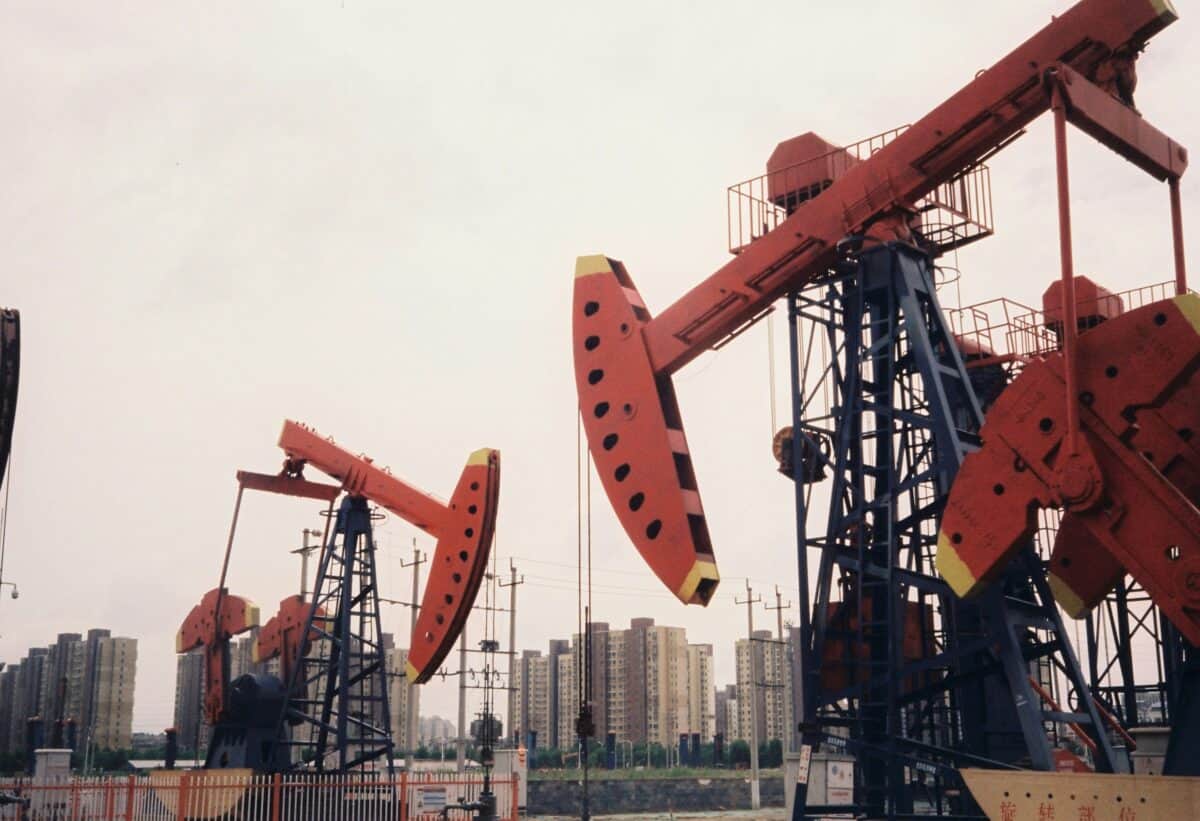
From day one, the Trump administration has prioritized support for the oil industry billionaires he solicited to help bankroll his campaign.
His administration has exposed more than a billion acres of federal ocean waters and public lands to the risks of oil drilling; cut the rate oil companies pay for crude produced on public lands and taken or proposed dozens of additional measures that favor the industry..

Meanwhile, the administration has worked to repeal federal fuel efficiency standards and, working with the Republican-led Congress, eliminated federal incentives that had lowered the cost of building, charging and buying electric vehicles. Scuttling those rules and incentives will increase gasoline consumption by 2.3 million barrels per day – about 40 percent – by 2050, compared to the path the country was on had existing policies been left alone.
Separately, the Trump administration has worked to block construction of wind and solar energy facilities that can help to charge electric vehicles with clean, low-cost power. The administration is even using taxpayer money to pay companies to cancel offshore wind projects.
Denying the country domestically produced power, while slamming the brakes on fuel efficiency and electric vehicle gains, only makes the United States more vulnerable to global oil shocks – and to those that would exploit that weakness.
No nation understands this more clearly than Iran.
It’s been nearly five decades, after all, since the Iranian Revolution triggered soaring pump prices that sparked an economic crisis across the United States.
The United States produces 60 percent more crude oil today than in 1980. At 13.6 million barrels a day, in fact, US crude production, long the world’s largest, broke a record in 2025, for the fourth year in a row, and is on track for more gains this year.
If the country could drill its way to energy security, in other words, it would have happened by now. We can’t, because oil is a global commodity, priced on a global market.
That means an oil shock anywhere in the world drives up pump prices everywhere across this country. Producing more oil doesn’t change that.
Rising oil prices actually hurt US consumers and businesses more directly than many others, because the United States is so dependent on oil.
With 4 percent of the world’s population, the United States uses 20 percent of the world’s oil. Other G7 nations, on average, get one third more economic value per barrel of oil than the United States.
Most of the world, in fact, is working to move even further away from oil and other fossil fuels: global clean energy drew a record $2.3 trillion in investment last year. Many countries have accelerated that investment in recent months, precisely to reduce their exposure to the kind of oil-shock risks the war with Iran created.
By reducing its reliance on oil, the United States can also reduce those risks, make our economy more competitive, cut prices for our families and businesses and curb the fossil fuel pollution that’s driving the climate crisis.
Beyond those manifest benefits, breaking oil’s stranglehold on the US economy is essential to confronting the country’s strategic Achilles heel and making it more energy secure.