
Along Morocco’s Atlantic and Mediterranean coastlines, rows of wind turbines stand as visible markers of a national strategy to reduce reliance on imported fossil fuels and accelerate the country’s energy transition.
Major Wind Projects
Morocco has licensed 23 wind power projects. Among them, the Aftissat Wind Farm is the country’s largest wind energy facility. Located 50 kilometers south of the city of Boujdour on Morocco’s Atlantic coast, the project was developed in four phases. The first phase began commercial operations in 2019, with subsequent phases brought online in stages to increase the facility’s generating capacity. As of July 2026, the final turbines for the fourth phase had been delivered, indicating that the project is nearing completion.
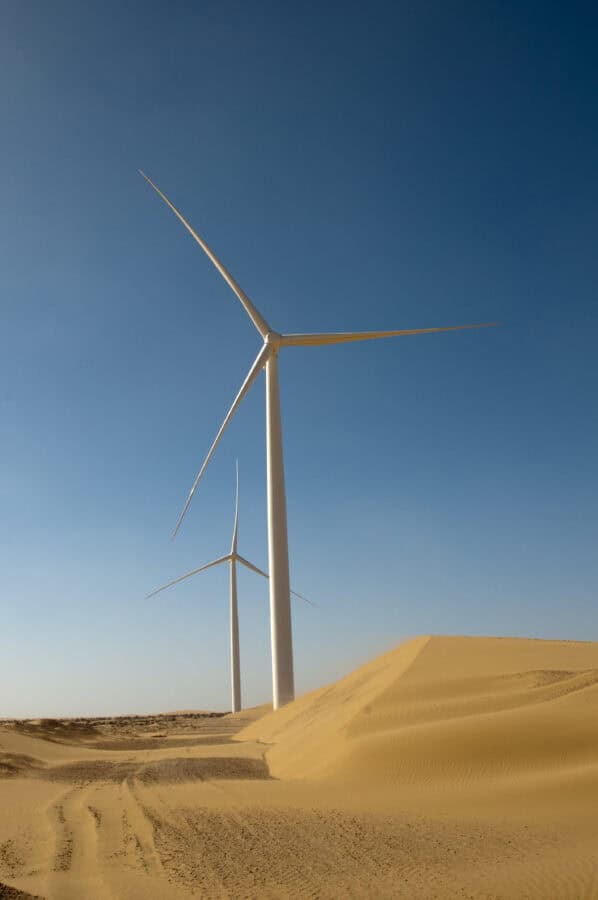
The Tarfaya Wind Farm is Morocco’s second-largest wind energy project. Commissioned in 2014, it has an installed capacity of 301 MW and generates approximately 1,000 gigawatt-hours (GWh) of electricity annually, avoiding around 790,000 tonnes of carbon dioxide emissions each year.
The project was developed through a partnership between Nareva and ENGIE at a site located about 30 kilometers south of Tarfaya, with a total investment of 5.6 billion Moroccan dirhams (approximately USD 560 million).
Electricity generated by the facility is sold to Morocco’s National Office of Electricity and Drinking Water (ONEE) under a 20-year power purchase agreement (PPA).
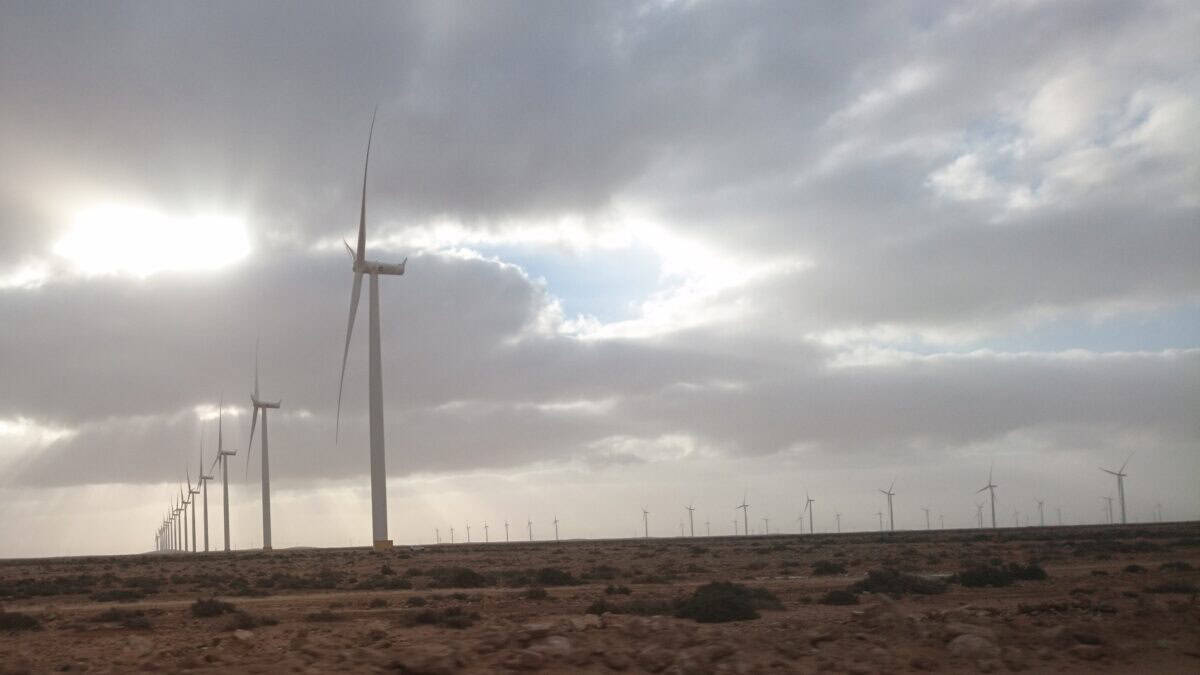
Other operational wind farms include Akhfennir, Tangier I (Rahba Wind Farm) and Khalladi, while several additional projects remain under development.

Together, these projects are strengthening Morocco’s energy security, reducing greenhouse gas emissions and attracting private-sector investment into the renewable energy sector. Current indicators suggest that the country could achieve its renewable energy targets ahead of schedule, supported by the expansion and commissioning of large-scale wind farms.
Why Morocco Leads in Wind Energy
According to Jauad El Kharraz, Director of the Water, Energy and Climate Experts Network, coordinator of the TeraMed Initiative, and coordinator of the Mediterranean Clean Energy Network, Morocco’s leadership in wind power is no coincidence but rather the result of exceptional natural resources combined with a clear political vision and long-term strategy.
By 2025, Morocco’s installed wind power capacity reached approximately 2,433 megawatts, backed by total investments of 37.62 billion Moroccan dirhams (around USD 4 billion). According to El Kharraz, Wind energy now accounts for nearly 20% of the country’s electricity mix and has overtaken hydropower to become Morocco’s largest source of clean electricity.
“Morocco possesses enormous wind energy potential estimated at 25,000 megawatts,” El Kharraz said. “Its Atlantic and Mediterranean coastlines benefit from strong and stable winds ranging between 7.5 and 11 meters per second, providing ideal conditions for utility-scale wind projects.”
He added that strategic vision and support from the Moroccan monarchy have also been decisive factors, pointing to Morocco’s 2009 Renewable Energy Strategy, which set the country on a path to meet or potentially exceed its target of sourcing 52% of installed electricity capacity from renewable energy by 2030.
El Kharraz said Morocco’s evolving legal and regulatory framework has played a central role in attracting investment.
“Legislative reforms, including Law 13-09, as amended by Law 40-19 governing private electricity generation, and Law 82-21 on self-generation, have significantly expanded opportunities for private-sector participation,” he said. Law 13-09 and its amendments opened Morocco’s renewable energy sector to greater private investment, while Law 82-21 established a framework for self-generation, allowing consumers to produce electricity for their own needs.
“Meanwhile, the National Electricity Regulatory Authority (ANRE) has strengthened transparent governance and ensured fair access to the national grid,” he went on to explain.
He also highlighted Morocco’s ability to establish strategic international partnerships.
“The Kingdom has succeeded in building trusted partnerships, reflected in advanced negotiations with three major Emirati energy companies, Masdar, AMEA Power and TAQA, to invest up to $10 billion in large-scale wind projects in Morocco’s southern provinces,” El Kharraz said.
Beyond electricity generation, Morocco has pursued industrial localization by developing a domestic renewable energy manufacturing base.
“The ambition has not been limited to producing electricity,” he said. “It also includes localizing the manufacturing industry, such as Siemens Gamesa’s wind turbine blade factory, which represents an investment exceeding 1 billion Moroccan dirhams, creating hundreds of direct jobs while integrating local suppliers into global value chains.”
Geography has also provided Morocco with a competitive advantage.
“The vast production areas in Morocco’s southern regions combine low population density with excellent wind speeds averaging 8.4 meters per second,” El Kharraz said. “This significantly reduces the land-use conflicts and environmental challenges often associated with large renewable energy projects in other countries.”
Technical Challenges Remain
Despite Morocco’s rapid progress, expanding wind energy still requires major upgrades to the national electricity grid, according to Jauad El Kharraz. He said limited transmission capacity has slowed the development of some privately led projects, while the concentration of wind farms in the country’s southern provinces, far from major demand centers such as Casablanca, underscores the need for expanded transmission infrastructure to connect generation with consumption.
According to El Kharraz, Morocco has adopted a proactive strategy to modernize its electricity infrastructure and facilitate the integration of growing renewable energy capacity.
“The country has allocated 27 billion Moroccan dirhams under its 2025-2030 Electricity Infrastructure Plan to strengthen the national transmission network,” he said. “The program includes smart grid technologies and artificial intelligence applications to improve energy flow management and enable real-time frequency control.”
He added that Morocco is also investing in high-voltage direct current (HVDC) transmission, a technology that enables large amounts of electricity to be transported efficiently over long distances.
“A flagship project currently under development involves a 1,400-kilometer HVDC electricity corridor designed to transmit 1,200 MW of wind-generated electricity from Morocco’s southern regions to Casablanca,” El Kharraz said. “Future plans envision expanding its capacity to 3 gigawatts.”
The country is simultaneously expanding strategic storage infrastructure.
“Morocco plans to integrate 1,500 MW of battery energy storage systems,” he said. “At the same time, it already relies on pumped-storage hydropower stations, including Afourer (464 MW) and Abdelmoumen (350 MW), to absorb surplus electricity and supply power during periods of peak demand.”
El Kharraz said Morocco’s National Electricity Regulatory Authority (ANRE) has updated the grid’s renewable integration capacity to 9,338 MW for the 2025-2029 period, including 4,175 MW dedicated to wind energy, providing investors with greater regulatory certainty.
He also highlighted the importance of expanding cross-border electricity interconnections.
“Morocco is reinforcing its existing interconnection with Spain while studying a third transmission link,” he said. “New interconnections with Portugal and Mauritania are also under consideration, allowing excess renewable electricity to be exported while reducing pressure on the domestic grid.”
A Model for Africa and West Asia
El Kharraz believes Morocco has emerged as a continental benchmark for energy transition, positioning the country to lead South-South cooperation across Africa and West Asia.
“Today, Morocco occupies the position of a regional leader and reference model in renewable energy development,” he said. “This creates significant opportunities to promote South-South cooperation by transferring Morocco’s successful public-private partnership (PPP) model.”
He said West Asian and African countries could adapt Morocco’s approach to structuring large-scale renewable energy projects and mobilizing both concessional and commercial international finance without placing excessive pressure on public budgets.
El Kharraz also emphasized the importance of sharing legislative and regulatory expertise.
“Morocco can support neighboring countries in developing legal frameworks for self-generation, electricity market liberalization and independent energy regulators modeled on the experience of ANRE,” he said.
A landmark agreement signed in February 2025 between Morocco’s National Office of Electricity and Drinking Water (ONEE) and Mauritania’s National Electricity Company (SOMELEC) provides a practical example of regional electricity integration, he added.
“The agreement demonstrates how regional power pools across North and West Africa can be interconnected to strengthen shared energy security,” El Kharraz said.
Morocco is already connected to Spain through two submarine electricity cables, while a third interconnection remains under study.
The country has also developed advanced technical training institutions.
“Morocco’s training ecosystem, including the AMEE Center of Excellence in Marrakesh and several specialized institutes, can help build the technical, engineering and managerial capacities needed across Africa and the Arab world to operate modern renewable energy systems,” he said.
He added that regional organizations, including the Union for the Mediterranean, the League of Arab States Energy Department, the Regional Center for Renewable Energy and Energy Efficiency (RCREEE), the International Renewable Energy Agency (IRENA) and the International Energy Agency (IEA), can all play an important role in supporting cross-border cooperation.
Financial institutions such as the Islamic Development Bank and the African Development Bank, alongside initiatives including RES4Africa and the Pan-International Energy (PIE) Fund, can further accelerate regional renewable energy deployment.
Meanwhile, Mohammed Tafraouti, a Moroccan media personality and environmental activist, said Morocco’s success in wind energy reflects years of strategic planning rather than favorable geography alone.
According to Tafraouti, Morocco’s progress has also been supported by early efforts to diversify its energy mix, sustained investment in electricity infrastructure, strong cooperation between the public and private sectors and the development of a skilled national workforce capable of operating and maintaining wind projects.
Tafraouti said maintaining the rapid growth of wind energy will require addressing several operational challenges.
“The variable nature of wind generation makes electricity storage increasingly important to ensure reliable power supplies,” he said.
He added that expanding renewable energy also requires more flexible electricity networks, wider deployment of smart-grid technologies and greater use of artificial intelligence to forecast wind generation and improve system management.
Tafraouti emphasised the importance of developing hybrid renewable energy projects that combine wind, solar power and energy storage, while increasing local manufacturing of wind turbine components and strengthening specialized maintenance capabilities.
Looking beyond Morocco, Tafraouti believes the country is well positioned to share its experience with other Arab and African nations.
He said Morocco could support neighboring countries by training engineers and technicians, assisting governments in developing national renewable energy strategies and providing technical expertise throughout the planning, financing and implementation of wind energy projects.
He added that stronger South-South cooperation and regional electricity integration could help accelerate the energy transition across Africa and the Arab world while positioning Morocco as a regional hub for renewable energy expertise.