

Q: Could you provide an overview of the work of E3G?
A: E3G is an independent climate think tank working to deliver climate safety for all.
We drive systemic action on climate by identifying barriers, constructing coalitions and creating spaces for dialogue to help guide governments, businesses and the public on how to deliver change at scale.
To do this, we work across several levels. Fundamentally, we influence decision-makers through targeted analysis and research, and convenings that bring together the public and private sectors.
I lead E3G’s programme focusing on how public investment and public banks can be used to mobilize climate finance at scale. A major priority for us is making better use of limited public finance and addressing challenges of access to finance and economic competitiveness. Mobilizing the private sector is key to addressing interconnected challenges across competitiveness, trade, security, climate and equity. E3G convenes public and private officials across these areas and helps build new coalitions that can advance action across these crosscutting issues.
We work with and provide technical input to support decision-making at the boards of the multilateral development banks. This institutional level work is backed up by political economic analysis that we’ve conducted, which assesses shareholders’ makeup, how decisions are made, and how coalitions are built around specific issues.
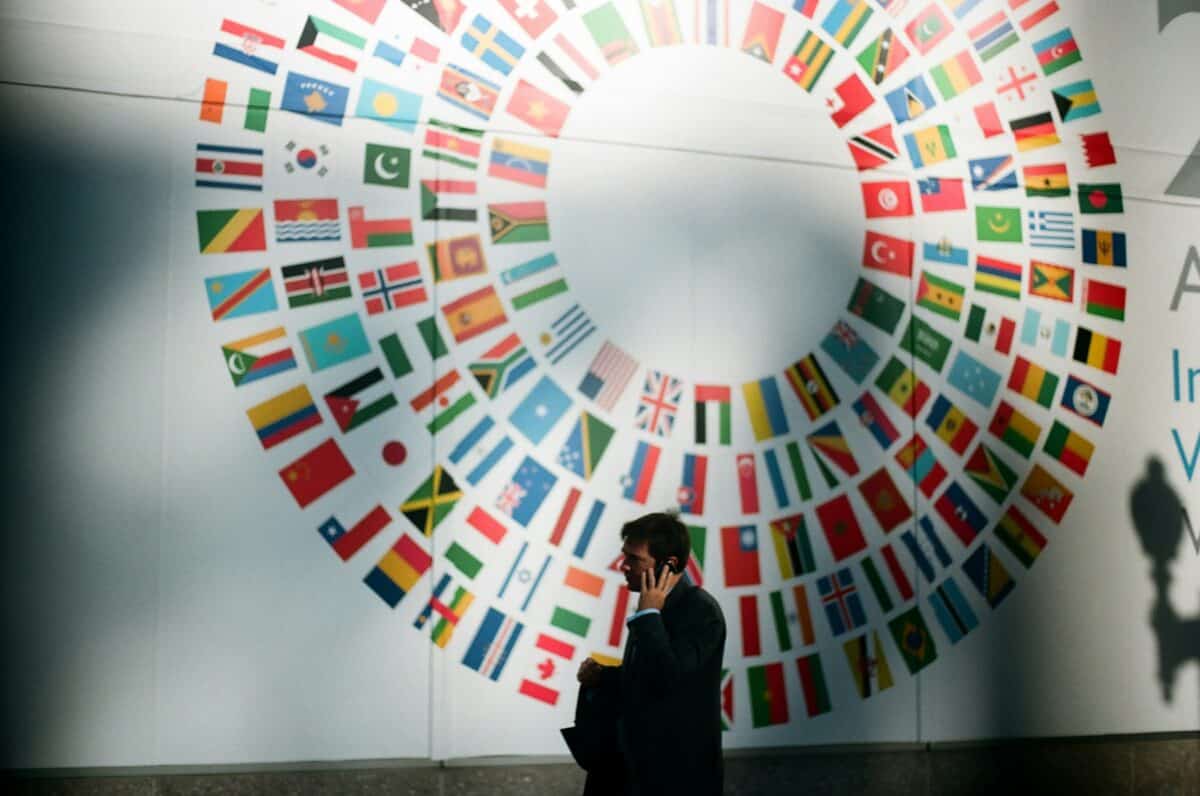
Our latest work has been on the World Bank’s Climate Change Action Plan (CCAP), specifically working to ensure that it was extended. In fact, the outcome was even better than initially expected. While the proposal on the table was to extend it for only one year, it was ultimately extended indefinitely.

At the systemic level, we have worked on credit rating agency assessments to ensure that real risks are properly taken into account. Two of the world’s largest credit rating agencies, Moody’s and Standard & Poor’s (S&P), have revised their methodologies, which has created significant lending headroom for multilateral development banks. This kind of work forms part of our broader effort to enable systemic change.
Finally, we support country-led platform approaches. For example, Brazil has developed an ecological investment platform to help organize and mobilize finance. Several countries in Africa have also advanced significantly with this approach, including Rwanda.
Q: Can you describe the importance of bringing together various climate stakeholders and how this allows for broader options for energy financing?
A: E3G organizes thousands of multilateral meetings and has been the instigator of London Climate Action Week, and holds the London Climate Action Week secretariat.
As part of this work, E3G convenes global leaders, including presidents, ministers, and heads of international institutions. For example, the UN Secretary-General spoke at an event focused on unlocking finance at scale for country-led transformation. A key message from his remarks was that climate risk is economic risk, highlighting the importance of resilience and the need for countries to take climate considerations into account when planning for the future of their economies.
In this same forum, developing countries were able to voice their experiences. The president of Palau spoke about their climate adaptation efforts and mentioned that financing needs to speed up to meet those needs.
Rwanda’s Minister of Environment also participated, alongside representatives from a range of developing countries and countries involved in the COP31 process, including Türkiye, Papua New Guinea, and the Republic of the Marshall Islands. Financial institutions were also represented. Together, participants shared lessons on what is working, and what is not, in country-led climate platforms. This created an opportunity for governments, development partners, and financial institutions to learn from one another and identify practical ways to strengthen these approaches.
A key part of the discussion focused on financing. Participants explored different mechanisms for supporting country-led transition, including proposals such as the Public Development Banks Guarantee Hub designed to mobilize greater investment and reduce barriers to finance.
This is an area where E3G has been actively involved, including through engagement with the International Development Finance Club and the Finance in Common initiative to help advance this agenda. We also held discussions on the credit rating agency work I mentioned earlier.
The forum brought together the institutional, systemic and delivery levels that we focus on in E3G’s Public Banks and Development team. By connecting these different parts of the development finance system, we aim to support better decision-making and help accelerate progress. Ultimately, E3G’s approach is centered on building relationships by convening different stakeholders.
One thing that was very interesting was that, during the country session, both developed and developing countries shared their experiences. For example, Spain presented its Sustainable Finance Council approach.
E3G helped create a trusted space for this exchange. Rather than focusing on political debates about who is responsible for what, the discussion was centered on practical solutions and how to advance climate action.
Q: Can you address how you’ve seen countries learn from one another, compare resources or discuss solutions?
A: I think one of the ways we’ve evolved is by partnering with others to help to convene these conversations. It’s a really constructive way for countries to learn from one another and share how they’re approaching these challenges. It also gives them a chance to compare experiences and discuss solutions, particularly around how they can translate their transition plans and adaptation plans into investment opportunities.
Countries need to organize themselves across ministries to ensure a coordinated approach, and, in particular, they need strong engagement from the finance ministry. They can’t implement transition plans through a single ministry.
One of the core lessons that countries seem to be sharing is that the more that the finance ministry is embedded in the decision-making, the better. Country platforms work best when they are used to deliver national plans and are clearly led by the government itself, sometimes from the finance ministry, and in some cases from the prime minister’s office. This strong country ownership is critical for attracting investment.
Country ownership is essential when it comes to building investment pipelines. Countries often need institutional capacity-building and other forms of support.
Rwanda spoke about how it has been working to engage across governments but also stressed the importance of being realistic. Countries are sharing lessons about what works and about the institutional efforts involved.
There are also different models of country platforms. Some are quite focused. For example, the European Bank for Reconstruction and Development supports platforms that are centered on specific sectors, such as energy. Others take a broader approach across the whole economy, such as the Bangladesh Climate Development Partnership.
What countries are sharing is the importance of working across the government to ensure the right plans are in place. Ultimately, the purpose of these platforms is to translate those plans into concrete investment opportunities and help coordinate funders around them.
One of the common themes emerging from the more successful examples is the presence of a national development bank. Brazil has the Brazilian Development Bank, Türkiye has the Industrial Development Bank of Türkiye, and Rwanda has the Development Bank of Rwanda. These institutions have been critical to the success of their platforms because they help mobilize finance and invest in projects.
That can be more challenging for countries that do not have a comparable institution in place, such as Bangladesh. For those countries, a lot of the value comes from sharing experiences and lessons with others that have developed these kinds of mechanisms.
Q: What is it about national development banks that makes them so important for successful green finance?
A: They have the financing. In some countries, there simply isn’t the funding available to support a dedicated coordinating entity, so having the backing of a national development bank can be crucial.
They also bring expertise and a strong understanding of the financial landscape. That’s important when it comes to turning national plans into investment pipelines. Having a banking institution involved can make a real difference.
That’s one of the interesting aspects of the Public Development Banks Guarantee Hub launched at COP30. It is designed to engage national development banks and use that network to support country platforms.
There is also a strong focus on peer learning. Countries are sharing knowledge and lessons amongst themselves about what works in practice, and we work with the Global Capacity Building Coalition (GCBC) to support that exchange between countries.