
The prospects for hydropower trade between Bangladesh and Nepal are currently under threat. Less than two years after the agreement was signed, the initiative has suffered a major blow due to devastating floods caused by a glacial collapse located near the Nepal-Tibet border on August 26. Electricity exports from Nepal have been temporarily halted following damage to hydropower plants.
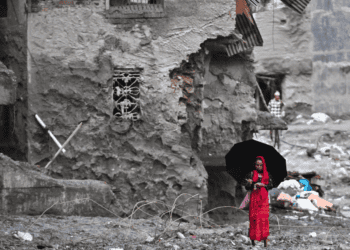
Massive quantities of mud, rocks, and debris swept down with the water, wreaking havoc on riverside settlements and damaging infrastructure such as roads, bridges, and buildings. The floodwaters surged into the Trishuli River, washing away people, vehicles, and structures from the worst-affected areas and carrying debris into various districts (CCTV footage from the flooding).
Nepal was exporting an average of approximately 1,000 MW of electricity; this figure has now dropped to around 650 MW. The nation that had unlocked new possibilities for energy cooperation in South Asia is now struggling to cope with an energy crisis and the aftermath of this disaster.
The death toll from the flash floods has surpassed 1,450. More than 6,000 people remain missing. The floods caused extensive damage to infrastructure, virtually destroying villages located near the Nepal-Tibet border. Twelve hydropower plants in the Trishuli River basin sustained severe damage.
According to the Nepal Electricity Authority, there are currently 225 hydropower plants in Nepal with a total generation capacity exceeding 3,900 MW—enough to meet the electricity needs of approximately 3 million households. Operators have not yet been able to confirm whether any of these damaged facilities can be brought back online. Due to the damage to these plants, more than 10 percent of the country’s total power generation capacity has been rendered inoperable. However, hundreds of similar projects are currently under construction or in the pipeline in Nepal. Most of these are situated in high-altitude mountainous areas, where they harness fast-flowing currents to generate electricity. These projects require minimal or no storage systems. However, as high-altitude Himalayan regions are warming 50 percent faster than the global average, they face heightened environmental risks.
Electricity Export to Bangladesh Halted
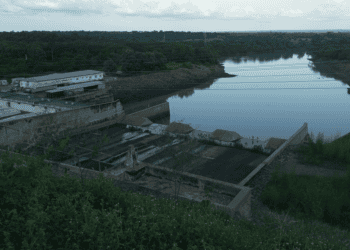
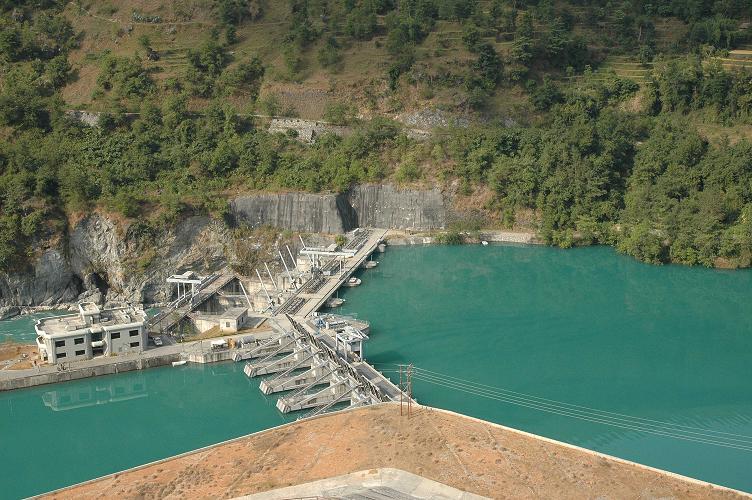
According to the Nepal Electricity Authority (NEA), at least 12 hydropower projects have been directly damaged and shut down due to recent devastating floods and landslides in the Bhote Koshi and Trishuli river basins. These include the Chilime Hydropower Project (22 MW) and the Trishuli Hydropower Project (24 MW). Both of these projects used to supply electricity to Bangladesh. Power generation at both projects has been suspended since last week. The Chilime project is authorized to sell 21.4 MW of power to India, while the Trishuli project is authorized to sell 18.6 MW. Additionally, permission was granted to supply electricity from these projects to Bangladesh using India’s transmission infrastructure.

On January 5, 2024, the Nepal Electricity Authority (NEA), India’s NTPC Vidyut Vyapar Nigam Limited (NVVN), and the Bangladesh Power Development Board (PDB) signed a tripartite agreement to facilitate electricity imports from Nepal.
Dirghayu Kumar Shrestha, Acting Managing Director of the Nepal Electricity Authority (NEA), told local journalists, “Both projects supplying electricity to Bangladesh have been damaged. Consequently, we have requested India to allow us to supply power to Bangladesh from alternative projects. Currently, electricity exports to Bangladesh have effectively dropped to zero.”
Electricity exports from Nepal to Bangladesh began on November 15, 2024. The agreement stipulated that Bangladesh would import 40 MW of hydroelectric power annually from June 15 to November 15 (a five-month period). Under the terms, the electricity is fed into the Bangladeshi grid via India, as there is no direct transmission link for electricity exports from Nepal to Bangladesh; thus, imports began using Indian transmission lines.
Nepal receives payment for the electricity sold to Bangladesh in US dollars. The price was set at 6.4 cents per unit (100 cents to a dollar), which is approximately 7.50 Taka. In the 2024-25 fiscal year, Bangladesh paid the country 15,829,000 Taka (1,29,152.47 USD) for electricity imports.
Bangladesh relies on energy imports to meet its growing electricity demand. Against this backdrop, Nepal’s surplus hydroelectric power has emerged as a promising source of clean, low-carbon electricity for Bangladesh. Bangladesh is facing a severe power crisis just as Nepal’s electricity exports have been halted due to floods. For years, Nepal had relied on electricity imports, particularly during the dry winter months; however, the country is now striving to establish itself as a regional electricity exporter. It is precisely at this juncture that the disaster striking Nepal has disrupted its electricity exports.
Export Complications
Although Nepal aspires to engage in South Asia-based cooperation regarding hydroelectric power trade, the process is fraught with complexities—most notably concerning exports. Nepal had sought to export an additional 20 MW of electricity to Bangladesh. During a Joint Steering Committee (JSC) meeting in Dhaka on November 27, 2025, both nations reached an agreement in principle to increase exports by 20 MW. However, the Indian government has not yet granted approval to transmit this additional power through its transmission lines.
Nepalese officials informed local journalists that the Indian power trading entity responsible for managing cross-border grid operations with Bangladesh rejected the request in June of this year. It is reported that NTPC Vidyut Vyapar Nigam Limited made this decision citing capacity constraints on the India-Bangladesh transmission line. Discussions regarding energy cooperation between India and Nepal took place in July; while some progress was made in bilateral energy coordination, the issue concerning the 20 MW of electricity remained unresolved.
The combined installed capacity of the power grids across the three nations is approximately 586 GW. Energy experts, officials, and power sector analysts from the concerned countries indicate that the impasse surrounding this 20 MW supply is complex. They point out that technical, procedural, and political factors are all involved. Strains have emerged in India-Bangladesh relations following the change of government in Bangladesh in 2024, and this could be a contributing factor.
According to Shahriar Ahmed Chowdhury, Director of the Centre for Energy Research at United International University in Dhaka, “Power trade between Nepal and Bangladesh is an economically rational move. The volume of trade may be small, but it is significant as it marks the beginning of cross-border electricity cooperation.”
Shafiqul Alam, Lead Analyst for Bangladesh at the Institute for Energy Economics and Financial Analysis (IEEFA), stated, “Hydropower from Nepal and Bhutan could prove more cost-effective than many of Bangladesh’s existing power generation sources.”
The disruption in electricity supply from Nepal has occurred at a critical time for Bangladesh. During peak hours—particularly in the evenings and hot weather—national electricity demand surges, resulting in load-shedding of approximately 3,000 to 3,600 MW.
Although demand drops slightly during off-peak periods like midnight, shortages and load-shedding ranging from 1,000 to 2,000 MW often persist due to gas and fuel crises. In rural areas and regions served by rural electrification boards, residents frequently face power outages lasting seven to eight hours a day, or sometimes even longer. And the failure to receive electricity from Nepal has further exacerbated this crisis.
Nepal’s Repeated Efforts to Bounce Back
Nepal has frequently suffered from disasters that have impacted its hydropower projects. Experts suggest that given the increasing frequency of climate-related disasters, it is time to re-evaluate Nepal’s hydropower policy.
Reports indicate that in September 2024, unprecedented cloudbursts in the Trishuli and Bhote Koshi river basins triggered flash floods in the Rasuwa, Nuwakot, and Dhading districts, severely affecting riverside areas and hydropower projects. In July 2025, the bursting of a glacial lake in Tibet’s Gyalung County caused a flash flood; the resulting torrent surged into Nepal’s riverine regions, damaging critical infrastructure and hydropower projects while disrupting trade and commerce. Over the past few years, more than twenty privately operated hydropower plants in the country have sustained damage due to minor flash floods, glacial meltwater flows, and landslides.
Despite multiple barriers, Nepal achieved electricity self-sufficiency in a remarkably short time. As recently as 2010, only two-thirds of the population had access to electricity, with many households enduring up to 16 hours of load-shedding daily. Through rapid expansion of its hydropower infrastructure, the country eventually became energy self-sufficient. By 2018, the majority of the population began receiving 24-hour electricity, thanks to measures tackling corruption and increased imports of electricity from India to help bridge seasonal power shortages.
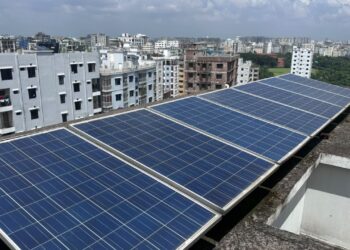
According to a joint study by the German Agency for International Cooperation (GIZ) and the Alternative Energy Promotion Centre (AEPC), Nepal’s technical potential for solar power generation is 432GW ; this figure is approximately ten times greater than the potential economic and technical capacity derived from hydropower. Experts therefore emphasize the need to explore alternatives such as solar and wind power. Integrating these sources could help prevent future power shortages.
Increasing Climate Risks
Nepal’s experience shows that climate disasters may strike locally, but their causes and solutions extend far beyond national borders.Despite having among the lowest greenhouse gas emissions, Nepal remains highly vulnerable to climate-related disasters. Governments and international organizations must therefore work together to share data, establish early warning systems, and provide support for disaster response and recovery.