
The Energy Pioneer
No Result
View All Result
  • Home
  • Clean Tech
    • Electric Vehicles
    • Battery Storage
    • Energy Efficiency
    • Green Hydrogen
    • Smart Grid
  • Renewable Energy
    • Solar
    • Fossil Fuels
    • Hydrogen
    • Hydropower
    • Nuclear
    • Wind
  • Green Finance
    • Crash Course
    • Private Financing
    • Public Financing
    • Carbon Markets
  • Policy
  • Regions
    • Africa
    • Asia
    • West Asia
    • Latin America
    • North America
    • Europe
  • Features
  • Who We Are
    • About Us
    • Contact Us
    • EP Investing
  • Home
  • Clean Tech
    • Electric Vehicles
    • Battery Storage
    • Energy Efficiency
    • Green Hydrogen
    • Smart Grid
  • Renewable Energy
    • Solar
    • Fossil Fuels
    • Hydrogen
    • Hydropower
    • Nuclear
    • Wind
  • Green Finance
    • Crash Course
    • Private Financing
    • Public Financing
    • Carbon Markets
  • Policy
  • Regions
    • Africa
    • Asia
    • West Asia
    • Latin America
    • North America
    • Europe
  • Features
  • Who We Are
    • About Us
    • Contact Us
    • EP Investing
No Result
View All Result
The Energy Pioneer
No Result
View All Result
  • Home
  • Clean Tech
  • Green Finance
  • Policy
  • Renewable Energy
  • Regions
  • Features
  • Who We Are
Home Renewable Energy Fossil Fuels

Coal Peaked in 2024: Where is it Headed?

Otto GundersonbyOtto Gunderson
March 12, 2025
Reading Time: 3 mins read

As the United States continues to shut down coal producers in the hope of reducing carbon emissions, overall coal demand reached an all-time high in 2024. This is the culmination of the last three decades, during which time coal consumption has doubled despite repeated efforts to limit usage. With a total demand of 8.77 billion tonnes, coal is far from a 20th-century fuel source.

RELATED POSTS

The Financiers and Startups Decarbonizing Africa’s ‘Anti-Fossil’ Fuel Nation

The Race to Host AI: Data Centres in Water-Scarce India

India’s Quietly Powerful Climate Warrior

One of the biggest questions regarding coal is when China will reach its peak coal consumption. As the largest producer and consumer, China has used coal to expand their economy rapidly. However, as the world hopes to reach carbon reduction goals, China must change its coal consumption. Of the 8.77 billion tonnes of coal in demand, China accounts for 4.9 billion. With one country representing more than half of the world’s coal consumption, the steady decreases in the United States and Europe cannot offset overall coal dependence.

It is crucial for India, with its rapid economic and population growth, to find a way to power economic development without resorting to the use of coal. A report from the International Energy Agency shows that while coal demand is expected to remain consistent through 2027, India is expected to see demand increase by over 100 Mt. With government incentives to produce more significant amounts of coal, production was expected to grow by 7% in 2024. After surpassing 9 Bt of coal supply for the first time in 2024, the reduction in usage is an uphill climb.

From The Energy Pioneer New memberships opening April 15, 2026

Meet EP Investing — capital discovery for the energy transition.

Visit EP Investing →

The overall market for coal has undoubtedly shifted eastward. While China, India, and the ASEAN countries represented 35% of coal demand in 2000, their share skyrocketed to 75% by 2024. Both the import and export of coal are dominated by a few countries. In 2023, almost 60% of total coal imports were done by three countries: China, India, and Japan. Coal exports were even more concentrated, with nearly three-quarters coming from three countries. Coal exporting was led by Indonesia, followed by Australia and Russia. Russia has noticeably shifted its coal exports eastward in response to the European ban on importing Russian coal, meaning that international coal trade is centered on Eastern shipping lanes. 

Urgewald, an organization that tracks coal usage globally as a prominent contributor to carbon emissions, released a report in 2024 regarding banks’ continued investment in thermal coal. This report found that commercial banks provided 470 billion USD in loans and underwriting to the thermal coal industry from January 2021 to December 2023. The vast majority (92%) of this capital came from banks in only seven countries: China, the United States, Japan, Canada, India, the United Kingdom, and Indonesia. This report found that the thermal coal industry’s financing rates were nowhere near the reductions required to meet climate goals.
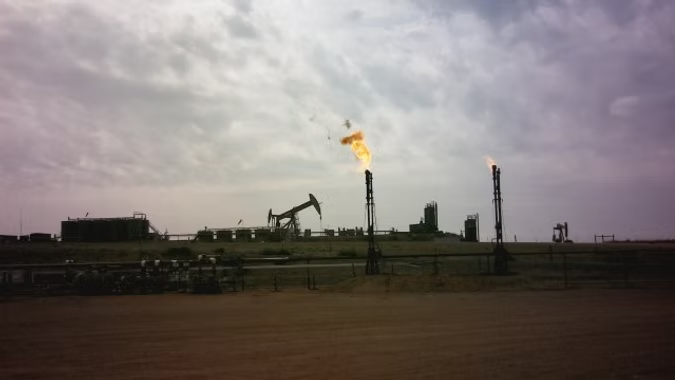
I was fortunate to speak with Katrin Ganswindt, Head of Finance Research at Urgewald, who emphasized these banks’ role in reducing coal investment. She made it clear that whoever provides the money carries the responsibility. However, regulators charged with overseeing these banks should also be held accountable.

Buy JNews
ADVERTISEMENT

While some good coal policies are already in place, they almost always focus solely on thermal coal. Metallurgical coal, which is primarily used in steel production, has rarely been considered in such policies. However, technologies to produce coal-free steel are already there and must be further developed. The distinction between metallurgical and thermal coal must not be used as a loophole to make both countries and banks accountable for coal production. 

Lia Wagner, head of metallurgical coal research at Urgewald, explained that it has become increasingly complex to secure financing for thermal coal. To maintain access to external funding, several coal companies are now expanding their portfolio with metallurgical coal. To hold banks and countries accountable, a straightforward truth must be acknowledged: coal is coal.
From The Energy Pioneer New memberships opening April 15, 2026

Meet EP Investing — the platform behind the stories.

1,300+ companies · 350+ investors · 47+ grants

Visit EP Investing →
ShareTweetShare
Otto Gunderson

Otto Gunderson

Otto Gunderson has been working in clean energy for the last 7 years, with the last two being spent split between South America, Africa, and Southeast Asia, reporting on the transition to clean energy. After traveling and writing for two years, he founded The Energy Pioneer to create a news outlet with a global approach to clean energy journalism. He particularly enjoys writing about entrepreneurship, investment, and innovations that are contributing to greenhouse gas reduction and clean energy development.

Related Posts

The Financiers and Startups Decarbonizing Africa’s ‘Anti-Fossil’ Fuel Nation
Africa

The Financiers and Startups Decarbonizing Africa’s ‘Anti-Fossil’ Fuel Nation

February 16, 2026
The Race to Host AI: Data Centres in Water-Scarce India
Asia

The Race to Host AI: Data Centres in Water-Scarce India

February 9, 2026
India’s Quietly Powerful Climate Warrior
Asia

India’s Quietly Powerful Climate Warrior

January 7, 2026
What is Powering Mozambique’s Green Energy Revolution
Africa

What is Powering Mozambique’s Green Energy Revolution

December 31, 2025
The Making of a Middle Power: Angola’s Lobito Corridor
Africa

The Making of a Middle Power: Angola’s Lobito Corridor

December 23, 2025
Undeterred by Obstacles, Architects Continue to Emphasize Environment, Sustainability, and People
Policy

Undeterred by Obstacles, Architects Continue to Emphasize Environment, Sustainability, and People

December 12, 2025
Next Post
Virginia’s Solar Energy Push

Virginia's Solar Energy Push

The Growth of Electric Vehicles in Ethiopia

The Growth of Electric Vehicles in Ethiopia

Popular Stories

  • The Financiers and Startups Decarbonizing Africa’s ‘Anti-Fossil’ Fuel Nation

    The Financiers and Startups Decarbonizing Africa’s ‘Anti-Fossil’ Fuel Nation

    0 shares
    Share 0 Tweet 0
  • Decarbonizing Africa’s Road Passenger Transport

    0 shares
    Share 0 Tweet 0
  • Green Hydrogen in Tunisia: Ambitious Energy Strategy amidst Implementation Challenges

    0 shares
    Share 0 Tweet 0
  • South African Pension Funds Outshine $13 Billion Green Transition Funds

    0 shares
    Share 0 Tweet 0
  • Unlocking Africa’s Renewable Potential with Battery Storage

    0 shares
    Share 0 Tweet 0

Actionable Info

🔒 NEW MEMBERSHIPS OPEN APRIL 15
EP
EP Investing Climate Finance Intelligence

Our journalism is made possible by readers like you.

The founders, investors, and professionals reading The Energy Pioneer use EP Investing to find capital, partners, and opportunities.

1300+Companies
350+Investors
45+Grants
Explore EP Investing →

The Energy Pioneer

The Energy Pioneer covers the global energy transition — from clean tech and green finance to policy and renewable energy.

Recent Posts

  • Decarbonizing Africa’s Road Passenger Transport
  • Unlocking Africa’s Renewable Potential with Battery Storage
  • The Financiers and Startups Decarbonizing Africa’s ‘Anti-Fossil’ Fuel Nation

Categories

  • Africa
  • Asia
  • Battery Storage
  • Carbon Markets
  • Clean Tech
  • Crash Course
  • Electric Vehicles
  • Energy Efficiency
  • Features
  • Fossil Fuels
  • Green Finance
  • Green Hydrogen
  • Hydrogen
  • Hydropower
  • Latin America
  • North America
  • Nuclear
  • Policy
  • Private Financing
  • Public Financing
  • Renewable Energy
  • Smart Grid
  • Solar
  • West Asia

Quick Links

  • Home

© 2026 The Energy Pioneer | All Rights Reserved. |

No Result
View All Result
  • Home
  • Clean Tech
    • Electric Vehicles
    • Energy Efficiency
    • Green Hydrogen
    • Smart Grid
    • Battery Storage
  • Green Finance
    • Public Financing
    • Private Financing
    • Carbon Markets
  • Policy
  • Renewable Energy
    • Wind
    • Solar
    • Hydropower
    • Nuclear
    • Hydrogen
    • Fossil Fuels
    • Geothermal
  • Regions
    • Africa
    • Asia
    • Europe
    • North America
    • Latin America
    • West Asia
  • Features
  • Who We Are
    • About Us
    • EP Investing
    • Contact Us

© 2026 The Energy Pioneer | All Rights Reserved. |